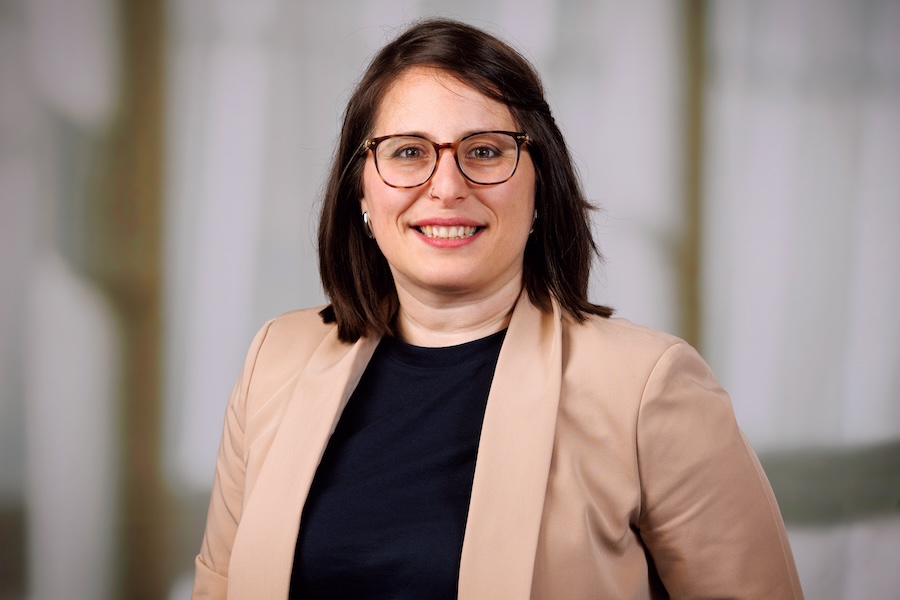
Raquel Buj, PhD
Assistant Professor, UNMC Eppley Institute for Research in Cancer and Allied Diseases
Research focus: Cancer metabolism; tumor microenvironment; tumor immunology; therapy resistance, melanoma and other solid tumors
Research
The Buj Lab investigates how metabolic interactions between cancer cells and the tumor microenvironment regulate anti-tumor immunity and therapeutic response. Our research seeks to understand how the availability and utilization of nutrients, micronutrients, and other metabolites shape the function of both cancer and immune cells, influencing tumor progression and resistance to therapy.
To answer these questions, we combine state-of-the-art technologies, including high-throughput CRISPR knockout screens, metabolomics, metallomics, immune profiling, and advanced microscopy, to discover metabolic pathways that regulate cancer progression and therapeutic response. We then use rigorous mechanistic studies in clinically relevant cell and mouse models, together with patient-derived specimens and publicly available patient datasets, to determine how these pathways function and contribute to disease. Our goal is to identify metabolic vulnerabilities that can be translated into new therapeutic strategies to improve cancer treatment.
Current Lab Members
Dr. Bujs lab is actively recruiting. For information on student rotation and postdoc opportunities, please contact Raquel Buj at rbuj@unmc.edu
Trainee Outcomes:
Dr. Buj has over a decade of experience mentoring and co-mentoring trainees at all stages of scientific training, including high school, undergraduate, master's, graduate, and postdoctoral trainees. Many of these trainees have gone on to careers in academia and industry, where they continue to contribute to cancer research and related areas of biomedical science.
- 2021 | Postdoctoral training, Cancer Immunology, University of Pittsburgh School of Medicine and the UPMC Hillman Cancer Center, Pittsburgh, PA
- 2020 | Postdoctoral training, Cancer Metabolism and Cellular Senescence, Penn State University, Hershey, PA
- 2017 | PhD in Thyroid Cancer Epigenetics, Health Sciences Research Institute of the Germans Trias i Pujol (IGTP) and the University of Barcelona, Barcelona, Spain
- 2011 | MS in Developmental Biology and Genetics, Institute of Biomedical Research of Barcelona (IIBB) and the University of Barcelona, Barcelona, Spain
- 2010 | BS in Biology, University of Valencia, Valencia, Spain
Research Areas: Tumor immunometabolism and therapy resistance
Techniques and Training: CRISPR knockout screens; metabolomics and metallomics; immunophenotyping; syngeneic mouse models; microscopy.
Collaborations
The Buj Lab collaborates with investigators across diverse disciplines, including cancer metabolism, metabolomics and metallomics, tumor immunology, and redox biology. Key collaborators include Katherine M. Aird (The Wistar Institute), Nathaniel W. Snyder (Temple University), Clementina Mesaros (University of Pennsylvania), Nadine Hempel (University of Pittsburgh), and Jason Lohmueller (University of Pittsburgh), among others.
- CDKN2ALow cancer cells outcompete macrophages for microenvironmental zinc to drive immunotherapy resistance. bioRxiv [Preprint]. 2025 Feb 08. DOI: 10.1101/2025.02.08.637227.
- De novo purine metabolism is a metabolic vulnerability of cancer with low p16 expression. Cancer Res Commun. 2024 May 2; 4 (5): 1174-1188. PMID: 38626341.
- Loss of p16 a bouncer of the immunological surveillance? Life (Basel). 2021 Apr 2;11(4):309. PMID: 33918220.
- Suppression of p16 alleviates the senescence-associated secretory phenotype. Aging. 2021 Feb 6; 13 (3): 3290-3312. PMID: 33550279
- Suppression of p16 induces mTORC1-mediated nucleotide metabolic reprogramming. Cell Reports. 2019 Aug 20; 28 (8): 1971-1980.e8. PMID: 31433975.
Appointments:
- Member, Editorial Board of Translational Oncology, 2025–Present
- Member, Editorial Board of Biochemical Pharmacology, 2025–Present
- Member, Active Member in the American Association for Cancer Research (AACR), 2024 – Present
Honors & Awards:
- 2018 | Penn State Cancer Institute Postdoctoral Fellow Award (2 years), Penn State Cancer Institute
- 2018 | International Cell Senescence Association Travel Award, ICSA
- 2012 - 2016 | Doctorate Research Training Fellow Award (FPI, 4 years), Spanish Ministry of Economy and Competitiveness
Grants:
- 2025 - 2030 | NIH/NCI R01 (1R01CA301573-01), PI (multi-PI R01) — Cell intrinsic and extrinsic effects of zinc metabolism in therapy resistant melanoma
- 2025 - 2028 | DoD MRP Team Science Award (ME240069P1), PI (team award) — Targeting SLC39A9 in CDKN2A-low melanoma