Health Design Thinking
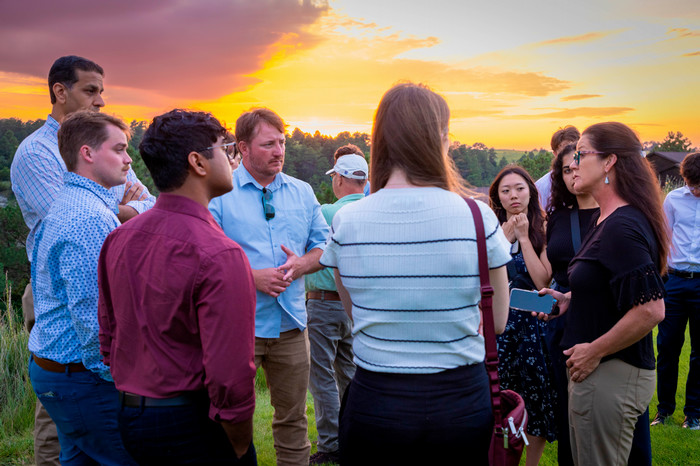
Continuous Improvement and Collaboration
Scott Scholars learn to apply design thinking principles to address complex healthcare challenges through innovation, collaboration, and continuous improvement. This journey begins during the Summer Bridge Program, where professionals from the Stanford d.school introduce students to human-centered design and guide them through the design thinking process.
By using this approach, students learn to empathize with patients and stakeholders, identify unmet needs, and develop creative, practical solutions to real-world healthcare problems. Throughout their time in the program, scholars continue to build these skills through workshops, design sprints, and community-based projects, preparing them to become thoughtful leaders and changemakers in healthcare.
Design Sprints
Intensive, one-day events where student health teams are tasked with solving pressing health-related challenges in collaboration with UNMC and Nebraska Medicine. These sprints are fast-paced and demand a deep engagement with design thinking principles. Through brainstorming, rapid prototyping, and iterative feedback, scholars develop practical and impactful solutions that address immediate needs of the health care community. The Design Sprints hone students’ problem-solving abilities and cultivate their capacity for teamwork and quick, effective decision-making in a high-pressure environment.

Community-Based Projects