The Psychiatric Nurse Practitioner Workforce in Nebraska: 2020 to 2025
Purpose
This data snapshot includes information about the psychiatric mental health nurse practitioner (PMHNP) workforce from 2020 to 2025.1 PMHNPs are advanced practice registered nurses (APRN-NP) who can diagnose and treat mental illnesses and promote the mental health of individuals and families. PMHNPs offer psychiatric/mental health assessments and therapies, order laboratory tests, and manage medications. They specialize in treating those who have more serious mental health problems than those managed by a local primary care physician.
Key Takeaways
- The Nebraska PMHNP workforce grew 53% from 2020 to 2025.
- The number of providers increased in all 6 Nebraska behavioral health regions.
- PMHNPs comprise the largest percentage of medical behavioral health providers in the state (52%), and in each region except Region 6.
- Training opportunities for PMHNPs exist across the state, making education more easily accessible than for other medical behavioral health provider types.
- The number of PMHNPs per 100,000 population still lags behind the national average.
Psychiatric Nurse Practitioner Training Programs
PMHNP education takes at least six years to complete. This includes an undergraduate degree in nursing (BSN) and a 2-year Master’s degree or 3-year Doctor of Nursing Practice degree, often with at least one year of nursing practice between undergraduate and graduate education required for acceptance into a program.
There are three PMHNP education programs housed in Nebraska: Clarkson College, Creighton University, and UNMC. The Clarkson and Creighton programs are in Omaha. The UNMC program offers training at all five of its nursing campuses (Omaha, Lincoln, Norfolk, Kearney, and Scottsbluff). Clarkson began their PMHNP program in 2020. Creighton started its PMHNP program in 2017. UNMC started advanced practice psychiatric nurse training as a Certified Nurse Specialist program in the 1960's, which was transitioned to a Nurse Practitioner curriculum in 1996. It expanded to all campuses in the late 1990s and doubled its capacity in 2008.
PMHNP training programs require certain core competencies along with a minimum of 500 hours of faculty-supervised, preceptor-led direct patient care clinical hours. It is important to note that these clinical hours are usually unpaid for the student and preceptor and are not standardized. To become a board-certified PMHNP, APRNs must: hold an RN license; have completed a Master’s degree, post-graduate certificate program (for those who are already APRNs in another specialty), or a DNP from an accredited training program; have completed the 500-hour minimum supervised practice requirement; and pass either the American Nurses Credentialing Center or the American Academy of Nurse Practitioners Certification Board PMHNP certification exam.
Currently, to become licensed in Nebraska, individuals must have practiced for 2,000 hours or have a formal, written Transition to Practice agreement with a supervising physician, osteopathic physician, or another APRN who has at least 10,000 hours of practice.2 This Transition to Practice agreement must include 2,000 hours of supervised practice. Some APRNs, especially in rural areas, may have a difficult time finding supervisors willing to enter into this practice agreement and often require payment to do so.
Regional Trends
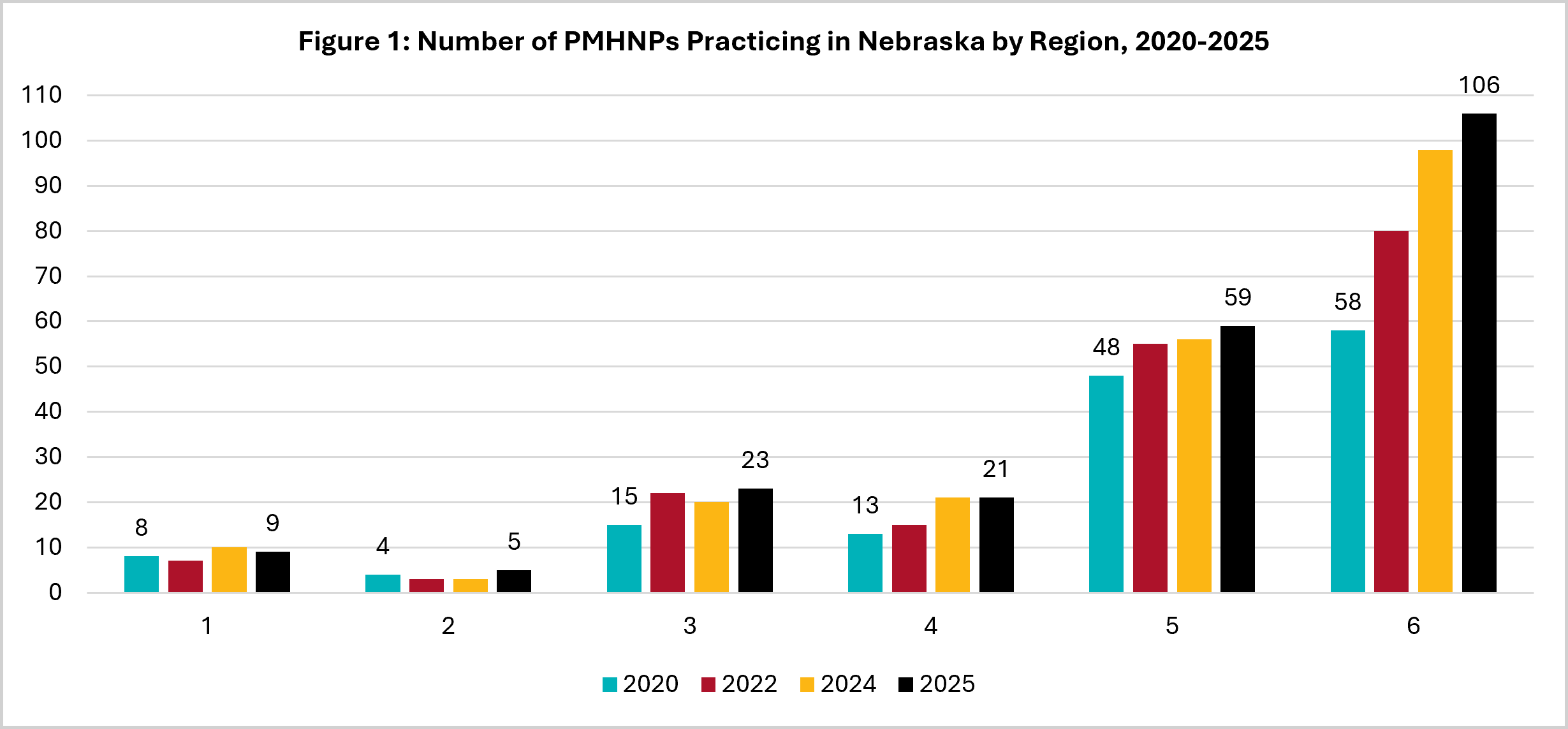
The number of licensed PMHNPs practicing in Nebraska increased 53% from 2020 to 2025 (from 146 to 223). The number of PMHNPs increased in all Nebraska Department of Health and Human Services behavioral health regions (see Figure 1).
Rural and Urban Distribution of Psychiatric Nurse Practitioners
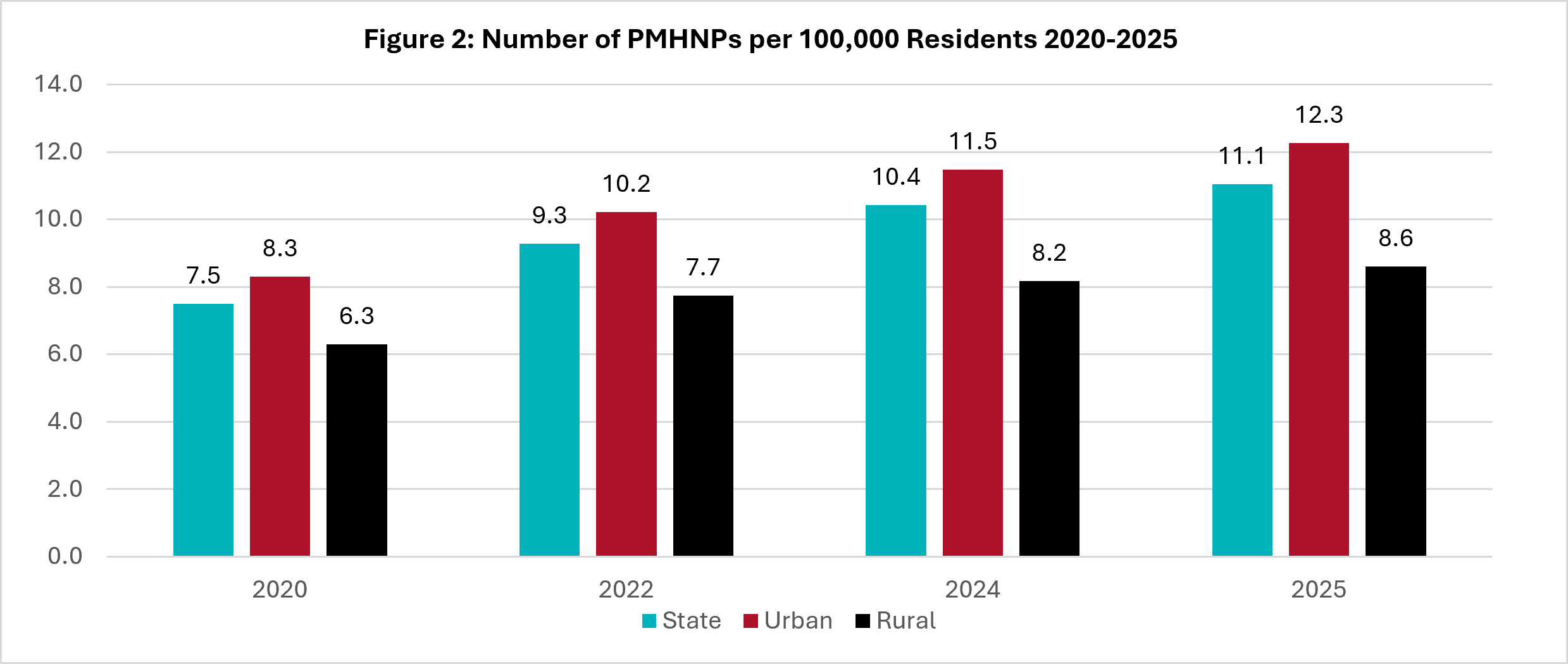
The number of PMHNPs in urban and rural areas increased from 2020 to 2025, but rural areas still had fewer providers per 100,000 population compared to urban areas (see Figure 2). In 2025, the average number of PMHNPs across the US was about 17 per 100,000 population. Nebraska’s urban areas had 12.3 PMHNPs per 100,0003 population while rural areas had 8.6 per 100,000.
Age of Psychiatric Nurse Practitioners
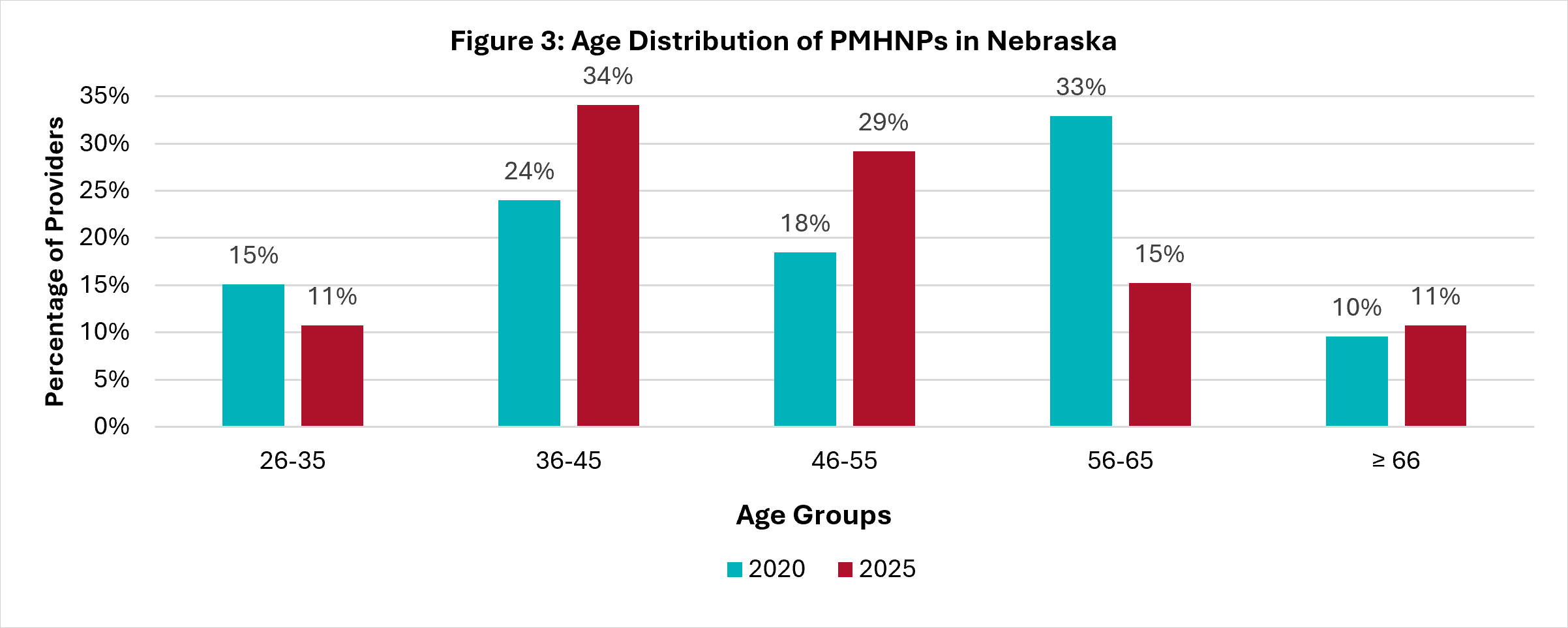
Since 2020, the number of late-career PMHNPs has decreased, and the number of providers aged 36-55 has increased. The percentage of providers above retirement age (≥ 66) is only slightly higher now than in 2020 (see Figure 3).
Conclusions
The PMHNP workforce in Nebraska has grown significantly since 2020, including in rural areas, with all behavioral health regions increasing in number. Furthermore, PMHNPs comprise the largest proportion of the medical behavioral health providers in the state (52%) due to their significant growth over the last decade. Nebraska offers PMHNP training opportunities in nearly every behavioral health region across the state. However, the availability of PMHNPs remains higher in Nebraska’s urban areas compared to rural areas. Overall, these findings highlight positive changes in the Nebraska PMHNP workforce along with the need for continued efforts to better understand and address shortages in rural areas of the state through strategies such as increasing the number of rural supervisors.
Suggested citation:
Behavioral Health Education Center of Nebraska. (2026). The Psychiatric Mental Health Nurse Practitioner Workforce in Nebraska: 2020 to 2025.
Footnotes
[1] BHECN analyzes data provided by the Health Professions Tracking Service (HPTS) to determine the number and type of licensed behavioral health professionals practicing in Nebraska. HPTS receives monthly licensure information from the Nebraska Department of Health and Human Services. Licensure data does not include practice location, and an active license does not necessarily indicate that a provider is currently practicing in Nebraska, as providers may maintain a license after moving or practicing in another state, leaving clinical practice, or retiring. To address these gaps in the licensure data, HPTS also sends annual surveys to all licensed behavioral health care providers that ask about practice location(s) and provider and patient demographic characteristics. BHECN continually reviews and refines its data collection procedures and verification protocols to increase provider engagement. While this approach may yield more conservative estimates than licensure counts alone, it provides a more realistic picture of the workforce available to deliver behavioral health services in Nebraska.
[2] Nebraska Legislature. (2025). Nebraska Revised Statute 38-2322. https://nebraskalegislature.gov/laws/statutes.php?statute=38-2322
[3] American Academy of Nurse Practitioners 2025 certification statistics AANPCB 2024 Certification Statistics.pdf; American Nurses Credentialing Center 2025 Certification Data ancc-cert-data-website.pdf