Behavioral Health Providers Practicing In Nebraska Behavioral Health Regions: 2020 to 2025
Purpose
This data snapshot presents information about the behavioral health workforce in each of the six Nebraska Department of Health and Human Services behavioral health regions from 2020 to 2025.1Key Takeaways
- Nebraska’s licensed behavioral health workforce grew across five of the six behavioral health regions between 2020 and 2025, with regional changes ranging from a 4% decrease to a 35% increase.
- Psychiatric APRNs and LIMHP/LMHP are the most prevalent and geographically dispersed behavioral health providers in Nebraska.
- Degree-granting behavioral health education programs are available in five of Nebraska’s six regions, with the broadest range of education programs concentrated in Regions 5 and 6.
Methods
Since 2010, BHECN has tracked behavioral health workforce trends for psychiatrists, psychiatric advanced practice registered nurses (APRNs), psychiatric physician assistants (PAs), psychologists, licensed independent mental health practitioners (LIMHPs), licensed mental health practitioners (LMHPs) and licensed alcohol and drug counselors (LADCs). Starting in 2025, BHECN also began tracking board-certified psychiatric pharmacists (BCPPs), licensed behavioral analysts (LBAs), licensed assistant behavioral analysts (LABAs), and certified peer support specialists (CPSSs).
BHECN analyzes data provided by the Health Professions Tracking Service (HPTS) to determine the number and type of licensed behavioral health professionals practicing in Nebraska. HPTS receives monthly licensure information from the Nebraska Department of Health and Human Services. Licensure data does not include practice location, and an active license does not necessarily indicate that a provider is currently practicing in Nebraska, as providers may maintain a license after moving or practicing in another state, leaving clinical practice, or retiring.
To address these gaps in licensure data, HPTS also sends annual surveys to all licensed behavioral health care providers asking about practice location(s) and provider and patient demographic characteristics. BHECN continually reviews and refines its data collection procedures and verification protocols to increase provider engagement. While this approach may yield more conservative estimates than licensure counts alone, it provides a more realistic picture of the workforce available to deliver behavioral health services in Nebraska. The number of BCPPs, LBAs, LABAs, and CPSSs practicing in Nebraska is not available prior to 2025, as those professions were added to the survey data collection in 2025.
Comparison Across Behavioral Health Regions
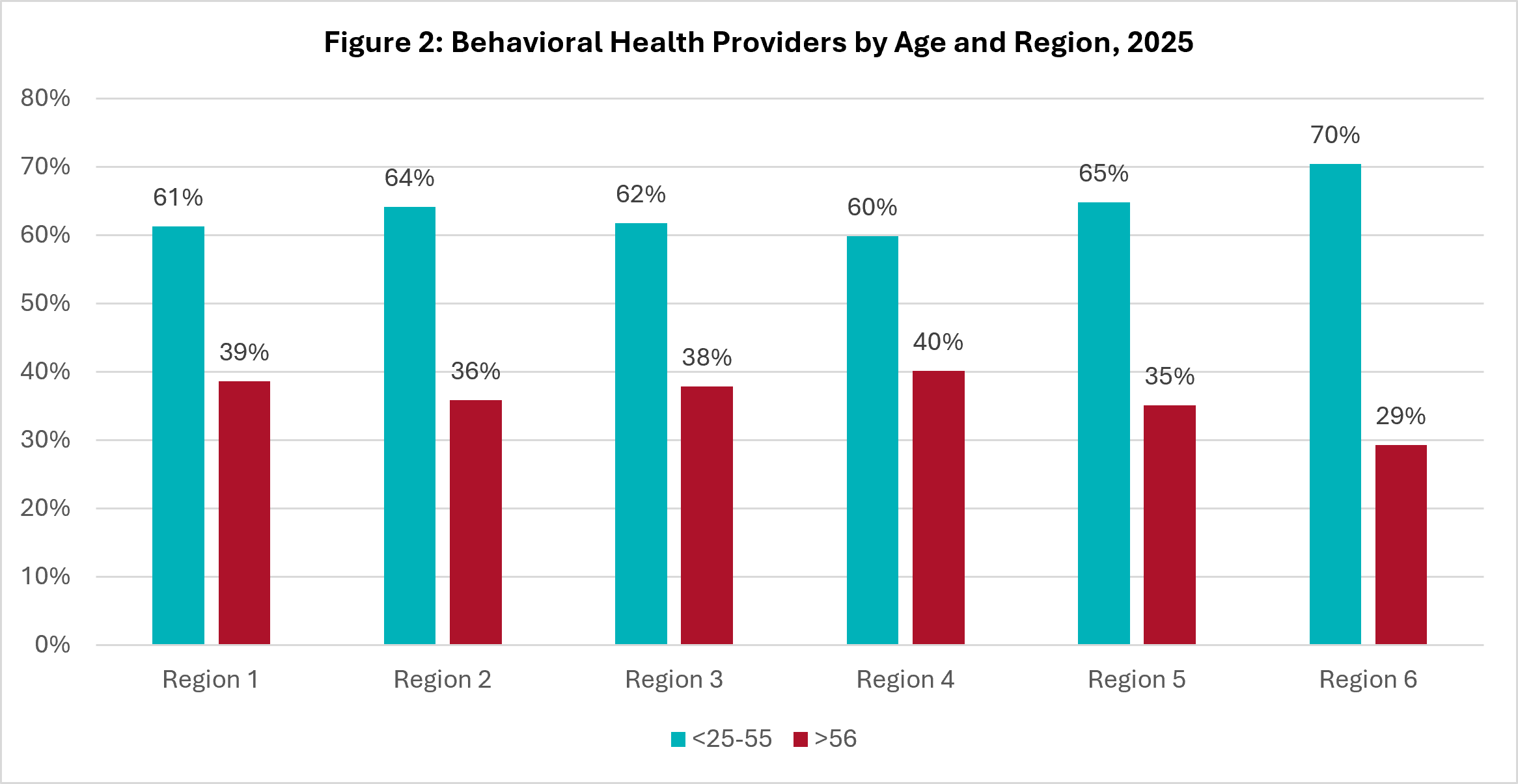
Table 1 provides a summary of regional characteristics.
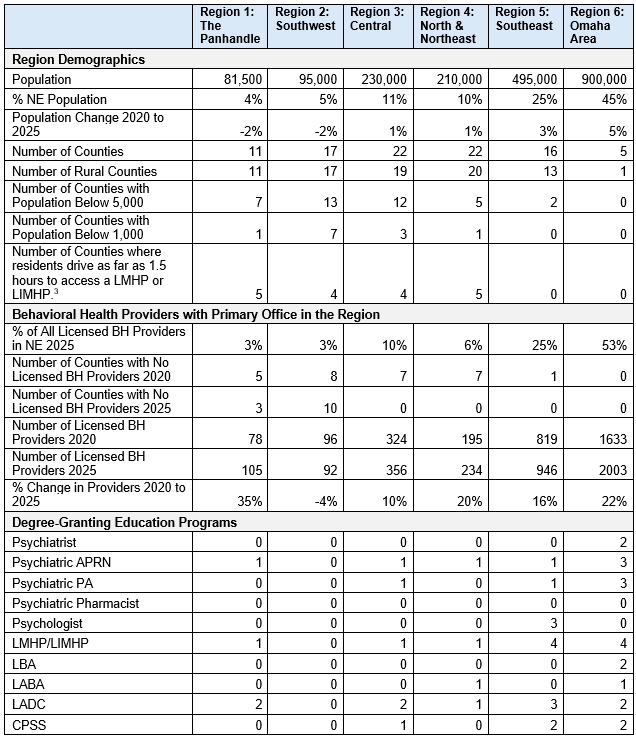
Figure 1 shows the total number of licensed behavioral health providers in each region for the years 2020, 2022, 2024, and 2025.
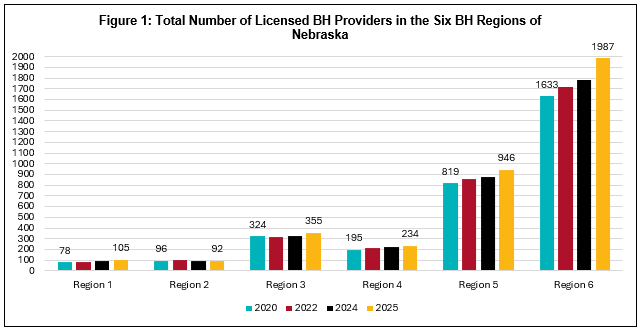
Table 2 provides information on specific provider types in each region for years 2020 and 2025.
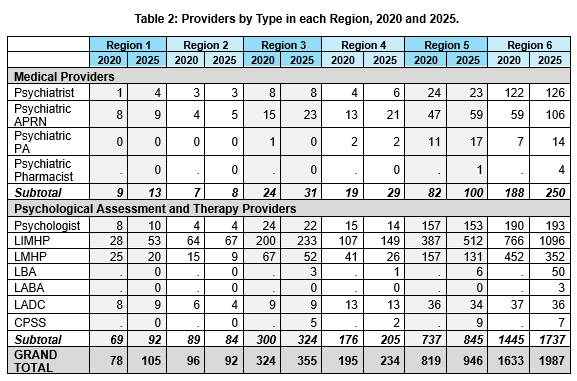
Figure 2 shows the number of providers in each region by age (≤55 and ≥56).
Regions 1 and 2: The Panhandle and Southwest
Regions 1 and 2 each account for 4-5% of the Nebraska population, and 3% of all behavioral health providers in the state. Region 1 has experienced a 35% increase in provider numbers since 2020, the largest increase among all regions across the state. In contrast, Region 2 experienced a 4% decrease in behavioral health providers.
Key differences in Regions 1 and 2 are county size and the availability of degree-granting education programs. Although all counties are classified as rural in both regions, Region 2 has a greater number of counties with populations below 5,000 (thirteen vs. seven) and below 1,000 (seven vs. one). Region 1 offers degree-granting education programs for psychiatric APRN, LMHP/LIMHP, and LADC roles, and while there are no degree-granting programs for psychology, there are internship opportunities. Region 2 does not have any degree-granting behavioral health education programs.
There are no PAs, BCPPs, LBAs/LABAs, or CPSSs in either Region 1 or 2. However, both regions have retained or increased their number of psychiatrists, APRNs, and LIMHPs. Both Regions lost LMHPs, some of which may represent license conversion to an LIMHP license, though Region 2 lost more LMHPs than it gained LIMHPs, and Region 1 gained more than license conversion alone would account for. Region 2 lost two LADCs between 2020 and 2025, while Region 1 gained one.
Regions 3 and 4: Central and Northeast
Regions 3 and 4 each account for about 10-11% of Nebraska’s population. Region 3 has 10% of the licensed BH workforce, while Region 4 has 6%. Both experienced an increase in their BH workforce between 2020 and 2025 (10% in Region 3; 20% in Region 4). Most counties in these regions are rural: Region 3 has three urban counties, and Region 4 has two. Region 3 has twelve counties with a population under 5,000, and three under 1,000. Region 4 has five counties with a population under 5,000 and one with a population under 1,000.
Both Region 3 and 4 have degree-granting education programs for psychiatric APRNs, LMHP/LIMHPs, and LADCs. Region 3 also offers degree-granting education programs for psychiatric PAs and CPSSs. While not housed in Region 3, psychiatry residents spend time there if they are participating in the Psychiatry Rural Residency training track.
Region 3 lost its only PA provider, and both regions lost psychologists – two in Region 3 and one in Region 4 (possibly due to retirement – Region 4 has the oldest BH workforce across the state). While LMHP numbers were down in both BH Regions, LIMHP numbers increased – a trend seen in all regions of the state. These two regions both have some of the new provider types being tracked as of 2025, including LBAs and CPSSs, though neither has BCPPs or LABAs.
Regions 5 and 6: Southeast and Omaha Area
Region 5 comprises 25% of Nebraska’s population, while Region 6 comprises 45% of the state’s population. Region 5 has 25% of the state’s BH workforce, matching its proportion of the population, while Region 6 has 53% of all licensed BH providers in the state – a greater proportion than the population. Both regions experienced an increase in the BH workforce between 2020 and 2025: 16% for Region 5, and 22% for Region 6.
While most of Region 5 is rural (13 of 16 counties), Region 6 has only one rural county. Region 5 has only two counties with populations below 5,000, while Region 6 has none.
Despite having the state’s only doctoral-level psychology training programs, Region 5 lost psychologists from 2020-2025, and lost one psychiatrist. Both regions also lost LADC providers. However, these regions saw significant growth in other provider types, including APRNs, PAs, and LIMHPs. Both regions also have the largest number of the newly tracked provider types – both have BCPPs, LBAs, and CPSSs, and Region 6 has LABAs.
Regions 5 and 6 have the largest number of degree-granting education programs for BH professions. Region 5 offers degree programs in all professions except the following: psychiatry, psychiatric pharmacy, and LBA/LABA. Region 6 offers degree programs for all BH provider types except psychology and psychiatric pharmacy. This may explain why these two Regions also have the youngest of the state’s BH workforce.
Suggested citation:
Behavioral Health Education Center of Nebraska. (2026). Behavioral Health Providers Practicing in Nebraska Behavioral Health Regions: 2020 to 2025.
Footnotes
[1] Nebraska Department of Health and Human Services. (2025). Behavioral Health Resources for Schools: Division of Behavioral Health. https://dhhs.ne.gov/BHSchoolResources/AboutDBH.pdf
[2] We present hierarchical counts, where each licensed provider practicing in Nebraska is counted once, according to their highest license. Hierarchical counts allow us to examine changes in the total number of licensed behavioral health providers practicing in each Nebraska behavioral health region.
[3] Healthcare Facilities and License Type Location Map (2026). Rural Health Transformation Program (RHTP), Nebraska Department of Health and Human Services. LIMHPs and LMHPs | Nebraska Rural Health Transformation Program (RHTP)