The Psychiatric Pharmacist Workforce in Nebraska: 2025
Purpose
This data snapshot includes information about Board Certified Psychiatric Pharmacists (BCPPs) in Nebraska in 2025.1 Psychiatric pharmacists are pharmacists with specialized expertise in the pharmacologic treatment of psychiatric and behavioral health disorders. They provide medication management, monitor treatment response and adverse effects, optimize complex medication regimens, and collaborate with other mental health professionals to provide patient care. BCPP certification is the formal specialty certification in psychiatric pharmacy awarded by the Board of Pharmacy Specialties. BCPP certification is not required for pharmacists to practice in psychiatric or behavioral health settings; however, using BCPP certification provides a consistent and identifiable population for purposes of this workforce snapshot.
Key Takeaways
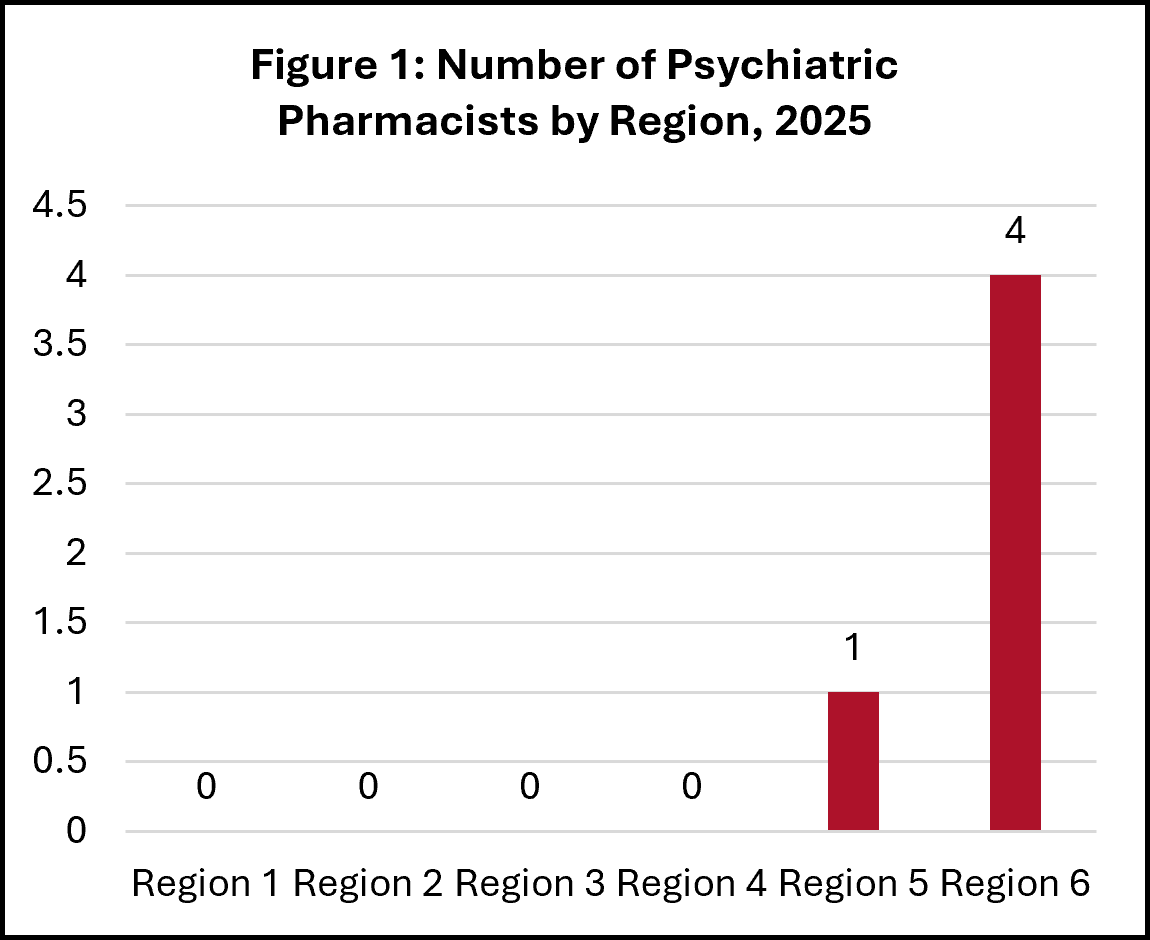
- There are currently five Board Certified Psychiatric Pharmacists (BCPPs) practicing in Nebraska, with BCPPs concentrated in the metropolitan areas of the state.
- Nebraska currently has no psychiatric pharmacy postgraduate year 2 (PGY2) residency programs, requiring pharmacists to seek this specialized training outside the state.
Psychiatric Pharmacist Training Programs
Psychiatric pharmacists complete the same foundational pharmacy education as other pharmacists. Depending on the Doctor of Pharmacy (PharmD) program, students typically complete 2-3 years of prerequisite coursework or a bachelor’s degree before earning a four-year PharmD degree from an Accreditation Council for Pharmacy Education-accredited program and meeting pharmacist licensure requirements. A common pathway to advanced psychiatric pharmacy practice is completion of a postgraduate year one (PGY1) residency followed by a postgraduate year two (PGY2) residency in psychiatric pharmacy, providing specialized training in psychiatric and behavioral health care.
The PGY1-to-PGY2 pathway is not required to practice in psychiatric or behavioral health settings or to become a BCPP. Pharmacists may pursue BCPP certification through several pathways, including psychiatric practice experience, PGY1 training combined with psychiatric pharmacy practice experience, or completion of a PGY2 psychiatric pharmacy residency. Awarded by the Board of Pharmacy Specialties, BCPP certification recognizes specialized knowledge and expertise in psychiatric pharmacy.
There are currently 72 psychiatric pharmacy PGY2 residency programs in the United States. However, there are no psychiatric pharmacy PGY2 residency programs in Nebraska or neighboring Wyoming.2 All other states bordering Nebraska offer at least one psychiatric pharmacy PGY2 residency program.
Regional Trends, and Rural and Urban Distribution of Psychiatric Pharmacists
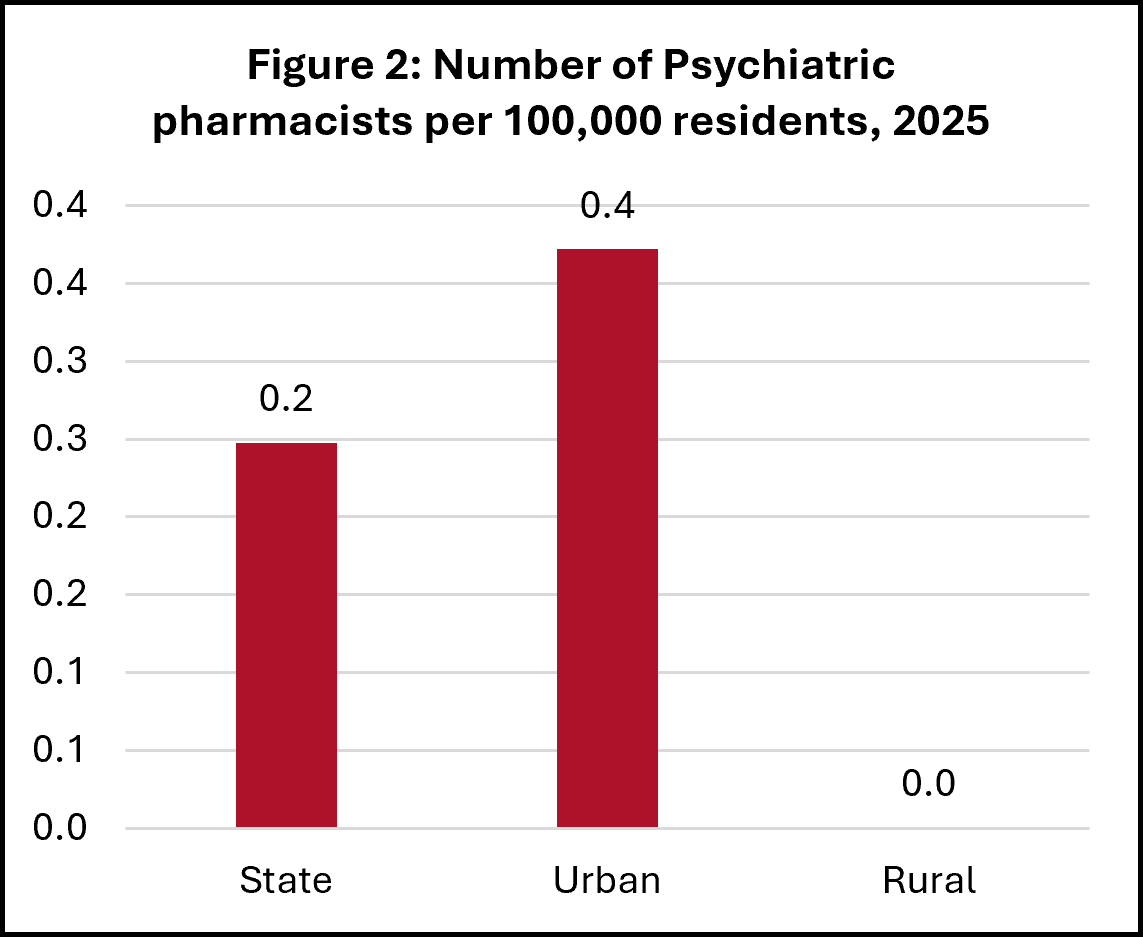
Psychiatric pharmacists are concentrated in the metropolitan areas of Nebraska (see Figures 1 & 2).
Age of Psychiatric Pharmacists
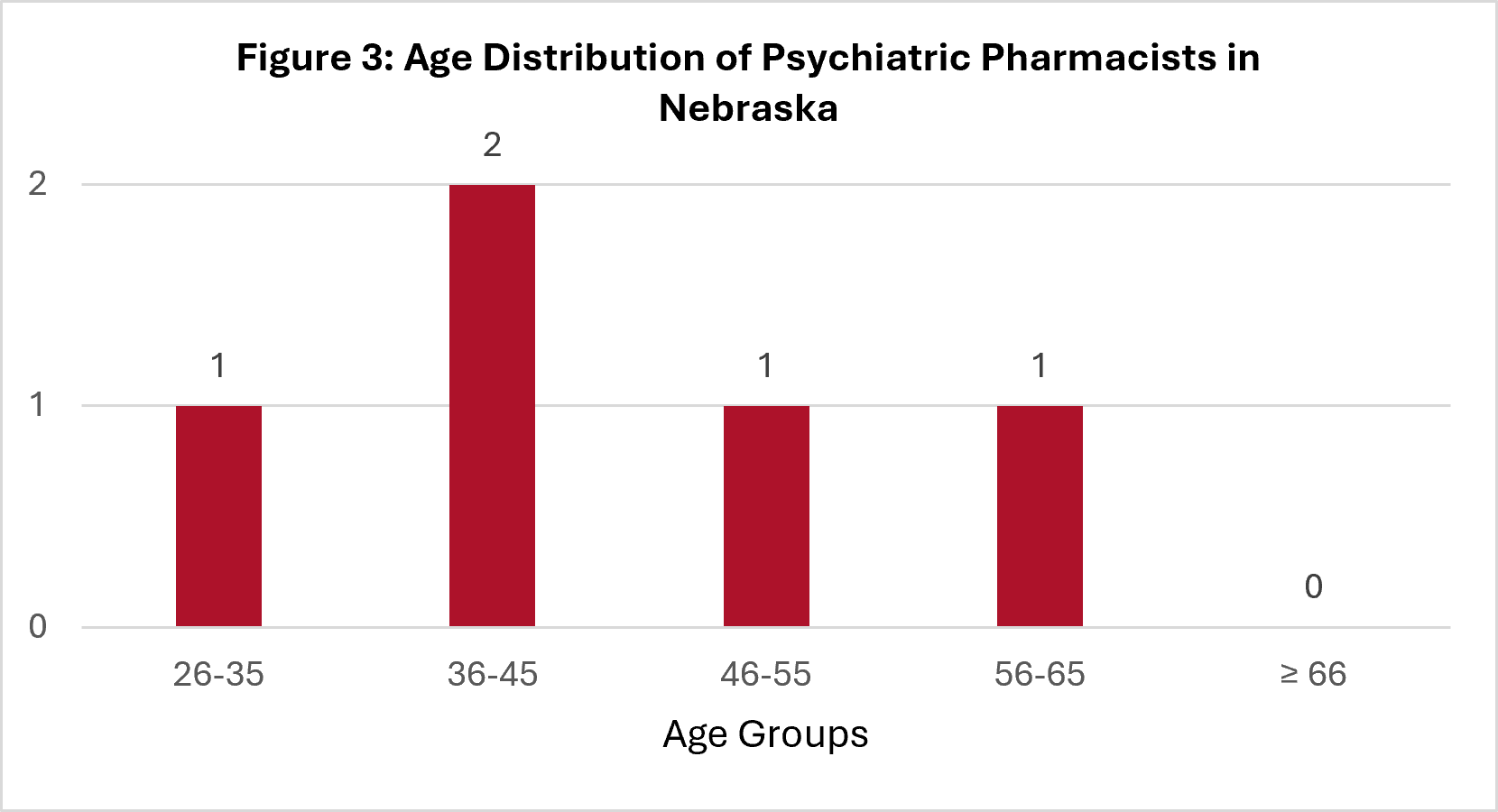
The age of psychiatric pharmacists in Nebraska is evenly spread between career entry and retirement page. No psychiatric pharmacists are >65 years of age.
Conclusions
Psychiatric pharmacists make up a very small portion of the behavioral health workforce in Nebraska and are concentrated in the metropolitan areas. There are no residency programs in the state, making attainment of this specialty more challenging for Nebraska pharmacists.
Suggested citation:
Behavioral Health Education Center of Nebraska. (2026). The Psychiatric Pharmacist Workforce in Nebraska: 2025.
Footnotes
[1] BHECN analyzes data provided by the Health Professions Tracking Service (HPTS) to determine the number and type of licensed behavioral health professionals practicing in Nebraska. HPTS receives monthly licensure information from the Nebraska Department of Health and Human Services. Licensure data does not include practice location, and an active license does not necessarily indicate that a provider is currently practicing in Nebraska, as providers may maintain a license after moving or practicing in another state, leaving clinical practice, or retiring. To address these gaps in the licensure data, HPTS also sends annual surveys to all licensed behavioral health care providers that ask about practice location(s) and provider and patient demographic characteristics. BHECN continually reviews and refines its data collection procedures and verification protocols to increase provider engagement. While this approach may yield more conservative estimates than licensure counts alone, it provides a more realistic picture of the workforce available to deliver behavioral health services in Nebraska. BHECN began collecting data about psychiatric pharmacists in 2025.
[2] American Association of Psychiatric Pharmacists (2026). How? Understanding the Career Path https://aapp.org/career/how