Hand and Arm Bimanual Intensive Therapy in Virtual Reality
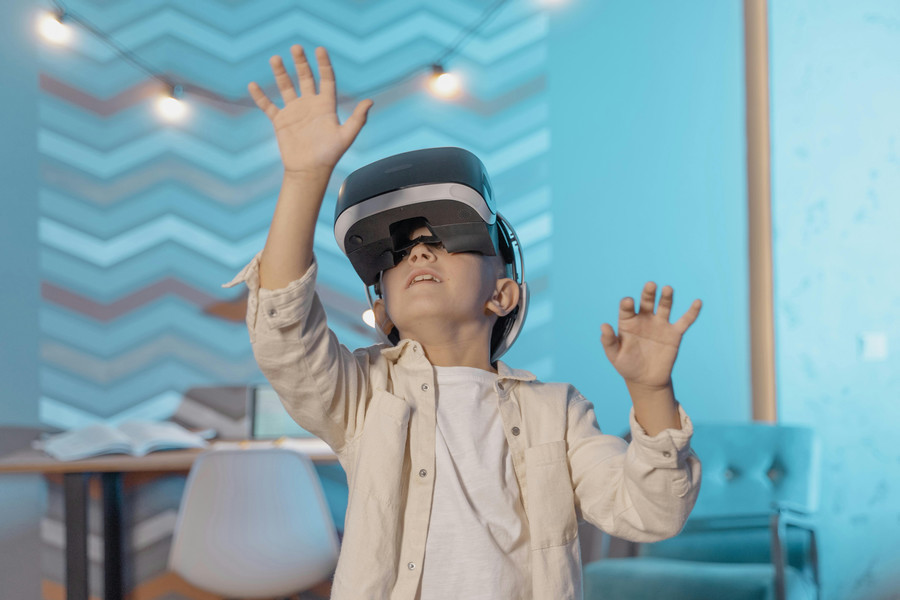
Our team developed a virtual reality program that detects when a child with cerebral palsy tries to move their arm, and responds by gently activating their forearm muscles — helping the brain and body practice working together.
This study aims to find out whether adding this brain-reading technology to an existing virtual reality program makes it more effective at improving arm and hand use in children with cerebral palsy.Eligibility Survey
Our research team is looking for children with cerebral palsy (CP), ages 6–17, with difficulty moving one or both arms.
To register for the study, please use the following link or reach out to our research team's principal investigators.
More Details
At the VR camp, children will play virtual reality games that encourage them to use both hands together. The goal is to make rehabilitation fun and social, like a camp experience with other kids.
The camp will take place at MMI during the summer and run for 2 consecutive weeks, during which children will play VR games for about 4 hours each day.
If assigned to a group that measures brain activity during the games, your child will wear a comfortable cap that records brain activity, and small sensors may gently stimulate arm muscles. These procedures are safe and non-invasive.
Each child will work one-on-one with a trained team member to make sure they feel comfortable and supported.
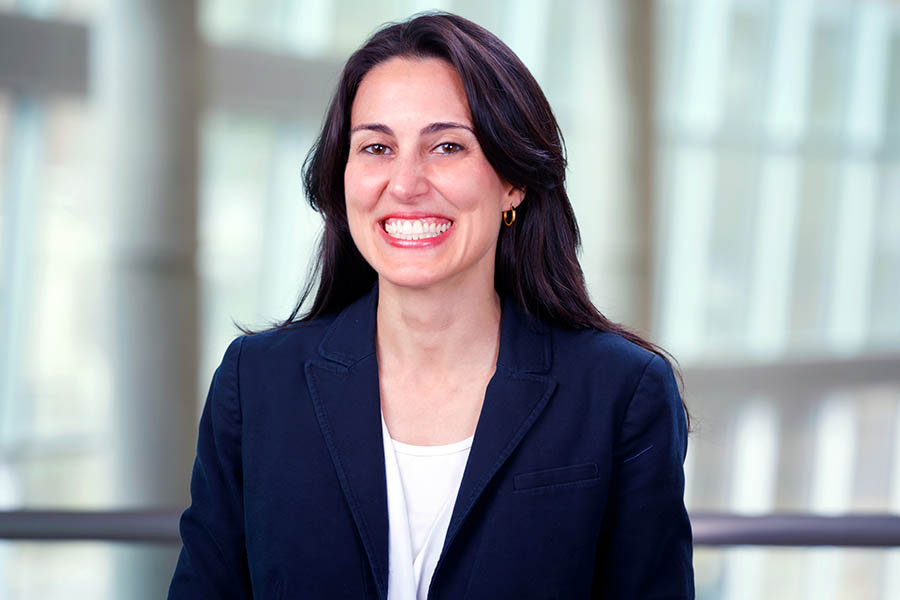
Andrea Baraldi Cunha, PT, PhD
Assistant Professor, Department of Physical Therapy
Director, Play Lab
Physical Therapist, Department of Physical Therapy
Primary Researcher
Find More Studies
Be a part of the next discovery and help advance knowledge and treatment that transforms lives. Browse our other research studies to find topics meaningful to you.