Outreach: Engaging Nebraska’s academic, community and workforce leaders
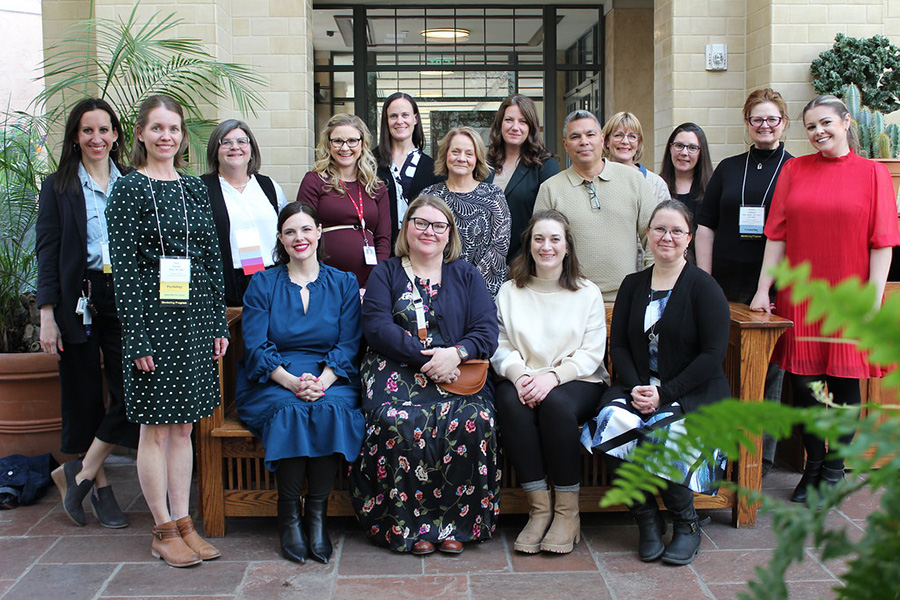
NEBHEP members pose for a picture at BHECN's 2025 Annual Awards dinner.
A unique BHECN partnership among graduate-level education programs connects professionals from multiple disciplines to strengthen Nebraska’s behavioral health workforce—an example of the Nebraska Model’s Outreach Pillar in action.
Formed in 2016, the partnership—called the Nebraska Behavioral Health Education Partnership (NEBHEP)—was created to increase awareness of the statewide need for behavioral health services and to provide a unified voice for behavioral health education programs.
NEBHEP’s effectiveness has since caught national attention. BHECN presented about the partnership at the 2024 National Academy for State Health Policy (NASHP) Conference.
There was initial skepticism about how effective NEBHEP could be, as many participants also competed for students. It quickly became clear, however, that the partners had many areas in which they could collaborate.
Connecting unlikely partners is one of the most innovative aspects of NEBHEP, said Kati Cordts, PhD, BHECN’s deputy director (right). In her role, Dr. Cordts oversees NEBHEP, which is composed of 20 academic institutions that provide graduate-level behavioral health education in Nebraska.
David Hof, EdD, a counseling professor at the University of Nebraska at Kearney, said one simple yet impactful way NEBHEP has fostered collaboration is through referring potential students to each other’s programs.
“Through the partnership, I have gotten to know other counseling programs in Nebraska, and there are times when our program doesn’t have room for more students that I recommend they apply to other programs at different institutions,” Dr. Hof said. “The bottom line is, we need to get more students trained and into the workforce. In that regard, we are all collaborators when it comes to caring for those who need our services.”
Input from partners has also helped BHECN create educational programs and other offerings designed to meet key state workforce needs, Dr. Cordts said. Those programs include:
- Financial support for behavioral health students interested in working in rural and underserved areas, as well as in corrections settings;
- BHECN’s Lifelong Learning Fund, which supports professional development opportunities for behavioral health students and professionals; and
- BHECN’s Student Advisory Board, which allows students to provide input regarding BHECN programs and initiatives—an idea born from conversations with NEBHEP partners.
As part of its overarching outreach strategy, BHECN has created and continues to strengthen similar networks in other areas, including:
- Nebraska Behavioral Health Training Partnership, a network of 11 organizations across the state that work with BHECN to provide training opportunities for behavioral health trainees and students;
- Nebraska Behavioral Health Workforce Partnership, composed of several organizations throughout the state that collaborate to create a statewide behavioral health workforce development strategy; and
- Behavioral Health Workforce Center Alliance, a coalition of organizations from across the country that come together to identify and share best practices for strengthening state behavioral health workforces.
BHECN also is forming a network of individual providers built from connections made during the BHECN ARPA Awards program. This network will help BHECN maintain open lines of communication with providers statewide to inform discussions about workforce development needs.
“NEBHEP has become a powerful network and an invaluable resource to us in our mission to grow the state’s workforce,” said Dr. Cordts. “It also serves as a model for our outreach work as forging similar connections with other communities will undoubtedly benefit Nebraska’s behavioral health workforce and the people it serves long into the future.”