Professional Support: Retaining and Supporting Behavioral Health Providers
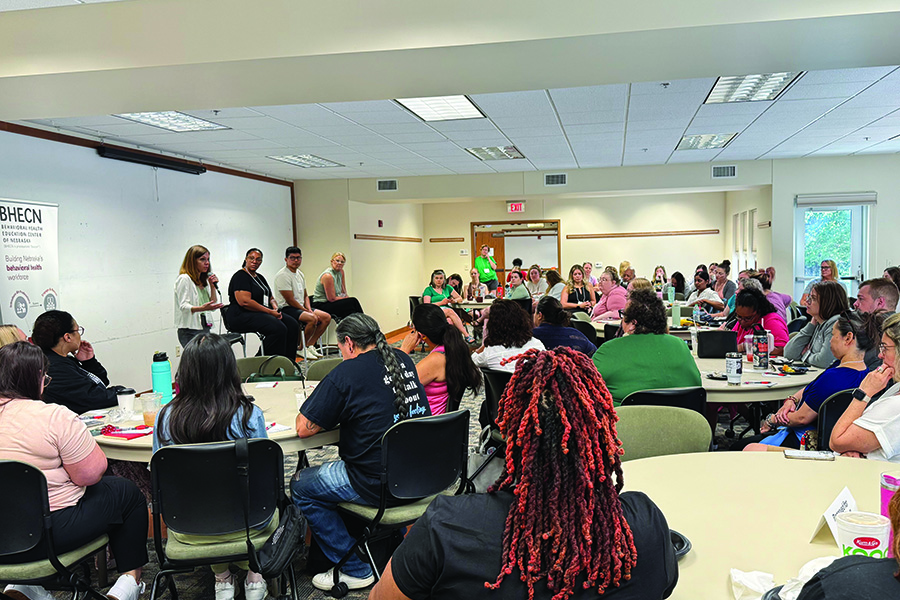
BHECN Director Marley Doyle, MD, speaks at a provider workshop near Omaha.
Disconnection and burnout are two common issues contributing to behavioral health workers leaving the field. Long hours spent in sessions treating clients can lead to isolation and fatigue.
To help address these concerns, BHECN has hosted a series of networking events over the past two years. These events have included provider workshops that combined continuing education and self-care opportunities with networking sessions, giving attendees the chance to connect with other professionals.
“Connecting providers with each other is an important way to help ensure they feel supported and avoid the isolation and burnout that truly harm our workforce and our ability to meet the state’s behavioral health needs,” said Ciara Warden, LISW, director of BHECN East, which hosted a provider workshop near Omaha this past summer. The response from providers who attended was overwhelmingly positive, she said.
“The comments and feedback from attendees clearly showed that events such as these can help remedy the isolation and fatigue that confront those who work in these fields, while at the same time helping them gain important skills they need to continue doing their jobs,” Warden said.
A similar event held by BHECN Southeast later in the year garnered comparable responses, said Denise Pecha, LCSW, associate director for network initiatives (right).
Given the success of these events, plans are underway for BHECN’s other four sites — BHECN Northeast, BHECN Panhandle, BHECN Central, and BHECN Southwest — to hold similar workshops, Pecha said.
In addition to these workshops, BHECN supports professionals through other continuing education offerings and financial assistance via the Lifelong Learning Fund (LLF). Professionals can apply for LLF support to attend conferences and trainings that contribute to their ongoing professional development.
Several projects funded through the BHECN ARPA Awards Program also were designed to help alleviate burnout and support professionals currently working in the field. Evaluation of these projects is underway, but preliminary feedback indicates that the support provided to behavioral health professionals was effective in helping combat isolation and burnout. Some of these professional support initiatives may continue with BHECN funding once the ARPA project concludes at the end of this year.
“The professional support pillar of the BHECN model is designed to ensure that our current workforce – the lifeblood of behavioral health care in our state – has the resources it needs to thrive and provide the best care possible,” said BHECN Director Marley Doyle, MD. “Ensuring that our caretakers are supported and have access to professional development opportunities is essential to retaining and strengthening Nebraska’s behavioral health workforce.”