Seating and Wheeled Mobility

"Seating and Wheeled Mobility: A Deep Dive Into Assessment and Interventions" is a comprehensive course covering essential techniques for effective clinical assessment and the implementation of evidence-based interventions in seating and wheeled mobility.
This two-day conference taught by Michelle Lange, OTR/L, ATP, SMS, takes place starting Friday, April 17th to Saturday, April 18th, 2026 at the Munroe-Meyer Institute. The course runs from 8:30 a.m. to 4:30 p.m. both days.
Course Descriptions
Friday
Wheelchair Seating Evaluation and Recommendations
Appropriate wheelchair seating provides postural alignment and pressure distribution, optimizes trunk and head control, optimizes stability and function, and provides comfort for seating tolerance. Determining the optimal wheelchair seating system begins with a mat assessment, determining specific positioning challenges, required postural support and seating angles, and then matching those parameters to specific product features.
This course will systematically address common wheelchair positioning challenges of the pelvis, trunk, lower extremities, upper extremities, and the head. Seating strategies to address each positioning challenge will be presented in a functional context, and case studies will be used throughout. Hands-on opportunities will be included. This intermediate course is designed primarily for occupational and physical therapists who work with people who require wheelchair seating.
Saturday
Wheelchair Mobility: Evaluation and Recommendations for Adaptive Strollers, Manual Wheelchairs, and Power Mobility Options
Mobility bases include adaptive strollers, manual wheelchairs, power mobility devices, and power wheelchairs. A mobility base supports the seating system and provides dependent or independent mobility. Independent mobility is critical for overall development, function, and participation.
Base features must be determined such as:
- growth
- accessibility considerations (i.e., folding for transport)
- seat functions (i.e., tilt)
- configuration (i.e., seat to back angle)
- postural management (i.e., ability to change position within the mobility base)
- dynamic seating (i.e., to diffuse client force)
If a power wheelchair is required, the evaluation must determine the ability of the client to drive and the optimal driving method.
This course will systematically move through a hierarchy of mobility options, assessment, and product features. Case studies will be used throughout, and hands-on opportunities will be included.
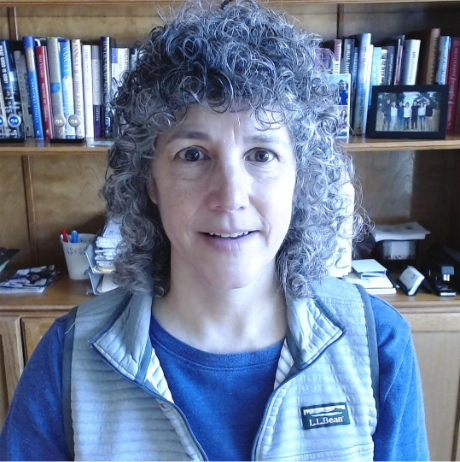
Instructor
Michelle Lange, OTR/L, ATP/SMS, is an occupational therapist with over 38 years of experience and has been in private practice, Access to Independence, for over 19 years where she currently focuses on education and consultation. She is a well-respected lecturer, both nationally and internationally, and has authored numerous texts, chapters, and articles. She is the co-editor of Seating and Wheeled Mobility: A Clinical Resource Guide (1st & 2nd editions).
Michelle is a Rehabilitation Engineering and Assistive Technology Society of North America Fellow and a RESNA certified ATP and SMS. She is also a member of the Clinician Task Force.
Cost: $125.00
Lunch and snacks will be provided on both days. Space is limited, so we encourage you to register early.
Registration closes when capacity is reached.
- Apply appropriate wheelchair seating interventions for a client sitting with an asymmetrical pelvic position.
- Apply appropriate wheelchair seating interventions for a client sitting with an asymmetrical trunk position.
- Apply appropriate wheelchair seating interventions for a client sitting with the lower extremities in an asymmetrical position.
- Apply appropriate wheelchair seating interventions for a client assuming destructive postures or demonstrating uncontrolled movements of the upper extremities.
- Implement assessment strategies for a client with a suboptimal head position.
- Apply appropriate wheelchair seating interventions for a client sitting with a suboptimal head position.
- Describe mobility base categories and clinical indicators for each.
- Match individual client parameters with appropriate mobility base categories.
- Determine optimal manual wheelchair configuration for optimal self-propulsion.
- Assess a client to determine if a power wheelchair is an appropriate option.
- Describe power seating interventions and clinical indicators for each.
- Match individual client parameters with an appropriate power wheelchair driving method.
Course sponsored by Stealth Products.
Lunch and snacks on Friday sponsored by NuMotion.
Lunch and snacks on Saturday provided by UNMC's Munroe Meyer Institute Department of Physical Therapy.
Hosted by UNMC's Munroe Meyer Institute Department of Physical Therapy.
Schedule

Our Location
Access a Google Map or printable map of MMI with parking and building entrance labels (also in Spanish).