Enduring Smiles
Improving the Oral Health of Long-Term Care Residents
The Enduring Smiles program is a partnership between the UNMC College of Dentistry, Nebraska Community Foundation and the Nebraska Department of Health and Human Services. The goal of this program is to:
- Inform independent older adults about the oral health issues and changes they may experience in the future.
- Train public health dental hygienists to teach oral health to elder facility staff.
- Educate direct care staff and caregivers to improve elder oral health.
Module 1
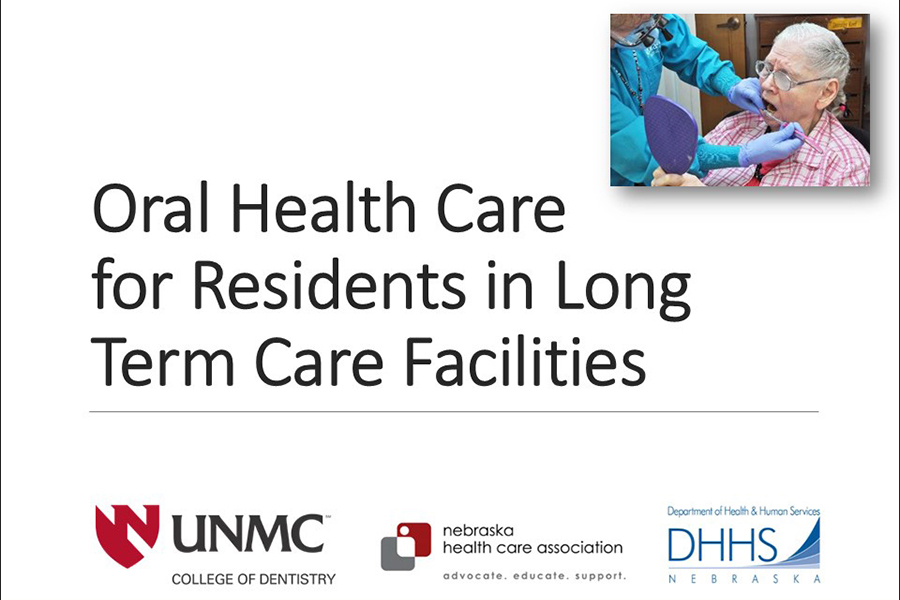
Learning Objectives:
- Increase direct care providers’ awareness of the importance of providing / supervising daily oral care for the long-term care resident
- Implement effective oral care measures for the long-term care residents and their direct care providers
- Direct care providers will be able to recognize and report oral pain and abnormal conditions in residents’ mouths to charge nurse or dentist
- Direct care providers will utilize correct behavior management and communication strategies when providing oral health care for long term care residents.
Download Powerpoint or View Powerpoint with Voiceover
Objectives | Quiz | Quiz Answers | Evaluation | Certificate of Completion
Module 2
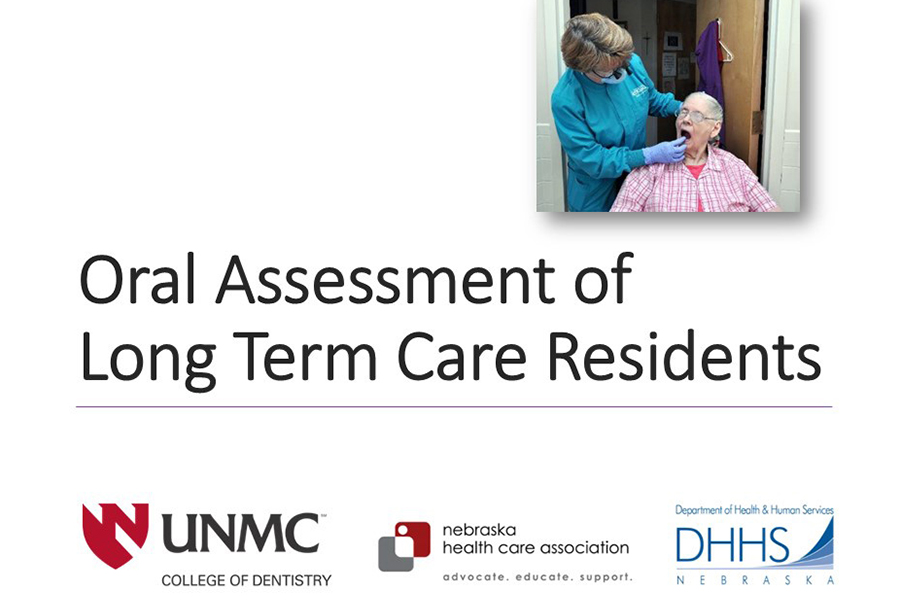
Learning Objectives:
- Direct care providers will be able to perform an oral health assessment, identifying normal anatomy and conditions
- Direct care providers will be able to recognize and report oral pain and suspicious / abnormal conditions in residents’ mouths to charge nurse and/or dentist
- Direct care providers will utilize appropriate behavior management and communication strategies when assessing the residents’ oral cavity.
Download Powerpoint or View Powerpoint with Voiceover
Objectives | Quiz | Quiz Answers | Evaluation | Certificate of Completion
Module 3
Learning Objectives:
- Direct care providers will be able to identify most prescribed and common medications used by long-term care residents
- Direct care providers will be able to discuss the common oral side effects of medications
- Direct care providers will be able to identify oral symptoms and side effects in residents and bring it to the attention of the charge nurse and/or dentist
- After consultation with charge nurse or dentist, direct care providers will help residents apply or use products designed to alleviate or manage side effects
Download Powerpoint or View Powerpoint with Voiceover
Objectives | Quiz | Quiz Answers | Evaluation | Certificate of Completion
Module 4
Learning Objectives:
- Given a systemic condition, the direct care providers will be able to describe the oral and systemic relationships in the elderly
- The direct care providers will be able to recognize abnormal oral conditions and bring it to the attention of the charge nurse and/or dentist
- The direct care providers will adapt oral care to accommodate special systemic conditions in the resident
Download Powerpoint or View Powerpoint with Voiceover
Objectives | Quiz | Quiz Answers | Evaluation | Certificate of Completion
Module 5-1
Learning Objectives:
- Identify compromising conditions affecting this age group that increase oral health needs
- Discuss the oral and systemic health interconnection and emphasize why oral health matters in the geriatric population
- Understand teledentistry as a viable option to address access to dental care for this age group
- Discuss post-COVID 19 pandemic considerations in the dental office setting, and using new technology.
Download Powerpoint or View Powerpoint with Voiceover
Module 5-2
Learning Objectives:
- Discuss the symptoms of dry mouth and identify the common causes
- Identify most prescribed/common medications used by aged adults
- Understand why medication side-effects are more significant in the elderly
- Understand compromised saliva and the role it plays in increased dental disease
- Manage oral side-effects and/or alleviate symptoms with special oral care products.
Download Powerpoint or View Powerpoint with Voiceover
Module 5-3
Learning Objectives:
- Identify oral health/dental diseases in older adults
- Discuss the mouth-body connection and how dental disease may increase the risk of systemic diseases
- Understand how dental diseases and conditions can lead to nutrition deficiencies
- Discuss how nutritional deficiencies may lead to medical conditions that lead to alterations in the diet
- Understand how oral health and nutrition risk factors can lead to the inability to heal properly
- Recognize the importance of healthy eating guidelines
- Perform a comprehensive diet analysis with recommendations for improvements.
Download Powerpoint or View Powerpoint with Voiceover