Cutting-Edge Innovation and Discovery
The Child Health Research Institute is an innovative partnership between University of Nebraska Medical Center and Children’s Nebraska that was launched to change – and save – young lives.
What We Do:
- Promote the health and well-being of children.
- Discover new diseases.
- Contribute new knowledge about the mechanisms of disease.
- Translate research into new tests and novel treatments.
- Explore innovative approaches to disease prevention.
- Use resources wisely through responsible stewardship.
Mission
To provide every child an equal opportunity for a healthy life through leading-edge innovation and discovery.
Vision
To support talented CHRI researchers in innovative research and collaborative discovery to improve the health of children everywhere.
Goals
- Elevate and Integrate Research: Foster, sustain and integrate high impact pediatric research across Children's Nebraska, UNMC, partner institutions and the communities we serve.
- Develop Premier Investigators: Promote an environment that recruits, retains and advances established investigators while strategically mentoring and investing resources to drive sustained growth of early-career faculty, our future leaders in child health research.
- Ensure Our Discoveries Impact Child Health: Discoveries will be disseminated, discussed, critically reviewed and then integrated into practice in clinics, hospitals and populations to improve the health of every child and prepare each child for a fulfilling and productive life.
Message from our Executive Director
As the Executive Director of the Child Health Research Institute, I am focused on building a foundation for our investigators to successfully grow research platforms, collaborate and secure extramural funding. We will disseminate the results of our efforts to the greater pediatric scientific community to improve the health of children through research innovation world-wide. Along with UNMC and Children's, our committed sponsors, the Child Health Research Institute is poised to provide every child an equal opportunity for a healthy life.

A Closer Look
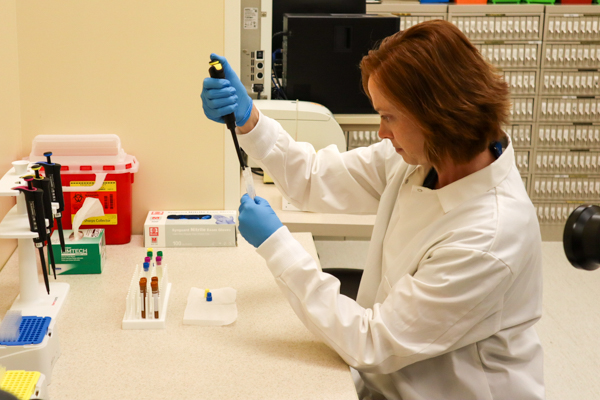
Dr. Ann Anderson-Berry talks about how the Child Health Research Institute empowers pediatric research.
By the Numbers
Our key metrics
580
Institute members
296
Current studies
1,094
Patients enrolled

About CHRI
Our people and purpose.
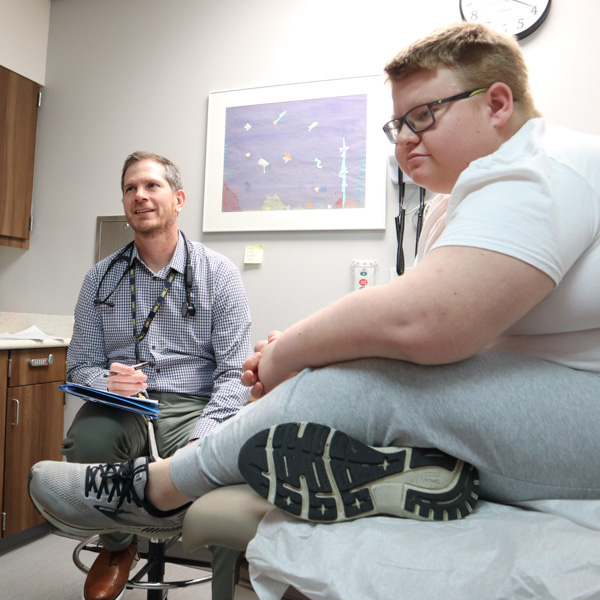
Upcoming Events
11-13-2026
CHRI Scientific Conference
News Stories
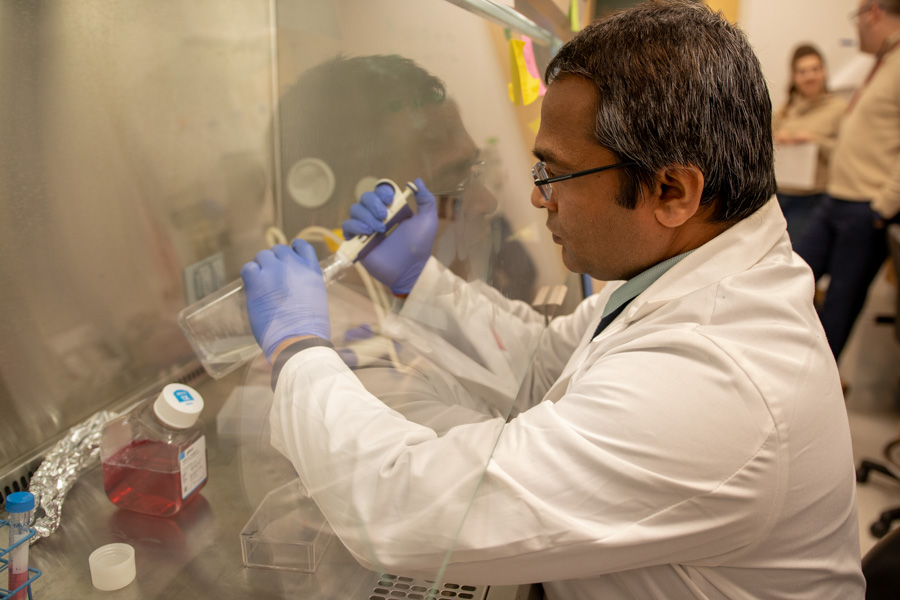
CHRI Release 2025 Annual Report
The Child Health Research Institute (CHRI) is proud to unveil its inaugural annual report for 2025. The report provides a general introduction to the institute and a detailed overview of CHRI’s achievements, including key data points, highlights from the past year, and a celebration of the individuals and partnerships driving pediatric research forward.

CHRI Scholar, Christopher Cummings, MD, PhD, Receives K08 Award to Study Epigenetic Mechanisms of Fetal Alcohol Spectrum Disorders
Christopher Cummings, MD, PhD, a geneticist at Children’s Nebraska and assistant professor in the University of Nebraska Medical Center Department of Pediatrics, has received a K08 Mentored Clinical Scientist Research Career Development Award from the National Institute on Alcohol Abuse and Alcoholism.

CHRI Researchers Karoly Mirnics, MD, PhD, and Eric Peeples, MD, PhD, Author Article on Association between Fetal Brain Development and Medications Taken During Pregnancy
A review article by a UNMC/Child Health Research Institute research team underscores and describes how altering fundamental brain development processes can be detrimental for the developing baby. The publication suggests that curtailing use of certain medications could reduce the risk for neurodevelopmental pathology in the developing fetal brain. The medications studied include some statins, antidepressants, anxiety medications and cardiovascular drugs.
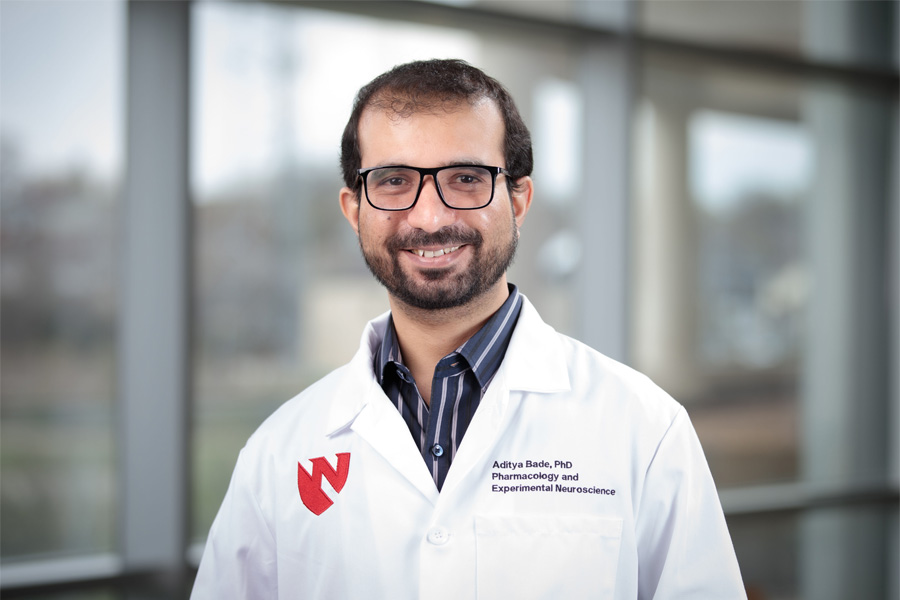
Research of Aditya Bade, PhD, Receives R01 and R21 Grants
Child Health Research Institute member, Aditya Bade, PhD, assistant professor, Department of Pharmacology and Experimental Neuroscience, recently received notice that his research has received an R01 grant and a R21 grant. His project, "Synergistic Effect of Nicotine and Antiretrovirals on Placental Development" received an R01 grant from the National Institutes of Health and National Institute on Drug Abuse (NIH/NDA). His R21 project is supported by the Eunice Kennedy Shriver National Institute of Child Health and Human Development (NIH/NICHD). His projects seeks to develop novel chemical exchange saturation transfer (CEST) magnetic resonance imaging (MRI) technique to non-invasively identify antiretrovirals (ARVs)-induced developmental neuronal impairments in rodent embryo brain during gestation with a goal of unraveling altered metabolites as early-stage biomarkers.

New Study Tests Use of Aquatic Treadmill to Improve Walking Motion in Children with Cerebral Palsy
Could the stabilizing effects of water help children who walk with an irregular gait to find a more stable stride? In May, Child Health Research Institute members at the University of Nebraska Omaha (UNO) published results of a study evaluating an aquatic treadmill environment to improve walking biomechanics. The work was published in the journal Sensors. The investigative team was led by Brian Knarr, PhD, and David Kingston, PhD, both assistant professors in the Department of Biomechanics at UNO.
Research and More