Panagiotis Koutakis, MS, PhD, FAHA
Associate Professor, UNMC Department of Cellular and Integrative Physiology
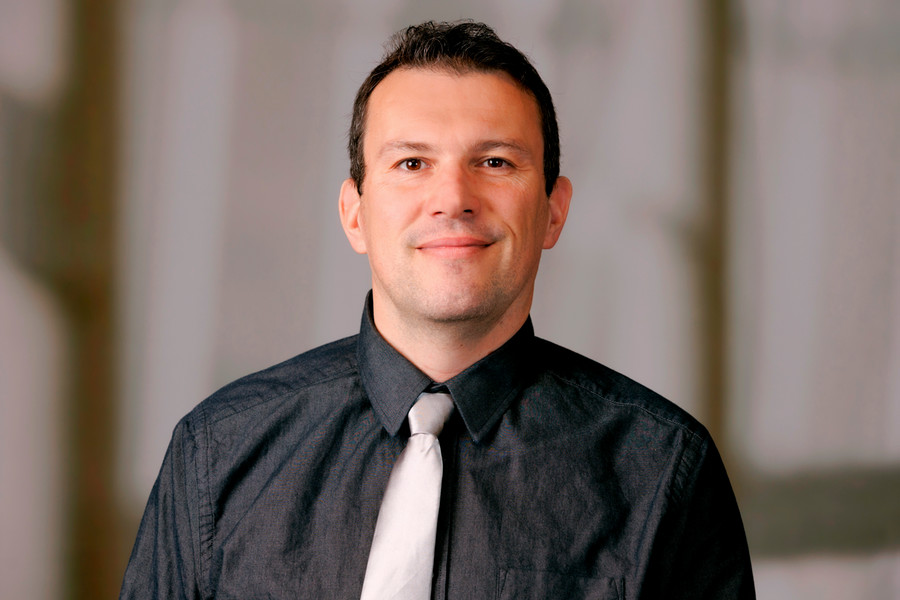
Dr. Panagiotis Koutakis is a muscle physiologist whose research program centers on the pathophysiology of cardiovascular disease. His laboratory investigates how cycles of ischemia and reperfusion injury elevate reactive oxygen species, impair mitochondrial bioenergetics, and drive progressive oxidative damage in gastrocnemius myofibers. A major focus of his research is the epigenetic and post-transcriptional regulation of the peripheral artery disease (PAD) myopathy, particularly the role of microRNA-210 (miR-210) as a master hypoxia-responsive regulator of mitochondrial function and oxidative stress, with translational implications for patient stratification and novel therapeutic targets.
Dr. Koutakis' program has expanded into the development of three-dimensional muscle-vascular organoid systems and bioreactor platforms that recreate the physiological and ischemic microenvironment of PAD-affected limb tissue, enabling the study of endothelial-smooth muscle-myofiber crosstalk under controlled hemodynamic conditions. These bioengineered platforms are being used to interrogate how hypoxia, oxidative stress, and TGF-β–driven fibrotic signaling disrupt the muscle-vascular unit, and to screen potential therapeutic interventions, including miRNA-based strategies, in a human-relevant context.
Complementing this mechanistic work, Dr. Koutakis employs multiomics approaches (transcriptomics, DNA methylomics, and metabolomics) to map systemic and tissue-level molecular signatures of PAD progression, and has documented how these biochemical disruptions translate into measurable deficits in gait biomechanics, including reduced joint torques, and powers. Together, this integrated research program, spanning molecular biology, tissue bioengineering, and functional physiology, seeks to define the mechanisms of PAD-related tissue injury and translate these findings into novel therapeutic strategies that restore muscle-vascular function and improve patient outcomes.
- PhD: University of Nebraska Medical Center, 2014.
- MS: University of Nebraska Medical Center, 2009.
- BS: Aristotle University, 2005.
- Postdoctoral Fellow: University of Nebraska Medical Center, 2015-2016.
Peripheral Artery Disease Pathophysiology
- Ischemia-induced skeletal muscle myopathy, with a focus on gastrocnemius oxidative damage as a predictor of long-term survival
- Structural degeneration of the desmin cytoskeletal network and fiber-type selective mitochondrial dysfunction in PAD limb muscle
Oxidative Stress & Mitochondrial Biology
- Mechanisms by which ischemia-reperfusion elevates reactive oxygen species and impairs mitochondrial bioenergetics in skeletal muscle
- Effects of limb revascularization on oxidative stress markers and muscle recovery
miRNA Biology & Epigenetics
- Role of microRNA-210 as a hypoxia-responsive regulator of mitochondrial function and oxidative stress in PAD patients
- miRNAs as diagnostic biomarkers and therapeutic targets in vascular disease
Muscle-Vascular Organoids & Bioreactor Systems
- Development of 3D muscle-vascular organoid platforms to model the PAD ischemic microenvironment
- Bioreactor-based systems to study endothelial–smooth muscle–myofiber crosstalk under hemodynamic and hypoxic conditions
Multiomics & Translational Genomics
- Integration of transcriptomics, DNA methylomics, and metabolomics to map molecular signatures of PAD progression
- Identification of hypoxia-driven epigenetic dysregulation in ischemic skeletal muscle
Scholar of Alexander S. Onassis Public Benefit Foundation
American Heart Association Pre-Doctoral Fellowship (13PRE13860010)
American Heart Association Postdoctoral Fellowship (15POST25520004)
American Heart Association Scientist Development Grant (17SDG33630088)