High Risk Organisms
Santarpia Lab
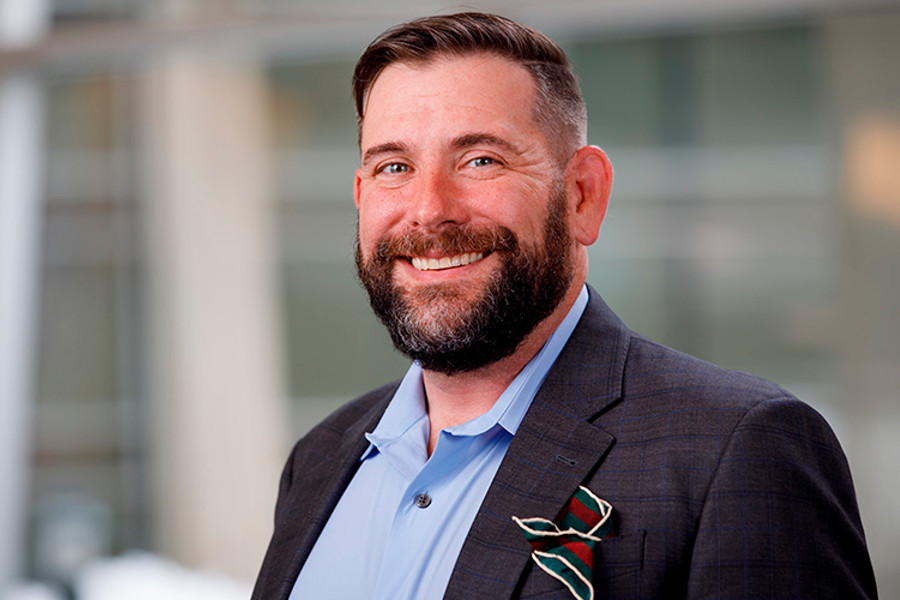
Joshua Santarpia, PhD
Professor, UNMC Department of Pathology, Microbiology and Immunology
Research Director, Chemical and Biological Programs, National Strategic Research Institute
The laboratory of Dr Santarpia works to understand the role of aerosols in the transmission of disease. In particular his lab has worked to develop an understanding of the role aerosols play in the transmission of SARS-CoV-2 and to characterize the transport of aerosol in built environments such as hospitals, schools, work environments and transportation.
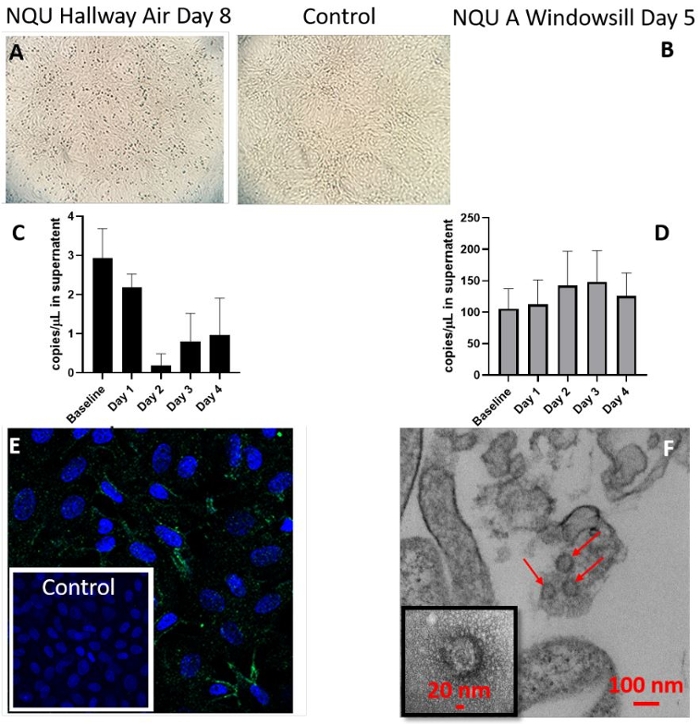
Images and graph describe the results of cell culture of two environmental samples taken from the National Quarantine Unit at UNMC during the SARS-CoV-2 pandemic.
The two samples: An air sample from the unit's hallway on day 8 (A,C, and E), and a windowsill in the unit on day 1 (B,D, and F). Cytopathic effect observed in these samples (A-B) is generally mild, compared to the control (top center) which had no environmental sample added. RT-qPCR from daily withdrawals of 100 µL of supernatant from the cell culture of each sample indicates changes in viral RNA in the supernatant throughout cultivation.
The hallway air sample indicates a decrease in RNA concentration in the supernatant over the first 2 days, consistent with the withdrawal of supernatant for analysis. Increase in concentration is observed on both days 3 and 4 (C). The windowsill sample showed stable and possible increasing viral concentrations for the first 3 days, despite the withdrawal of supernatant for analysis (D).
Immunofluorescent staining of the hallway air sample indicates the presence of SARS-CoV-2, after 3 days of cell culture (E), as compared to control cells (inset), which were not exposed to any environmental sample. TEM images of the lysates from the windowsill culture (F) clearly indicate the presence of intact SARS-CoV-2 virions, after 3 days of cell culture.