Shen Lab
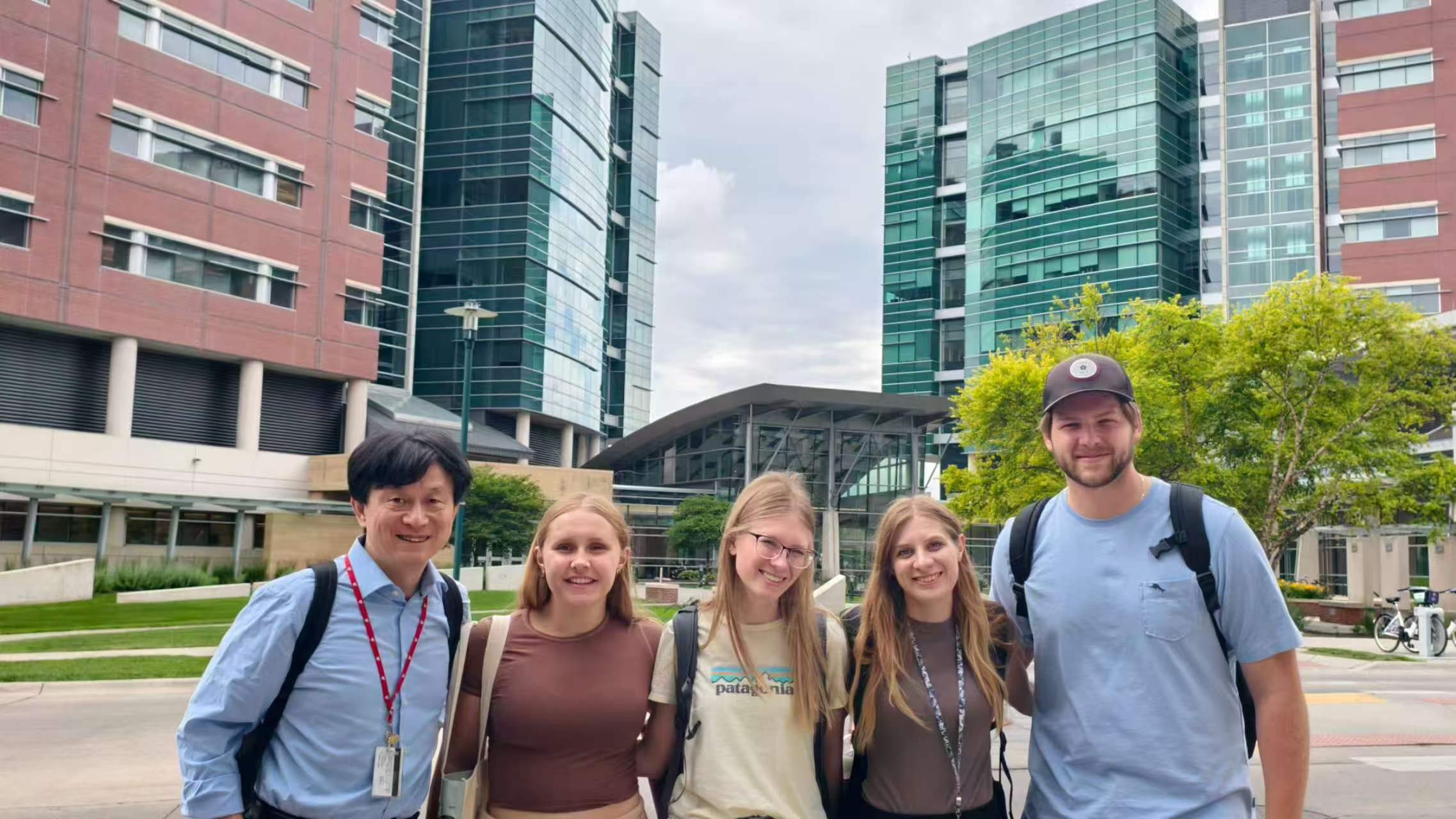
The Shen Laboratory investigates the cellular, molecular, metabolic, and neural-circuit mechanisms underlying epilepsy and associated neurological disorders, with the goal of developing new strategies for disease prevention and treatment. Our research focuses on how alterations in adenosine and neurotransmitter signaling, perineuronal-net and extracellular-matrix plasticity, neuroinflammation, and brain network function contribute to epileptogenesis, neurological injury, and associated comorbidities, while also exploring the broader roles of adenosine metabolism and signaling in cancer biology. By integrating mechanistic studies with physiological, molecular, imaging, and biomarker approaches, we aim to identify novel therapeutic targets and translational strategies to prevent neurological injury, improve recovery, and modify disease progression.
Lab Contact Information
Current Members

Trey Carlson, BS
Medical Student Researcher
Cora Dietrich
Undergraduate Research Student
Patrick Hanni, PhD
Postdoctoral Research Associate
Grace Schavee, BA
Research Assistant
Lab Features
- Epilepsy, epileptogenesis, SUDEP, and epilepsy-associated comorbidities
- Perineuronal nets (PNNs), OTX2 signaling, and extracellular matrix plasticity
- Adenosine metabolism and adenosinergic signaling in neurological disorders and cancer
- Glycinergic and glutamatergic neurotransmission in developmental and epileptic encephalopathies
- Neuroinflammation, neurological injury, and neuroprotection
- Preclinical mouse models of epilepsy and neurological disease
- Stereotaxic neurosurgery and intracranial injections
- Viral-mediated gene manipulation, chemogenetic, and optogenetic approaches
- EEG/EMG recording and quantitative EEG analysis
- Seizure, sleep, and cardiorespiratory monitoring
- Behavioral and neurocognitive testing
- Immunohistochemistry and immunofluorescence
- Confocal microscopy and quantitative image analysis
- Molecular biology, PCR, and genotyping
- Metabolomic and biochemical analyses
- NIH/NIGMS Center of Biomedical Research Excellence (COBRE), CoNDA Research Project Leaders Program (P20GM130447) | 2026.2–2029.1
- Child Health Research Institute (CHRI) Award | 2026.5–2027.4
- Edna Ittner Pediatric Research Support Fund | 2026.7–2027.6
- The Shen Laboratory received an NIH/NIGMS-funded CoNDA COBRE Research Project Leaders award to investigate perineuronal-net mechanisms in epilepsy and neurobehavioral dysfunction.
- The laboratory received research support from the Child Health Research Institute (CHRI) for studies of epilepsy and associated neurological dysfunction.
- The laboratory received the Edna Ittner Pediatric Research Support Award to advance preclinical epilepsy research.
- The laboratory expanded collaborative studies using MRI/MRS, metabolomics, and neural-circuit approaches to investigate epilepsy and associated neurological dysfunction.
- New medical and undergraduate research trainees joined the laboratory through UNMC summer research programs.
- Shen HY, Balzekas I, Jung Y, et al. A model of new-onset refractory status epilepticus (NORSE) using intrahippocampal kainic acid in adolescent mice. Epilepsy Research. 2026;222:107754. PMID: 41762487.
- Shen HY, Baer SB, Gesese R, et al. Adenosine-A2A receptor signaling plays a crucial role in sudden unexpected death in epilepsy. Frontiers in Pharmacology. 2022;13:910535. PMID: 35754505.
- Shen HY, Weltha L, Cook JM, et al. Sarcosine suppresses epileptogenesis in rats with effects on hippocampal DNA methylation. Frontiers in Molecular Neuroscience. 2020;13:97. PMID: 32581708.
- Shamloo B, Kumar N, Owen RH, et al. Dysregulation of adenosine kinase isoforms in breast cancer. Oncotarget. 2019;10(68):7238–7250. PMID: 31921385.
- Shen HY, Vliet EV, Bright KA, et al. Glycine transporter 1 is a target for the treatment of epilepsy. Neuropharmacology. 2015;99:554–565. PMID: 26302655.
- Matos M, Shen HY, Augusto E, et al. Deletion of adenosine A2A receptors from astrocytes disrupts glutamate homeostasis leading to psychomotor and cognitive impairment: relevance to schizophrenia. Biological Psychiatry. 2015;78(11):763–774. PMID: 25869810.
- Shen HY, Sun H, Hanthorn MM, et al. Overexpression of adenosine kinase in cortical astrocytes and focal neocortical epilepsy in mice. Journal of Neurosurgery. 2014;120(3):628–638. PMID: 24266544.
- Shen HY, Singer P, Lytle N, et al. Adenosine augmentation ameliorates psychotic and cognitive endophenotypes of schizophrenia. Journal of Clinical Investigation. 2012;122(7):2567–2577. PMID: 22706302.
- Lazarus M, Shen HY, Cherasse Y, et al. Arousal effect of caffeine depends on adenosine A2A receptors in the shell of the nucleus accumbens. Journal of Neuroscience. 2011;31(27):10067–10075. PMID: 21734299.
- Shen HY, Lusardi T, Williams-Karnesky RL, et al. Adenosine kinase determines the degree of brain injury after ischemic stroke in mice. Journal of Cerebral Blood Flow & Metabolism. 2011;31(7):1648–1659. PMID: 21427729.
- Theofilas P, Brar S, Stewart KA, et al. Adenosine kinase as a target for therapeutic antisense strategies in epilepsy. Epilepsia. 2011;52(3):589–601. PMID: 21275977.
- Dai SS, Zhou YG, Li W, et al. Local glutamate level dictates adenosine A2A receptor regulation of neuroinflammation and traumatic brain injury. Journal of Neuroscience. 2010;30(16):5802–5810. PMID: 20410132.
- Shen HY, Li T, Boison D. A novel mouse model for sudden unexpected death in epilepsy (SUDEP): Role of impaired adenosine clearance. Epilepsia. 2010;51(3):465–468. PMID: 19674057.
Kylie Hinrichs
SURP Undergraduate Research Student, 2025
Current Student, Washburn University
Alexis Shindhelm
UNMC MD/PhD Rotation Student, 2024
Kate Zachary
Research Technician, 2025–2026
SURP Undergraduate Research Student, 2024
Current UNMC Medical Student
Research Statement
The long-term goal of the Shen Laboratory is to understand how neuromodulatory signaling, neurotransmitter homeostasis, extracellular-matrix remodeling, neuroimmune mechanisms, and neural-circuit dysfunction contribute to epilepsy and associated neurological disorders, while exploring the broader roles of adenosine metabolism and signaling in cancer biology. By combining mechanistic and translational approaches, we seek to identify biomarkers and therapeutic targets for the prevention and treatment of neurological disease and to define how adenosine-related mechanisms, including adenosine kinase signaling, may contribute to cellular proliferation and tumor-associated molecular pathways. Together, these studies leverage our longstanding expertise in adenosine biology to advance therapeutic development across neurological disease and cancer.