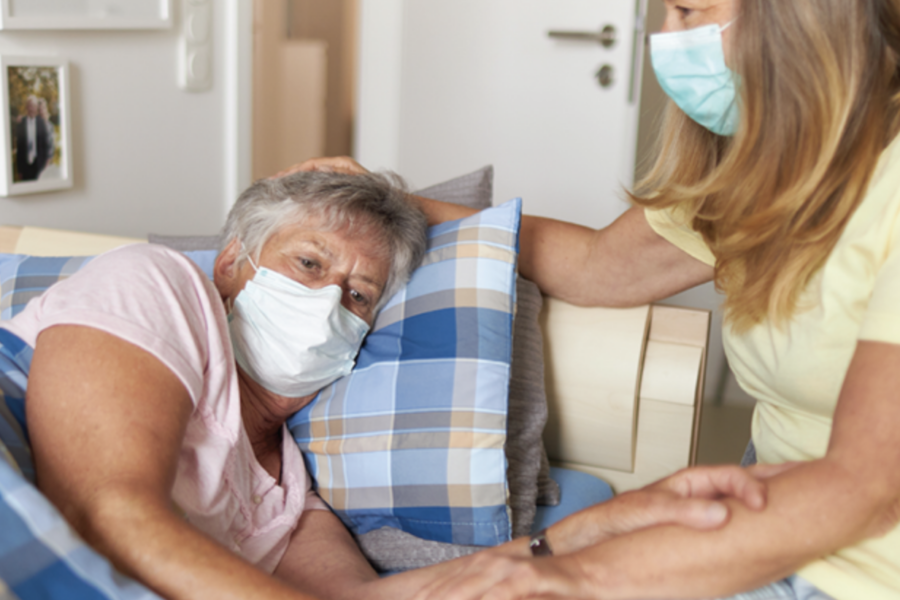
JAMA After exposure to someone with SARS-CoV-2 infection, an uninfected person’s risk of infection is cut in half if both people wore masks, researchers reported in Emerging Infectious Diseases.
Public health authorities in Johnson County, Iowa, launched their study after the Iowa Department of Public Health (IDPH) in September 2020 overrode the CDC’s recommended 14-day quarantine following exposure to SARS-CoV-2. (The CDC has since loosened its quarantine recommendations.) Instead, the IDPH advised that, if both were properly masked, contacts of people with the infection could just monitor their symptoms for 14 days rather than quarantine.
Concerned about an increased risk of transmission, the authorities set out to examine masks’ efficacy in reducing transmission and whether the IDPH’s relaxed recommendation was appropriate. Between October 2020 and February 2021, they collected data on mask use among 431 SARS-CoV-2 cases and 966 contacts with conclusive SARS-CoV-2 test results.
About 1 in 5 contacts tested positive for SARS-CoV-2. The infection rate rose to about 26% if the infected person, their contact, or both were unmasked but dropped to about 13% if both were masked. The presence or absence of symptoms didn’t affect infection rates among contacts. However, nearly 26% of contacts who were with an infected person for at least 2 hours became infected compared with about 14% of contacts who spent less time.
“Despite the substantial reduction in transmission attributable to masking, the rate of transmission was still high when both parties were masked, leading us to conclude that in the absence of substantial hardship, quarantine regardless of mask use is generally preferred by public health practitioners,” the authors wrote.
Fair Use Notice
UNMC Global Center for Health Security staff curate publicly available news and information for educational and informational purposes. Brief excerpts of published articles may be displayed under principles of Fair Use, with credit and links provided to the source publications. All copyrights remain the property of their respective owners.