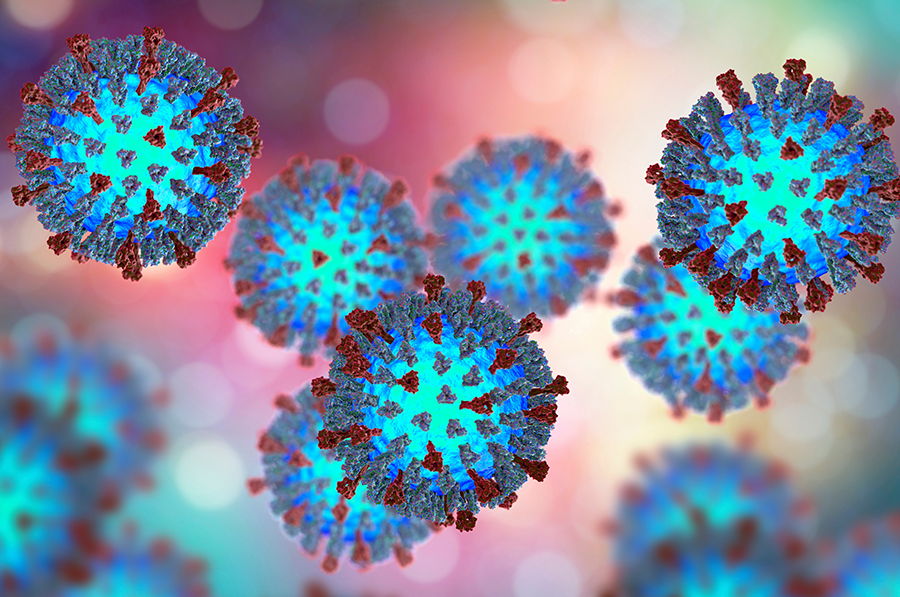
Measles is a highly contagious viral respiratory disease caused by the measles virus (Morbillivirus). It spreads easily through the air and can lead to serious complications, especially in young children and unvaccinated people. Measles is an acute viral illness characterized by fever, cough, runny nose, red eyes, and a distinctive rash that spreads over the body. Measles spreads through airborne droplets and aerosols when an infected person coughs or sneezes. The virus can remain in the air for up to two hours after an infected person leaves the area.
What to know:
- A rash appears 3–5 days after symptoms begin, starting on the face and spreading downward to the rest of the body.
- Symptoms can include pneumonia, encephalitis (brain swelling), severe diarrhea, blindness, and death. Complications are more common in children under 5, adults over 20, pregnant people, and immunocompromised individuals.
- The MMR vaccine (measles, mumps, rubella) is highly effective and the primary method of prevention.
- Due to its extreme contagiousness, measles outbreaks can occur quickly in areas with low vaccination coverage.