Geriatric Medicine Fellowship Curriculum
Our curriculum is based on the Geriatric Entrustable Professional Activities and Competencies. Training venues and activities are selected to provide fellows varied experiences in which to practice and learn the EPAs. Faculty support fellows in graduated levels of responsibility and use assessment instruments to structure evaluations of fellows and provide feedback.
Program goals include:
- Provide diverse interprofessional training environments and structured curricula. Geriatrics is the classic team sport and essentially all training environments engage fellows in team care. For example, the outpatient continuity, consult and comprehensive assessment clinics are conducted in our geriatric patient-centered medical home and the home care experience is within the VA Home Based Primary Care program.
- Foster leadership skills. For example, fellows complete team Strategies and Tools to Enhance Performance and Patient Safety (STEPPS). Also, the curriculum and experience in long-term care contain leadership training for medical directors. And fellows receive training and complete projects using plan-do-study-act cycles for practice improvement in outpatient and long-term care settings.
- Provide a variety of opportunities to participate in research and writing.
Clinical Rotations
Our fellow’s core clinical rotations include Outpatient Primary Care, Home-Based Primary Care, Geriatric Assessment Clinic, Geriatric Evaluation Management Clinic, Post-Acute and Long-Term Care, Inpatient Palliative Consults, Inpatient Geriatric Consults, Neurology (Memory Disorders), and Geriatrics Psychiatry. Fellows will also spend time with the Omaha local Program for All Inclusive Care of the Elderly (PACE).
- Gain experience in managing the spectrum of health and illness for older outpatients.
- Learn to manage complex geriatric patients in an outpatient setting.
- Understand and apply to practice the principles of geriatrics healthcare maintenance.
- Learn how to provide patient/caregiver education and discuss/set goals of care.
- Learn to perform geriatric consultations in outpatient settings.
- Improve communication skills with referring physicians.
- Improve ability to effectively co-manage patients with other specialists.
- Learn to organize and conduct a comprehensive geriatric assessment clinic.
- Master comprehensive geriatric assessment process and techniques.
- Function as an interdisciplinary team member and leader.
- Learn to prioritize evaluation and treatment in the face of complex health problems and the individual patient’s priorities.
- Assess undifferentiated cognitive dysfunction in the inpatient setting.
- Diagnose delirium, evaluate for precipitating factors, and manage associated behaviors.
- Evaluate medical decision-making capacity.
- Conduct a comprehensive fall risk assessment and recommend evidence-based interventions for fall prevention after discharge.
- Identify medications likely to contribute to delirium and/or falls in hospitalized older adults and formulate a medically appropriate plan for deprescribing guided by patient priorities.
- Define and evaluate “failure to thrive.”
- Navigate common questions regarding the appropriateness of procedures in frail elderly and implement potential interventions to decrease surgical risk.
- Describe the prevalence, prognosis, and complications of delirium.
- Discuss the epidemiology and impact of falls on older adults.
- Understand evidence surrounding tube feed use in late dementia.
- Identify quality improvement strategies for hospitalized older adults.
- Communicate potential patient safety problems that are noticed during the rotation.
- Incorporate prognosis and patient priorities into collaborative decision-making with patients and families. Lead family meetings surrounding goals of care.
- Describe models of delirium prevention
- Describe models for co-management of geriatric trauma patients.
- Review strategies to optimize transitions of care.
- Describe capabilities of post-acute care locations and determine appropriate discharge disposition for patients leaving the hospital.
- Improve skills in symptom management of patients nearing the end of life.
- Improve skills in developing advance care planning with patients, family members, and caregivers.
- Learn to deal with conflicts effectively.
- Learn to fill out death certificates correctly.
- Understand and be able to apply the Medicare Hospice admission criteria.
- Fellows will perform regulatory visits in the nursing home and see residents with acute medical problems.
- Refine skills in performing admission H&P examinations and writing orders for new residents to the nursing home.
- Serve as geriatric consultants for residents receiving Medicare Skilled nursing care and rehabilitation.
- Learn about telephone triage through routine contacts from nursing home staff and nighttime calls from the nursing home.
- Know changing social factors that impact the aged.
- Know psychological aspects of aging, including adaptability, the role of loss, maladaptive patterns of adjustment.
- Identify psychosocial contributors to depression.
- Know major medical contributors to mood disorders and their evaluation.
- Appreciation of the various presentations of mood disorders.
- Ability to identify and utilize multimodal approaches to the treatment of mood disorders including pharmacologic, ECT, psychotherapeutic, and social interventions.
- Knowledge of the major etiologies of dementia and their clinical, historical, and pathological correlates and risk factors.
- Knowledge of the medical evaluation for delirium and the reversible causes of dementia.
- Knowledge of the available treatment options for Alzheimer’s and vascular dementia, both the primary cognitive process and associated psychiatric symptoms.
- Knowledge of epidemiology, common etiologies, associated psychiatric symptoms, treatment options and prognosis of delirium.
- To expand the fellow’s fund of knowledge and skills in the evaluation and management of neurologic disease in the elderly. Primary areas of emphasis will include memory disorders, movement disorders, and cerebrovascular disease.
- Take an appropriately focused history and perform a proper neurologic examination of an older patient presenting with a common neurologic problem.
- Be able to describe normal physiologic changes in the aging nervous system.
- Be able to describe the pathophysiology of common neurologic disease of the elderly.
- Incorporate psychosocial aspects of neurologic diseases in the elderly, including: ethical/legal issues regarding neurologic problems (advance directives, guardianships, and other surrogate decision-makers) and health economics (Medicare, Medicaid, etc.) of neurologic problems.
- Be able to describe the relationship between neurological disorders and deficits in self-care function.
- Employ rehabilitation strategies in older patients with the following problems:
- Common musculoskeletal disorders and related disabilities
- Common neurological disorders and related disabilities, including stroke
- Gait and balance disorders
- Common movement disorders (eg, Parkinson’s disease)
- Limb amputation
- Questionable ability to drive safely
- Be able to identify indications for patient referrals and benefits to be gained from referrals to the following rehabilitation specialists:
- Physiatrist
- Physical therapist
- Occupational therapist
- Speech therapist
- Be able to identify and order appropriate diagnostic evaluations for physical disabilities and their appropriate use.
- Learn appropriate selection and prescription and principles of fitting canes, walkers and wheelchairs and other adaptive devices and equipment.
- Be able to describe how acute care rehabilitation hospitals differ from other rehabilitation settings, and which patients are most appropriate for admission.
- Be able to perform a geriatric assessment along with functional screening in patients' homes.
- Be able to describe the advantages of providing medical care in the elder's home.
- List the barriers and limitations of house calls.
- List equipment, supplies, and forms that are useful to bring for a home visit, (realizing that a stethoscope is often the only medical equipment that may be necessary).
- Be able to demonstrate documentation requirements for physician home visits.
- Be able to describe environmental assessment to identify hazards and barriers in the home.
- Home Safety Evaluation and recognize potential safety hazards in the home.
- Be able to describe strategies to maximize the efficiency of house calls.
- List the members of the interdisciplinary team and their roles.
- Be able to describe the values of the interdisciplinary team process to provide optimal care in the home.
- Describe situations when home care is not appropriate or safe for the elder or provider.
- List procedures to ensure the safety of the health care provider.
- Be able to describe the effect of house calls on the enhancement of the physician-patient relationship.
- Be able to describe the advanced treatment interventions that can be provided in the home setting.
- Be able to demonstrate appropriate skills as a physician consultant/member of the Interdisciplinary Team.
- Discuss the ethical issues arising between patient autonomy versus safety.
- List the definition of elder abuse and neglect and describe the role of Adult Protective Services.
Additional clinical experiences include:
- wound care
- dermatology
- osteoporosis
- community hospice care
- urology, urogynecology
- addiction medicine
Didactics and Other Educational Experiences
The fellowship program utilizes the Geriatric Review Syllabus textbook as its core didactic curriculum. The core didactics consist of roughly 60 topics ranging from current issues in aging and geriatric diseases and disorders to patient care approaches and care systems. Our faculty also present a series on medical direction and a series on quality improvement.
Fellows are required to attend weekly informal case conferences, monthly journal club and quarterly research conferences. Those interested in research will have the opportunity to attend the annual UNMC clinical research symposium.
We encourage those interested in pursuing a career in medical direction to review the details and requirements of the Mentored Certified Medical Director Program. The fellowship program offers some financial support for those who decide to participate.
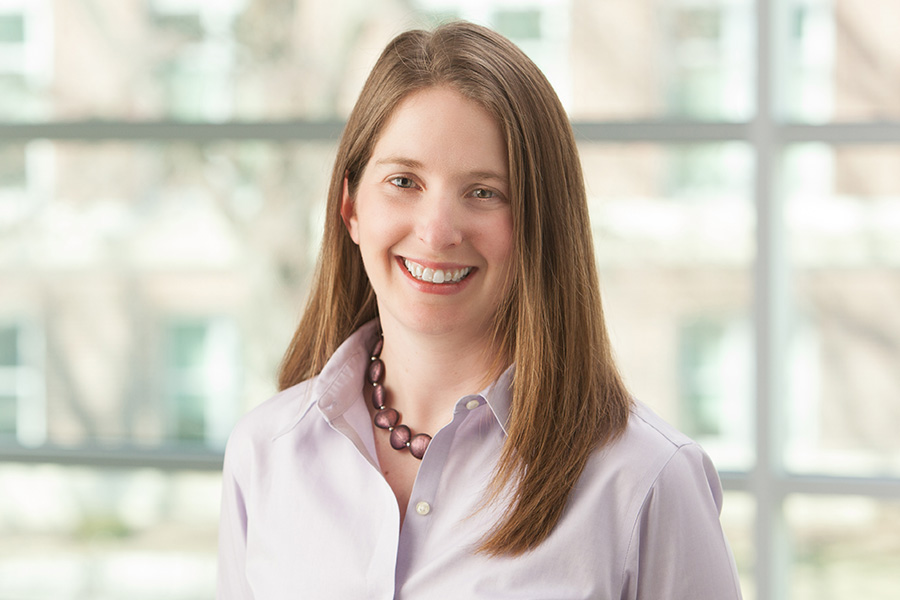
Elizabeth Harlow, MD
Geriatric Medicine Fellowship Program Director
402-559-3877