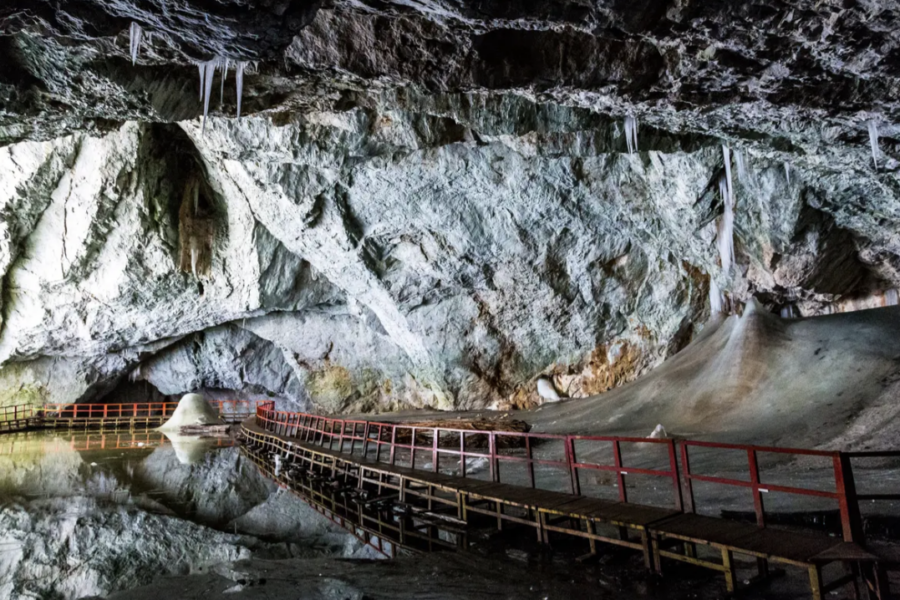
For decades, antibiotics have been humanity’s frontline defense against bacterial infections, yet these essential medications have also led to the rise of drug-resistant “superbugs.” Now, researchers have discovered an ancient strain of bacteria that managed to develop this superpower thousands of years before humans ever invented antibiotics. A study published Tuesday in the journal Frontiers in Microbiology describes Psychrobacter SC65A.3, a bacterial strain discovered frozen inside 5,000-year-old layers of cave ice in Romania. Testing revealed that SC65A.3 is resistant to 10 modern antibiotics and carries more than 100 genes linked to resistance despite never being exposed to these drugs. “Studying microbes such as Psychrobacter SC65A.3 retrieved from millennia-old cave ice deposits reveals how antibiotic resistance evolved naturally in the environment, long before modern antibiotics were ever used,” co-author Cristina Purcarea, a senior scientist at the Institute of Biology Bucharest of the Romanian Academy, said in a release.
Bacteria Frozen Inside 5,000-Year-Old Ice Cave Is Crazy Resistant to Antibiotics