Young children, older adults and people with weakened immune systems face the greatest risk of serious illness
(SACRAMENTO)
If you came down with a respiratory infection this spring that wasn’t the flu or COVID-19, it may have been a virus you’ve never heard of: Human metapneumovirus or HMPV.
The virus was first discovered in 2001 but is less well known than its viral relative, RSV (respiratory syncytial virus). Both are in the Pneumoviridae family.
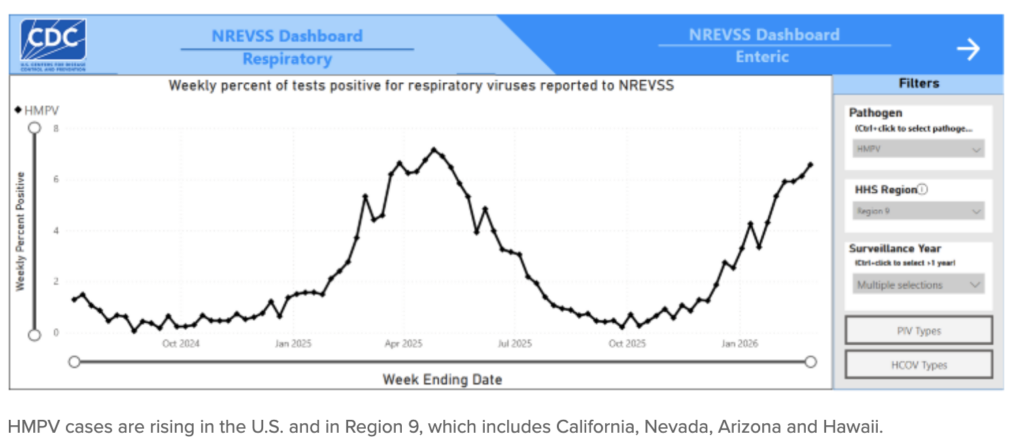
HMPV is seasonal — like the annual flu — and it is currently spiking in the U.S., according to the National Respiratory and Enteric Virus Surveillance System (NREVSS), which monitors viral activity.
WastewaterSCAN data, which tracks pathogens in wastewater, also shows high levels of HMPV in Northern California, including in Sacramento, Davis, Vallejo and San Francisco.
HMPV spreads through direct or close contact with an infected person, including exposure to respiratory droplets, large-particle aerosols, or fomites, which are contaminated objects.
Infection transmits by coughing and sneezing, close personal contact (touching or shaking hands), or touching contaminated objects or surfaces, then touching the mouth, nose or eyes.
Fair Use Notice
UNMC Global Center for Health Security staff curate publicly available news and information for educational and informational purposes. Brief excerpts of published articles may be displayed under principles of Fair Use, with credit and links provided to the source publications. All copyrights remain the property of their respective owners.