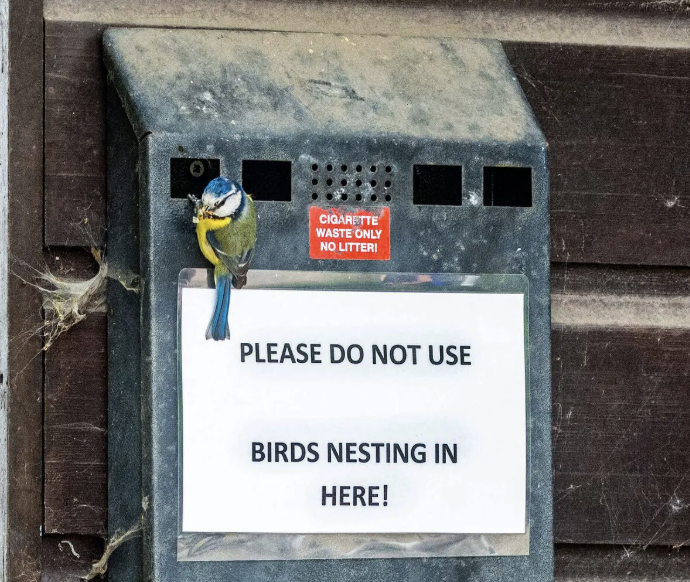
NYT Research from Poland adds to evidence from Latin American countries that compounds in used cigarette butts ward off parasites in bird nests. Darwin’s finches in the Galápagos, house finches in Mexico and song thrushes in New Zealand have all developed a curious habit: They put cigarette butts in their nests. Some songbirds in Britain are even nesting in outdoor ashtrays.
A new study adds evidence for why urban birds have picked up this preference, at least in one species: The toxins in tobacco may keep parasites at bay in the nests of blue tits, colorful birds that are found across Europe.
Cigarette butts contain about 4,000 chemical compounds, including nicotine, arsenic, polycyclic aromatic hydrocarbons and heavy metals. These compounds could ward off pests that harm birds and their offspring. The study was published this year in the journal Animal Behaviour.
Fair Use Notice
UNMC Global Center for Health Security staff curate publicly available news and information for educational and informational purposes. Brief excerpts of published articles may be displayed under principles of Fair Use, with credit and links provided to the source publications. All copyrights remain the property of their respective owners.