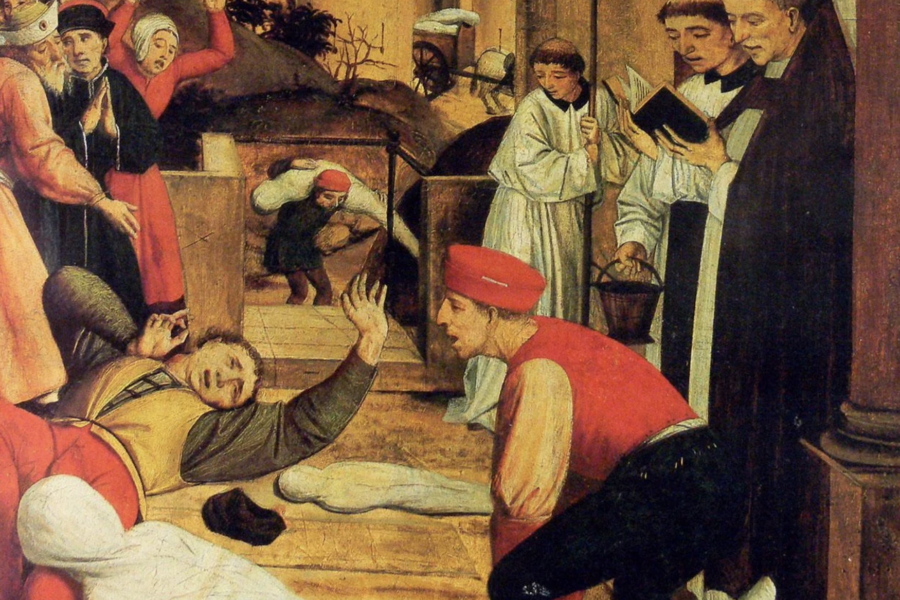
Archeology News A mass grave uncovered in the ancient city of Jerash in modern-day Jordan is offering new evidence of how one of history’s earliest pandemics reshaped life and death in the Byzantine world. Researchers have confirmed the burial as the first biomolecularly verified plague mass grave from the First Pandemic, also known as the Plague of Justinian, which spread across the Mediterranean between 541 and 750 CE. The study, published in the Journal of Archaeological Science, was led by a team from the University of South Florida. Instead of focusing only on identifying the disease itself, the researchers examined who the victims were and what their burial reveals about society during a major health crisis.
Jerash, known in antiquity as Gerasa, was once one of the region’s major urban centers. The city reached an estimated population of around 25,000 people during the 3rd century CE. By the end of the 6th century, the population had dropped to roughly 10,000. This decline placed the city in a period of social and demographic strain even before the plague burial described in the new research.
The mass grave was found in two chambers of Jerash’s hippodrome. Archaeologists documented around 230 individuals buried in tightly packed layers. The burial pattern was unusual for the period. Bodies were deposited rapidly, stacked with little attention to standard funerary customs, and placed over pottery debris in what had once been a public space. The evidence suggests the dead were buried over a very short period, likely days or weeks, during a sudden mortality crisis.
Fair Use Notice
UNMC Global Center for Health Security staff curate publicly available news and information for educational and informational purposes. Brief excerpts of published articles may be displayed under principles of Fair Use, with credit and links provided to the source publications. All copyrights remain the property of their respective owners.