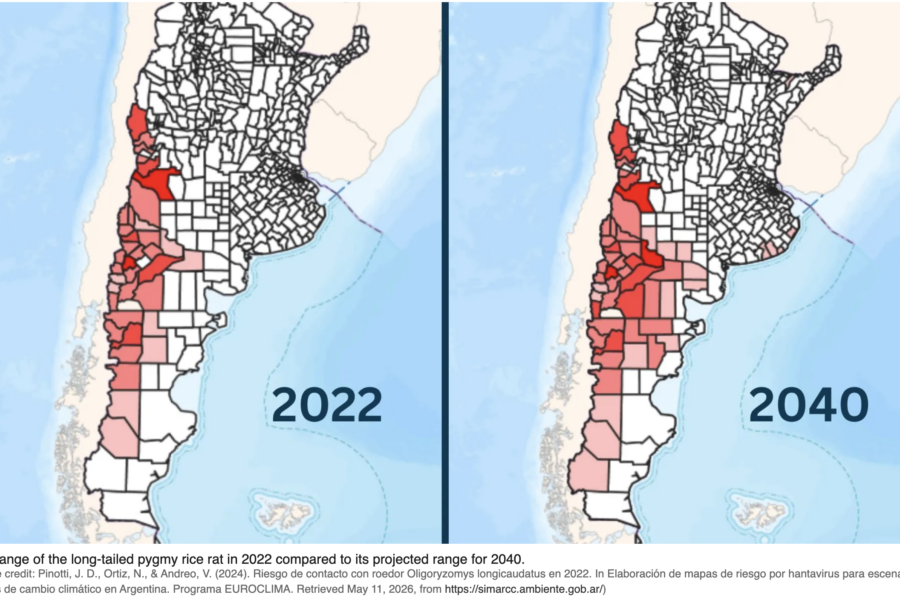
Live Science New models chart how virus-carrying rodents may spread across Argentina as climate change reshapes weather patterns. New models chart how virus-carrying rodents may spread across Argentina as climate change reshapes weather patterns. Climate change is likely to shift the distribution of virus-carrying rodents, potentially increasing the risk of spillover, when viruses make the jump from animals to humans.
This will likely expose populations to diseases that they haven’t encountered before and raise the risk of outbreaks, researchers warn.
The hantavirus cluster on the cruise ship MV Hondius has put the rodent-borne disease into the global spotlight. While countries in South America, especially Argentina and Chile, have been dealing with hantavirus for decades, there’s been a recent uptick in infections, according to the Argentine ministry of health. More than 100 cases of hantavirus disease were recorded between June 2025 and early May 2026, roughly double the number recorded in the previous year. Hantaviruses are a family of rodent-borne viruses found across the Americas, Europe and Asia. “New world” hantaviruses cause hantavirus cardiopulmonary syndrome (HCPS), characterized by headache, fever and gastrointestinal symptoms, followed by potentially life-threatening respiratory problems. The Andes virus, responsible for the cluster of cases associated with the MV Hondius, is the only hantavirus known to be transmissible between people.
Continue reading