Belonging and Community Engagement
Inspiring Excellence
The vision for the Department of Internal Medicine's Office of Belonging and Community Engagement involves institutional, regional and national leadership and recognition in four pillars: People, Culture, Leadership and Education, and Patient Care and Community Engagement.
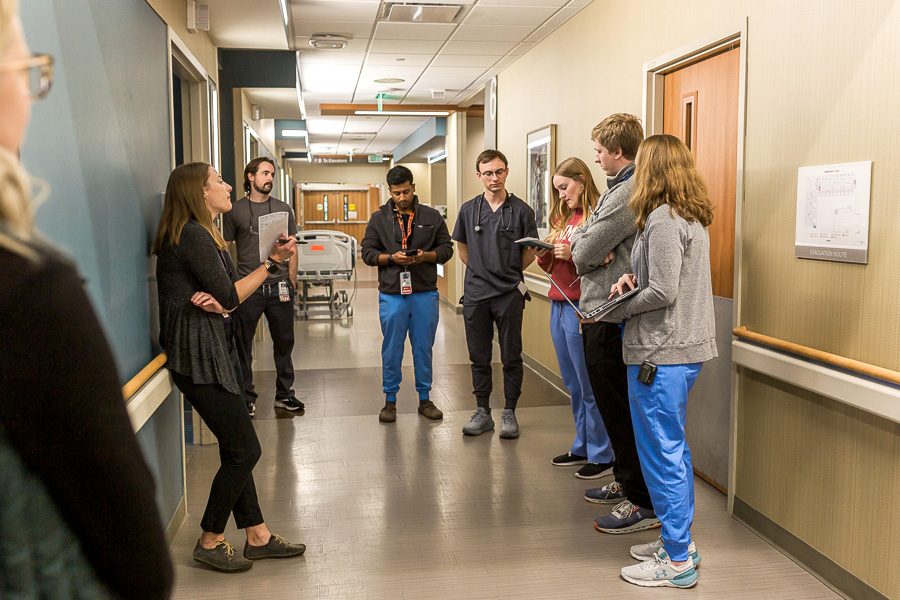
People
We are consistent in our recruitment and retention of faculty, staff and trainees that represent our community.
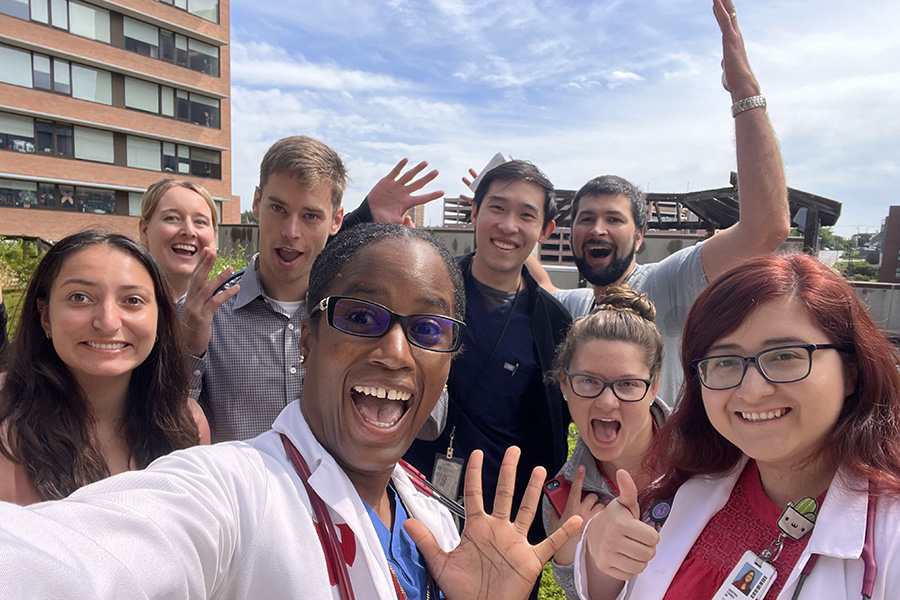
Culture
We foster a culture of belonging within the department where faculty, staff and trainees of all backgrounds can be successful when they bring their authentic selves to work.

Leadership and Education
We provide reliable leadership and education ensuring all patients and colleagues are treated with dignity and respect.
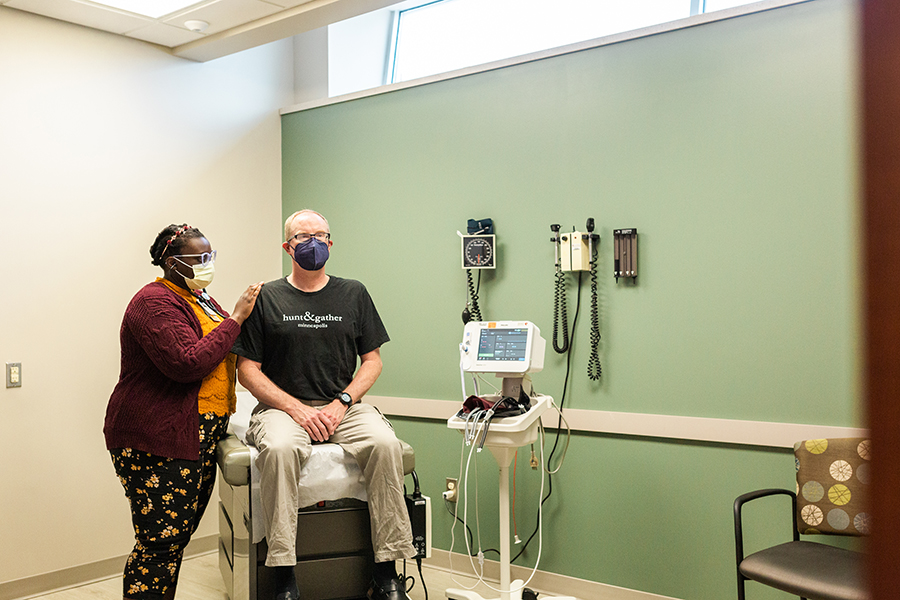
Patient Care and Engagement
We ensure that all patients receive high-quality care with an emphasis on reducing health disparities and strengthening our ties with the Omaha community.

News From the Office of Belonging and Community Engagement
ENGAGED is a monthly newsletter from the Office of Belonging and Community Engagement. It offers information about our initiatives, campus happenings and bite-sized education opportunities in an easily accessible format.
Meet Our Team
Jasmine R. Marcelin, MD, FACP, FIDSA
Vice Chair of Belonging and Community Engagement, UNMC Department of Internal Medicine
Associate Professor, UNMC Division of Infectious Diseases
Associate Medical Director, Antimicrobial Stewardship Program
402-559-8650
402-559-5581
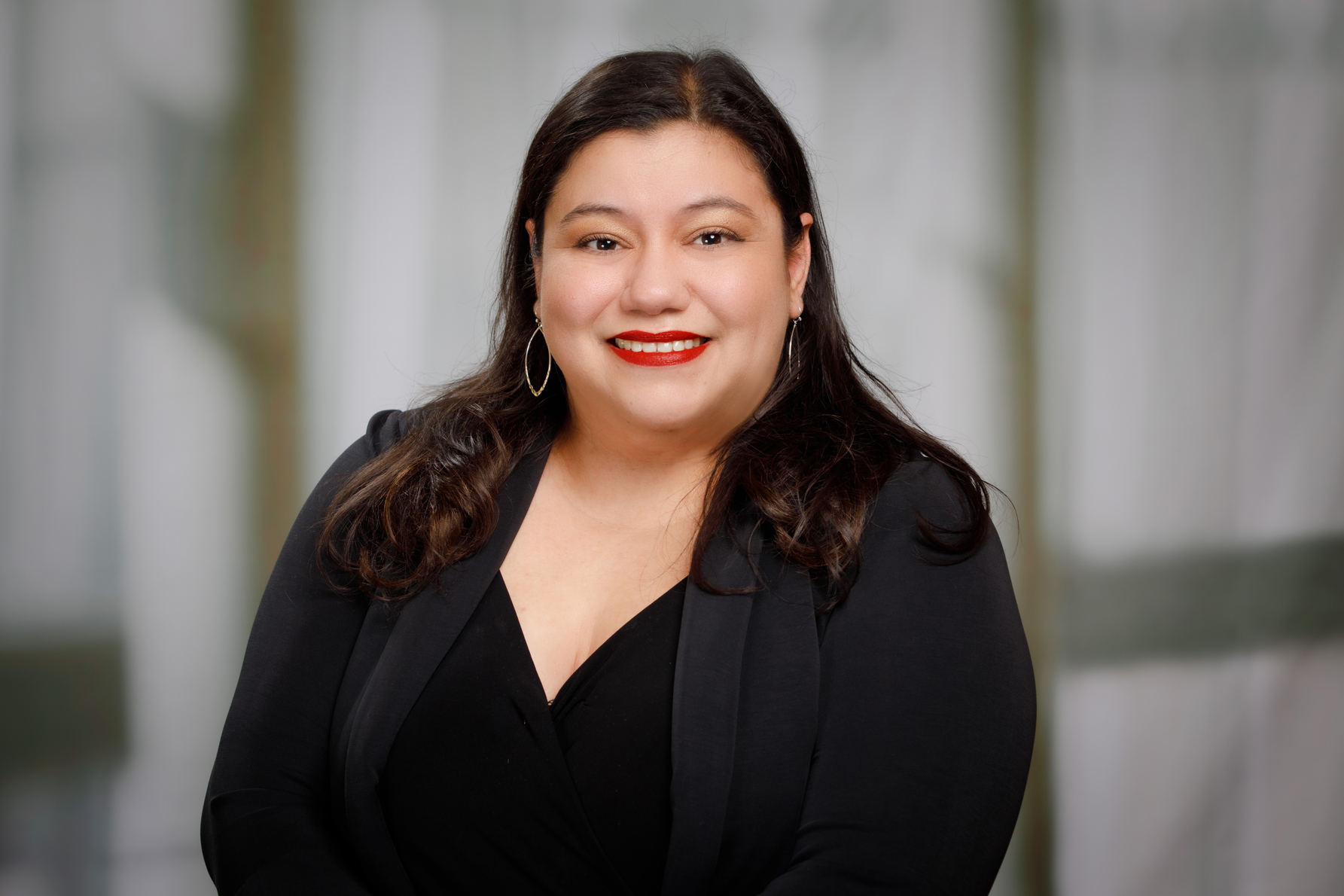
Chelsea Navarrette, MD
Assistant Professor, UNMC Division of Hospital Medicine
Associate Vice Chair of Belonging and Community Engagement, UNMC Department of Internal Medicine
Assistant Dean for Admissions, UNMC College of Medicine

Natalie Crump, MBBS
Assistant Professor, UNMC Division of Hospital Medicine
Belonging and Community Engagement Council Co-Chair, UNMC Department of Internal Medicine
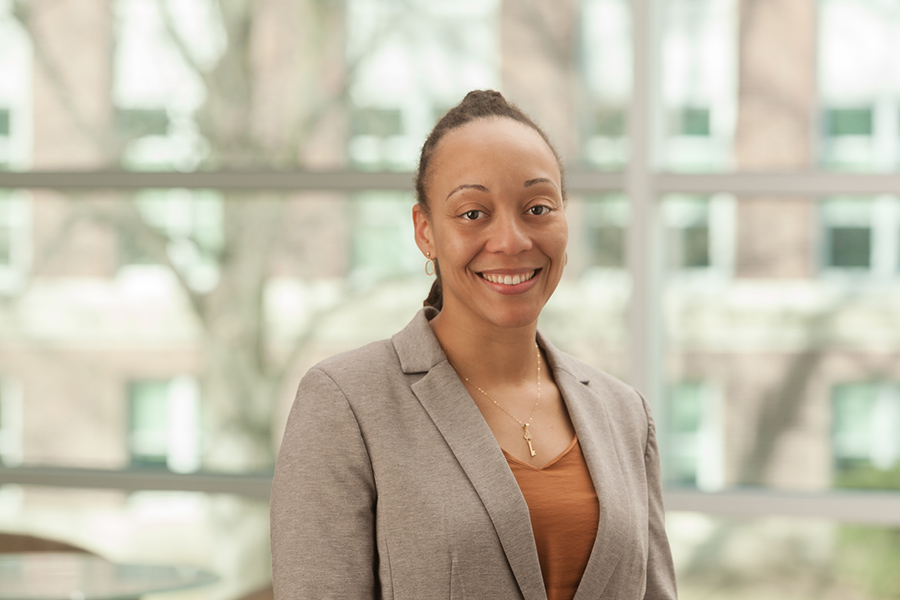
Jennifer M. Davis, MD
Assistant Professor, UNMC Division of Infectious Diseases
Associate Program Director, UNMC Infectious Diseases Fellowship
Belonging and Community Engagement Council Co-Chair, UNMC Department of Internal Medicine
Director, HIV Curriculum
402-559-5392
402-553-5527

Stacy Rafferty
Program Manager, Belonging and Community Engagement
Internal Medicine Advocacy Award
We are currently not accepting nominations. Check back here for the next nomination period.
Nominees for this award should exemplify excellence in advocacy that serves the public good. These individuals inspire others through their active efforts to improve clinical care, public health, education and/or research. Ideal candidates are those who demonstrate outstanding dedication to improving health and well-being through advocacy. This award honors those who take initiative, lead meaningful efforts, and create lasting, positive change in healthcare and the community. The award recognizes advocacy carried out at the campus, local, state, national or international level.
This award recognizes individuals whose leadership, creativity and sustained commitment have made a measurable impact on healthcare and the broader community.
Self-nominations are accepted; however, a letter of support/nomination from a colleague will still be required. Nominees will be contacted for their CV and a 300-word summary of their advocacy efforts and outcomes.
- Internal medicine faculty member
- Internal medicine Resident/Fellow/Post-doctoral fellow
- Internal medicine non-faculty clinical employee (e.g. APPs, pharmacists, nurses)
- Internal medicine non-clinical staff (e.g. office assistants, research coordinators and various administrative personnel)
- Impact on Community or Population Health
- Addressing social determinants of health
- Improving or expanding access to care
- Examples: establishing community partnerships, volunteering at free clinics or community events, coordinating rural outreach events, integrating screening tools into the EMR
- Leadership in Advocacy
- Health policy advocacy
- Public communication
- Combating misinformation
- Examples: testifying before legislature on healthcare policy, serving on local boards or a professional society that addresses health policy, advocating in the public sphere
- Commitment to Reducing Health Disparities
- Advocating for culturally competent care
- Reducing health disparities as quality improvement
- Research advocacy
- Examples: creating bias-reduction education programs, leading QI projects that reduce health disparities, advocating for research funding on underrepresented groups
- Academic Advocacy
- Advocating for inclusive curriculum
- Improving work conditions for healthcare workers
- Examples: developing or assisting in the creation of new curriculum (topics such as climate-related health impacts, rural health disparities, etc.), advocating for mental health resources for healthcare workers, creating/participating in mentorship programs to support underrepresented medical students and professionals
Please submit a letter of nomination to the Advocacy Award Selection Committee via Stacy Rafferty.
Nominations will be reviewed and a winner selected by a five-volunteer panel. The award recognizes extraordinary, persistent efforts and may not necessarily be given every year. Nominees from prior years will be reconsidered for up to three years after the initial nomination but may require updated materials when requested. Prior nominations will roll over into the current cycle.
The awards will be presented in person at the Belonging and Community Engagement Grand Rounds on September 4.
If you have questions, contact Chelsea Navarrette, MD, Associate Vice Chair for Belonging and Community Engagement.
- 2025 Nada Fadul
- 2024 Leslie Eiland
- 2023 Marcus Snow
- 2022 The Infectious Diseases Division
Resident/Fellow/Post-Doc Awardees
- 2025 Chydubem Nwaiwu
- 2025 Debra Wekesa
- 2023 Natasha Gallett
Internal Medicine Non-Faculty Clinical Employee Awardees
- 2025 No nominations
Internal Medicine Non-Clinical Staff Awardees
- 2025 Samantha Jones
Department of Internal Medicine Resources
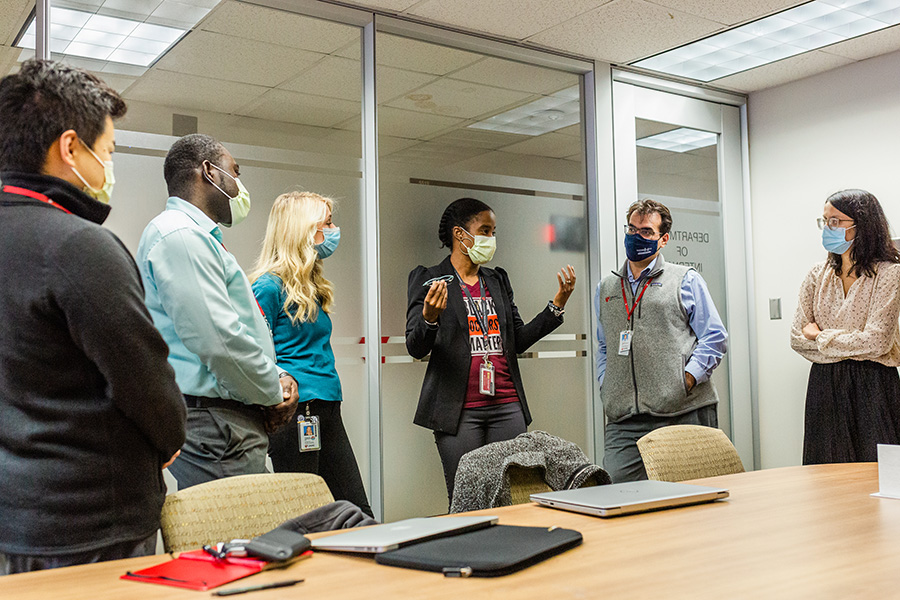
Extraordinary Culture and Environment Residency Council
The Internal Medicine Residency Program established a council focused on ensuring our residency reflects our patient population and provides an environment for residents to succeed.
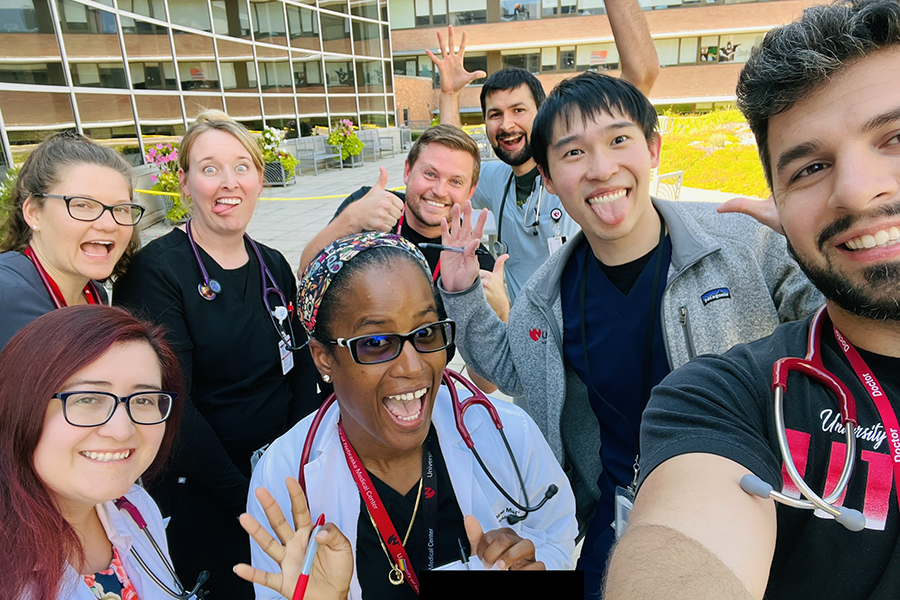
Visiting Student Externship
The Department of Internal Medicine Visiting Student Externship provides funding to support fourth-year visiting medical students who have demonstrated experience in or a commitment to working with individuals who have been historically underserved in health care or underrepresented in medicine.