Clinical Experience and Education
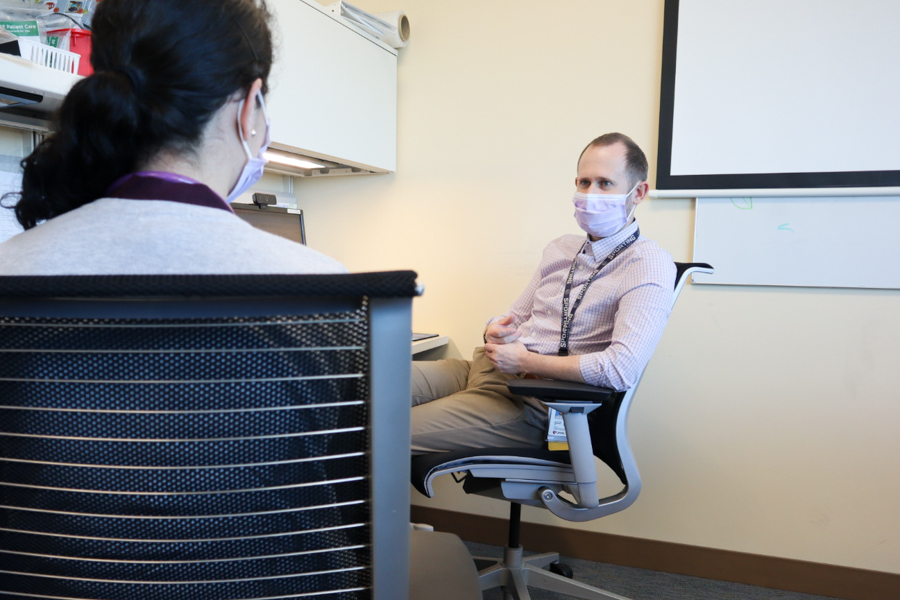
The UNMC Pediatric Infectious Diseases fellowship curriculum is designed to equip trainees with the skills needed to practice in a wide range of clinical settings while also preparing those pursuing academic careers.
Each fellow follows an individualized learning plan (ILP) that guides their educational experience based on personal career goals and interests. While a sample plan of study is provided below, schedules remain flexible to accommodate individualized training pathways.
Over the three years of fellowship, trainees complete approximately 52 weeks on the inpatient Infectious Diseases consultation service across Children’s Nebraska and UNMC. Inpatient rotations are typically scheduled in 1–2 week blocks.
Sample Schedule and Level Specific Objectives
- Clinical Microbiology at UNMC (4 weeks)
- Inpatient ID Consultation Service (6-7 months)
- Research (4-5 months)
- Learn to plan initial work-up and management of pediatric infectious diseases
- Develop an understanding of pathogenesis natural history
- Learn microbiological techniques and how to use them
- Review the basic function of the immune system and immunological basis of disease
- Learn pharmacology, pharmacokinetics and pharmodynamics of antibiotics and their interaction with other drugs
- Be able to design a research protocol, write a proposal, and apply for funding
- Develop an understanding of FDA regulations and IRB policies for conducting research
- Learn how to teach on rounds and at the bedside
- Be able to prepare and deliver lectures
- Attend Pediatric Fellows Academy
- Inpatient ID Consultation Service (3-4 months)
- Research (8-9 months)
- Second Year Fellow(s) will: Manage complicated infectious diseases, understand their pathogenesis, and natural history
- Understand hospital epidemiology and infection control; statistical methods
- Learn how clinical trials are conducted
- Implement their research protocol and submit results for presentation at national/international meetings
- Inpatient ID Consultation Service (3-4 months)
- Research (7-8 months)
- Hospital Epidemiology and Infection Prevention (2 weeks)
- Antimicrobial Stewardship (2 weeks)
- Optional Electives (include Global Health, Public Health, STI clinic)
- Third Year Fellow(s) will:Be able to manage complicated disease in children effectively and independently
- Be prepared for a role in hospital epidemiology and infection control
- Be effective in teaching both individuals and groups of learners in clinical settings, classrooms, lectures, and seminars using electronic and print modalities
- Prepare an original research manuscript for publication and/or presentation
Fellows Continuity Clinic
Fellows have a dedicated weekly half-day continuity clinic when not on the inpatient consultation service. This clinic emphasizes longitudinal care and clinical decision-making, with fellows serving as the primary infectious diseases physicians for patients they previously care for in the hospital, as well as evaluating new outpatient consultations, under attending supervision. In this clinic, fellows gain additional experience tuberculosis and HIV in the outpatient setting.
Travel ClinicFollowing the first year of fellowship, fellows have the opportunity to develop expertise in pre-travel evaluation and counseling, including risk assessment, preventative strategies, and administration of recommended vaccines.
Case Conference
Fellows participate in a weekly city-wide Infectious Diseases case conference that brings together specialists from infectious diseases, microbiology, pharmacy, and pathology. Fellows present cases with accompanying literature review.
Journal Club
Pediatric Infectious Diseases journal club is held monthly and provides an opportunity for fellows to critically appraise current literature and lead discussion.
Core Curriculum
A structured core conference series covers the breadth of Pediatric Infectious Diseases, along with foundational topics in immunology and anti-infectives. Sessions occur twice a month during the first year of fellowship, followed by a monthly series in subsequent years to reinforce and expand key concepts.
Board Review
Fellows participate in a monthly board review conference in which faculty highlight high-yield topics and review board-style questions in an interactive format.