Distinguished Educator
Be recognized for sharing your knowledge and skills with fellow educators.
The Distinguished Educator designation is the highest honor in Academy membership. It is granted to a faculty member who consistently demonstrates excellence in teaching and peer mentoring to promote the development of the next generation of effective and innovative teachers.
Due to the competitive nature and prestige of the designation, no more than two individuals will be named Distinguished Educators each year.
Current Distinguished Educators
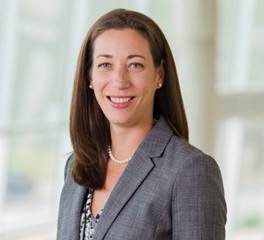
Abbey Fingeret, MD, MHPTT, PhD, FACS
Distinguished Educator Since 2026
Professor, UNMC Department of Surgery, Division of Surgical Oncology
Endocrine Surgery Program Director
UNMC College of Medicine
Abbey Fingeret, MD, PhD, is a professor of surgery in the UNMC College of Medicine. An endocrine surgeon and nationally recognized leader in surgical education, Dr. Fingeret credits her passion for teaching to the mentors who shaped her early professional development. Her educational philosophy emphasizes supportive, rigorous and learner-centered experiences that foster curiosity, confidence and professionalism.
Since joining UNMC in 2016, Dr. Fingeret has led innovative efforts in curriculum design, competency-based education and digital learning. Her contributions include the development of Entrustable Professional Activity-based curricula, simulation-enhanced training programs and educational strategies that strengthen collaboration, competency and professional identity across health professions education.
Dr. Fingeret also serves in several leadership roles, including as chair of the Interactive E-Learning Steering Committee. She is the former chair of the College of Medicine Curriculum Committee. Mentorship remains central to her work, and she is committed to developing future educators, clinicians and leaders through individualized, strengths-based guidance.
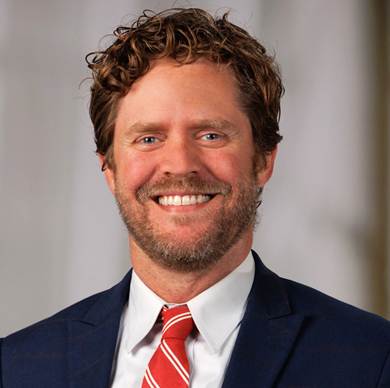
Tedd (T.J.) Welniak MD, MACM
Distinguished Educator Since 2025
Associate Professor, Emergency Medicine
UNMC College of Medicine
Associate Residency Program Director, Director of the Fellowship in Medical Education Technology and Innovation, and Co-Director of UNMC Design Thinking
T.J. Welniak, MD, is a physician educator and academic leader in the UNMC Department of Emergency Medicine whose work focuses on developing the next generation of healthcare professionals. An Omaha native, he joined UNMC in 2016. Dr. Welniak is driven by the opportunity to help learners grow into confident clinicians, educators and leaders. What he values most is seeing them come into their own and begin contributing in meaningful ways to patients, colleagues and future learners.
Dr. Welniak’s educational approach emphasizes active learning, critical thinking and collaboration. He believes learners develop these skills most effectively through authentic experiences that require them to navigate uncertainty, solve complex problems and consider different perspectives. Whether in clinical settings, classroom discussions or other interactive learning experiences, he encourages learners to explore new ideas, challenge assumptions and refine their thinking through reflection and dialogue.
His teaching philosophy centers on aligning educational methods with intended outcomes. To support learner development, he draws from storytelling, community-engaged learning and design thinking alongside a wide range of classroom and experiential approaches. Dr. Welniak believes effective teaching is a skill that can be learned, practiced and continuously improved through feedback and self-reflection, allowing educators with many different styles and personalities to develop an approach of their own.

Teresa M. Cochran, DPT, PhD
Distinguished Educator Since 2025
Associate Professor
Associate Dean
College of Allied Health Professions
Douglas A. Kristensen Rural Health Education Complex, Kearney
An associate professor and board-certified clinical specialist emerita in geriatric physical therapy, Dr. Cochran’s teaching philosophy centers on developing moral agents in health care who are equipped to meet the complex needs of patients and populations today, while possessing adaptability and vision to guide the future of care. She emphasizes that learners must recognize the foundational role of societal trust, and the trust placed in them by patients to facilitate health care decisions during times of uncertainty and vulnerability.
Her 23-year teaching career is deeply influenced by Dr. Lee Shulman’s concept of signature pedagogies (discipline-specific teaching methods that shape professional identity), and she echoes Dr. Parker Palmer’s view that teaching involves risk, courage and relational engagement among students and colleagues.
Dr. Cochran’s approach reflects a commitment to principled, student-centered education in development of a collaboration-ready workforce. She was awarded the 2024 Impact in Education Interprofessional Education Scholar Award and holds the CQuence Distinguished Professorship for Innovation in Health Care, recognizing her work within CAHP, UNMC, and at the national forefront of interprofessional education.

Kristen M. Cook, PharmD, BCACP
Distinguished Educator since 2025
Clinical Associate Professor, UNMC Department of Pharmacy Practice and Science
Director of Campus Culture
Kristen Cook’s career began in Veterans Affairs and community health settings, where she cared for patients from diverse backgrounds and addressed both pharmacotherapy and social determinants of health. These experiences shaped her teaching philosophy, inspiring her to prepare students to become compassionate, adaptable providers.
At UNMC, Dr. Cook is known for her innovative simulation-based teaching, which challenges students to stretch beyond their comfort zones and collaborate under pressure. She believes teaching thrives through shared experience and she actively engages in peer observation, faculty development and co-teaching to foster growth among colleagues and learners alike.
Her creative spirit—rooted in her early passion for writing—drives her to continuously reimagine educational practices. A powerful example of her impact came when a former student credited her suicide prevention lab with giving them the confidence to intervene during a clinical rotation.
Dr. Cook’s philosophy is simple yet profound: “Teaching takes courage… and a back-up plan.” Her dedication to student-centered, collaborative education continues to shape the culture of pharmacy education at UNMC.

Nancy E. Krusen, PhD, OTR/L
Distinguished Educator Since 2024
Professor
Director, Occupational Therapy
College of Allied Health Professions
Dr. Nancy Krusen is the founding program director for the entry-level occupational therapy clinical doctorate at UNMC. Her educational philosophy is grounded in occupational adaptation and translational science. Occupational adaptation proposes the development of adaptive strategies to manage daily life challenges. Translational science engages knowledge users to create innovations for health and wellness. These values help her f ind the just-right challenge in service, teaching and learning, mentoring, and education-based scholarship.
At the end each day, Dr. Krusen asks herself whether she has made a difference. She believes that educators plant seeds for trees in the shade of which we may never sit. She values the past and looks to the future and feels there is always more to learn and more to do.

Justin Mott, MD, PhD
Distinguished Educator Since 2024
Director, MD-PhD Scholars Program
Professor, Biochemistry & Molecular Biology
College of Medicine
A strong advocate for mentoring both faculty and students, Dr. Justin Mott believes in assessing each mentee individually, based on their strengths, needs, goals and weaknesses. In addition to liver disease and DNA and RNA biology, Dr. Mott teaches about principles of leadership, communication, emotional intelligence, bias, overcoming barriers to inclusion, and conflict resolution to students and faculty.
He has received numerous awards throughout his career, including the Distinguished Graduate Student Mentor Award and the UNMC-wide Impact in Education Varner Educator Laureate Award.

Geoffrey A. Talmon, MD, MEd
Distinguished Educator Since 2024
Professor and Vice Chair for Medical Education, Pathology, Microbiology & Immunology
Associate Dean for Medical Education
College of Medicine
Dr. Geoffrey Talmon has more than 15 years of experience mentoring and guiding both faculty and students at UNMC. He was the inaugural director of the Interprofessional Academy of Educators, the UNMC Impact in Education Varner Educator Laureate awardee in 2021, and the University of Nebraska Outstanding Teaching and Instructional Creativity Award recipient in 2023.
His innovations include development of a pathology externship, an off-ramp master’s degree for medical students, and the first pathology course for high schoolers in the nation. Dr. Talmon was one of the leaders of the College of Medicine’s curriculum redesign and served as pathology residency director. The book he co-edited, “Mind the Gap: Generational Differences in Medical Education,” is the first work dedicated to managing intergenerational conflict in medical education.