Center for Neurodegenerative Disorders (CND)
The Center for Neurodegenerative Disorders facilitates research in infectious and neurodegenerative diseases. Seeking a balance between the pursuit of knowledge and research directed at understanding disease pathobiology and developing novel therapeutics are the cornerstones of our research.
The center’s mission is to support interdepartmental translational research in the following areas:
- Collaborative, multidisciplinary research.
- Studies on the molecular and biochemical basis of neuroinflammatory, neuroinfectious, and neurodegenerative disorders.
- Serve to improve scientific infrastructure facilitating the molecular, biochemical, genetic, therapeutic, biomarker, and pathogen-based studies used to evaluate how central nervous system disorders progress and cell and immunomodulatory therapeutics can be developed to improve disease outcomes.
- Provide an administrative home for interdepartmental graduate and postdoctoral training that serves to improve clinical outcomes for neurodegenerative disorders.
- Stimulate Nebraska’s economic development by providing a conduit between academic and pharmaceutical sectors for pathobiology, biotechnology, and drug discovery.
Director’s Message
Neurodegenerative disorders (Alzheimer’s and Parkinson’s disease, amyotrophic lateral sclerosis, stroke) are linked to immunity, age, infectious and neoplastic processes. They are a top concern to global health. From 1990-2021, neurological disorders increased by 18.2% and affected over 40% of the global population, estimated at 443 million people worldwide. As the global population ages, the urgency to find effective treatments becomes ever more critical.
Our research efforts are dedicated to filling the major scientific gaps in our basic understanding of these complex disease processes to allow the development of rational and efficacious therapeutics. Progress in understanding just one brain disease often provides insights applicable to others, a "Cure One, Cure Many" philosophy. Continued analysis of preclinical and clinical studies will inform public health action and prevention strategies. Our research demands smart approaches, collaboration across industry, academia, and regulatory agencies, and continued support from the public and patient communities. We are hopeful that scientific advancements will lead to translational breakthroughs, offering hope and improved quality of life for those affected by these devastating diseases.
Howard E. Gendelman
Our Research
The complex biological phenomena we study require a multidisciplinary approach. Melding the talents of individual laboratories that results in a synergy enabling forward progress more quickly and effectively than working alone.
About the CND
The CND evolved from the Center for Neurovirology and Neurodegenerative Disorders (CNND) which was initiated in 1997 and was operational until 2009. The CNND was dissolved in 2009 to facilitate the initiation of 3 new centers. These centers included the CND which was approved on June 12, 2009, the Center for Integrative and Translational Neuroscience, approved June 12, 2009, and the Nebraska Center for Substance Abuse Research, approved on April 10, 2015.
The CND is hosted by the Department of Pharmacology and Experimental Neuroscience (PEN) in the College of Medicine (COM) at the University of Nebraska Medical Center. It includes programs within the COM that are collaborators and or mentors within the CND’s National Institutes of Neurological Disorders and Stroke (NINDS) training grant (Howard E. Gendelman Contact PI and Daniel Mognaham (MPI) with the Departments of Genetics, Cell Biology, and Anatomy; Radiology; Internal Medicine; Anesthesiology; Neurological Sciences; and Ophthalmology and Visual Sciences; and within the College of Pharmacy (COP) in the Departments of Pharmaceutical Science and Pharmacy Practice. The administrative unit is located within the Department of PEN in DRC1, room 3005.
Training Opportunities
The Department of Pharmacology and Neuroscience, and the CND sponsor the NIH-funded T32 Neuroimmunology of Disease training program. This selective program accepts approximately 4 students per year and provides research opportunities in a variety of aspects associated with neuroimmunology, infectious diseases, and neurodegeneration of the central nervous system.
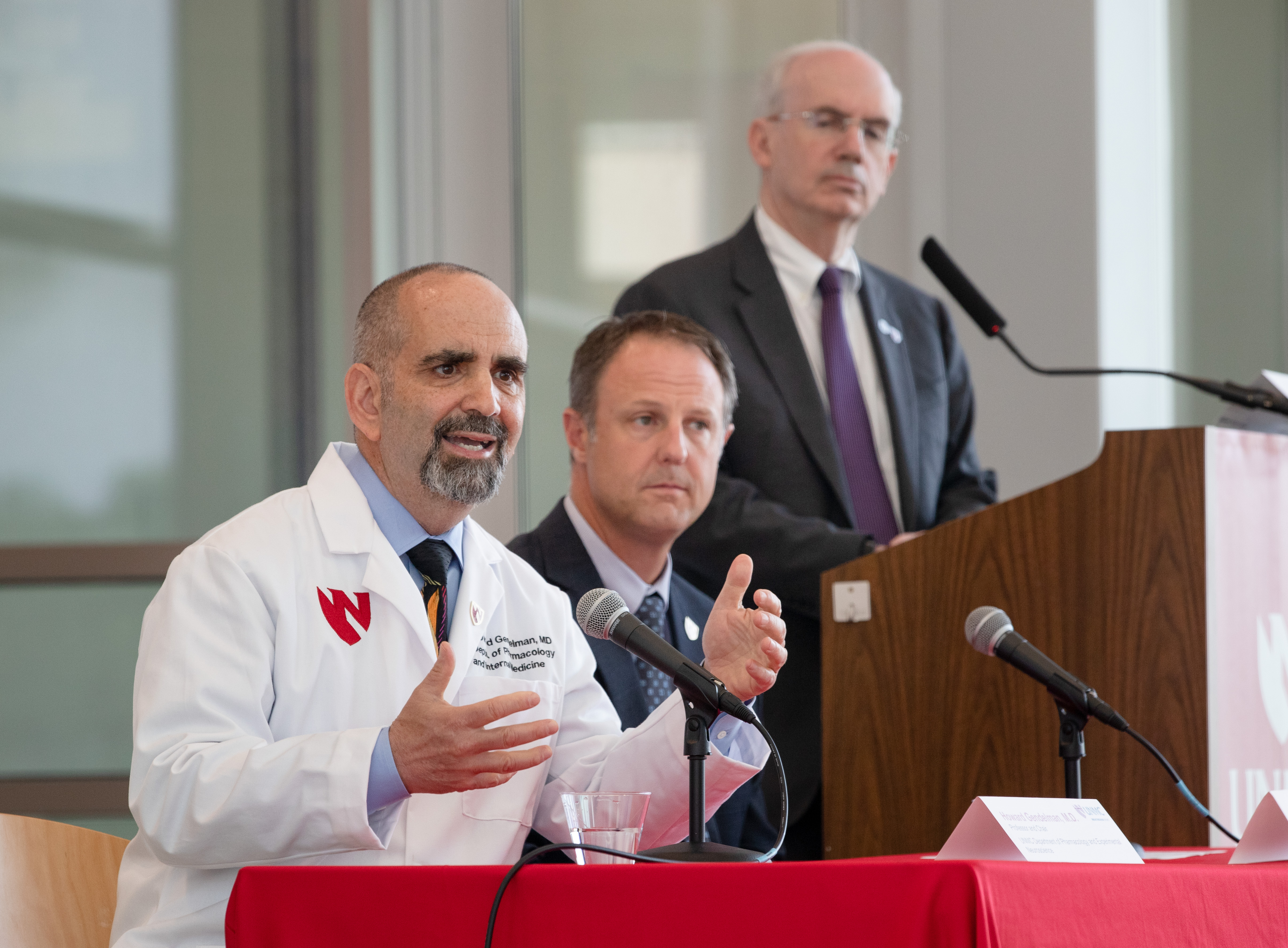
Howard E. Gendelman, PhD
Director, Center for Neurodegenerative Diseases
985880 Nebraska Medical Center, Omaha, NE 68198-5880