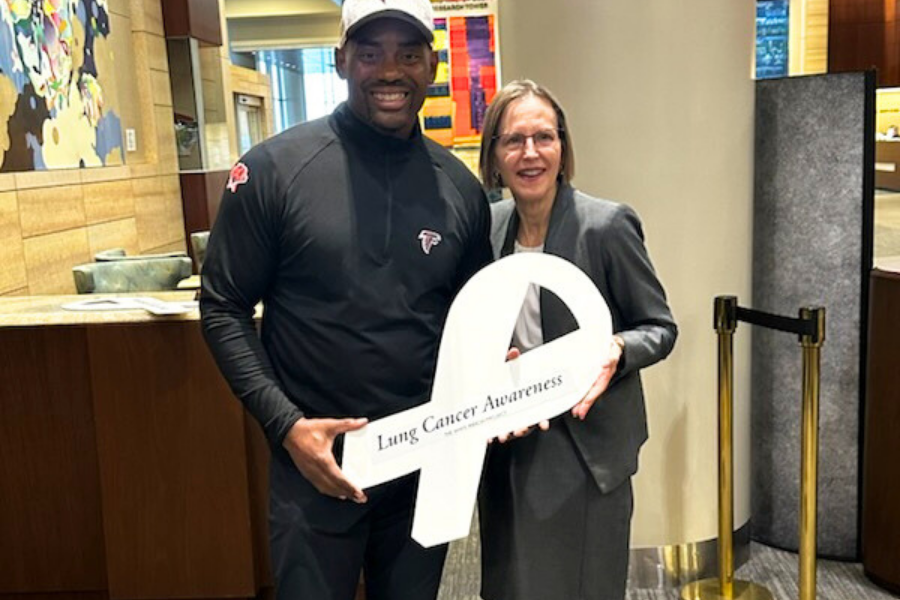
On Nov. 25, Christopher Michael Draft visited the Fred & Pamela Buffett Cancer Center – Nebraska Medical Center for a meet-and-greet with the med center community. This Thanksgiving arrived with a significance far greater than turkey dinners and family gatherings. For Draft, former NFL player and co-founder of the Chris Draft Family Foundation, the holiday marked a solemn wedding anniversary — he and his wife, Keasha Rutledge Draft, were married on Nov. 27, 2011. She sadly passed away from lung cancer just one month after their wedding. Instead of surrendering to grief, Draft has transformed that loss into purpose. He has dedicated his life to raising awareness and driving change through the Foundation, which honors Keasha’s legacy and supports lung cancer survivors and research.
While telling his story to the med center community, Draft shared, “My fight is no longer just personal, it is part of a much larger movement.” That perspective can be collectively owned in everything we do to fight cancer — whether as researchers, clinicians, staff, supporters, or advocates — the ultimate impact is the same: better outcomes and more cancer survivors.
“Chris Draft is changing the ways we think about a diagnosis of lung cancer for people and families affected by this disease. He is helping to remove the stigma associated with this disease. Chris is also a strong advocate for lung cancer screening, and increasing the lung cancer screening rates for Nebraskans is top of mind for the Fred & Pamela Buffett Cancer Center because early detection saves lives,” said Dr. Joann Sweasy, director of the Fred & Pamela Buffett Cancer Center, in her closing remarks.
As one of the strongest voices in lung cancer advocacy, Draft empowers families to embrace healthier lifestyles and speaks openly about smoking and tobacco cessation, noting that research has long shown tobacco use to be a leading cause of lung cancer. At the same time, he emphasizes: “People who smoke are not to be blamed — they are often victims of addiction and circumstance.” His message is one of empathy and understanding rather than shame, recognizing the challenges individuals face.
Draft underscores the power of personal stories: “If we want that behavioral shift and to help people quit, it’s the power of personal stories. Celebrating those who have found the strength to quit can inspire meaningful behavioral change. Each testimony of resilience, courage or quitting can motivate others to take that same step toward better health.”
Drawing from his background in sports, Draft connects the determination, discipline and resilience he cultivated as an athlete to his advocacy work and personal journey. His statement, “Do something you are remembered for. Play like it’s your last shot”, reminds us that a focused mindset can transform grief into resolve, turn pain into compassion and inspire action that reaches far beyond ourselves. His journey from athlete to advocate, from personal loss to public purpose — inspires each of us to consider the legacy we leave behind.
It invites us all to reflect: What will we be remembered for?
Find out if you or a loved one meet the recommended guidelines for lung cancer screening and whether you should get screened.