To bridge the gap between the academic phase of medical school and the hands-on, clinical responsibilities encountered during residency, the UNMC College of Medicine has implemented a residency prep course. It is the final course for graduating students and is offered each April.
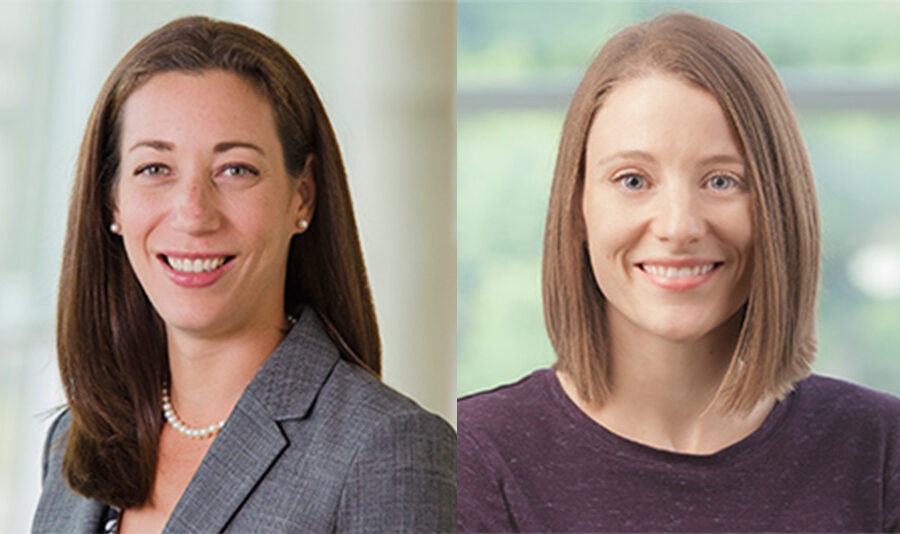
Jill Zabih, MD, assistant professor of hospital medicine, and Abbey Fingeret, MD, PhD, associate professor of surgical oncology, are directors for the course. They, along with David O’Dell, MD, professor of general internal medicine, and Susan Evans, MD, assistant professor of family medicine, planned and designed the content of the course before it debuted in 2021.
Dr. Zabih said creating and implementing a transition-to-residency course is a major trend nationally with medical student curricula – a trend that UNMC has been ahead of, since its course became a graduation requirement for all medical students in 2021. In 2025, 127 students completed UNMC’s course.
“The transition from medical student to resident physician is the largest increase in responsibility physicians experience in their career,” Dr. Zabih said. “UNMC was on the leading edge of implementing a required course to help ease the transition. These courses are now part of the curriculum at more than 80% of medical schools, though they vary in scope and rigor.”
Peyton Bash, MD, graduated from the UNMC College of Medicine in May 2025 and started as a first-year internal medicine resident on July 1. He said the residency prep course is one of the strongest aspects of UNMC’s medical curriculum.
“It bridges the gap between student and physician in a very tangible way, and it sets the tone for a smoother, more confident start to residency,” he said.
The course includes two weeks of general content for all students, then students break into groups with their planned residency specialty for the second two weeks of the course.
Dr. Bash said the design of the course helps ease the transition from student to resident and makes those first few weeks on the job feel less overwhelming.
“I walked away from the course feeling more confident about starting residency,” he said. “I had the chance to practice key skills in a low-pressure, supportive environment. Running a code, responding to RRTs, managing patients overnight – all of these are daunting at first, but the course helped me realize just how far we’ve come. It truly reinforced that I had the knowledge and training needed to care for patients – with supervision, of course.”
Now in her seventh year of teaching the course, Dr. Zabih said it is heavily simulation-based and covers rapid response scenarios, procedures, cross cover, handoffs, disclosing medical errors and critical care simulation.
“This course is highly dependent on faculty facilitators, given how many simulations are included,” she said. “It includes hundreds of faculty contact hours with students in small groups and simulation activities.”
Dr. Bash said the guided simulations were especially beneficial. “They allowed us to apply our knowledge in realistic scenarios, reinforcing what we’ve learned and building confidence,” he said. “Having practiced many of the tasks I was most nervous about, I felt genuinely ready to take the next step in my training.”