The University of Nebraska on Friday announced the launch of the Artificial Intelligence Institute. The AI Institute will be a major, system-wide initiative that positions Nebraska as a national leader in shaping the future of responsible, human-centered artificial intelligence.
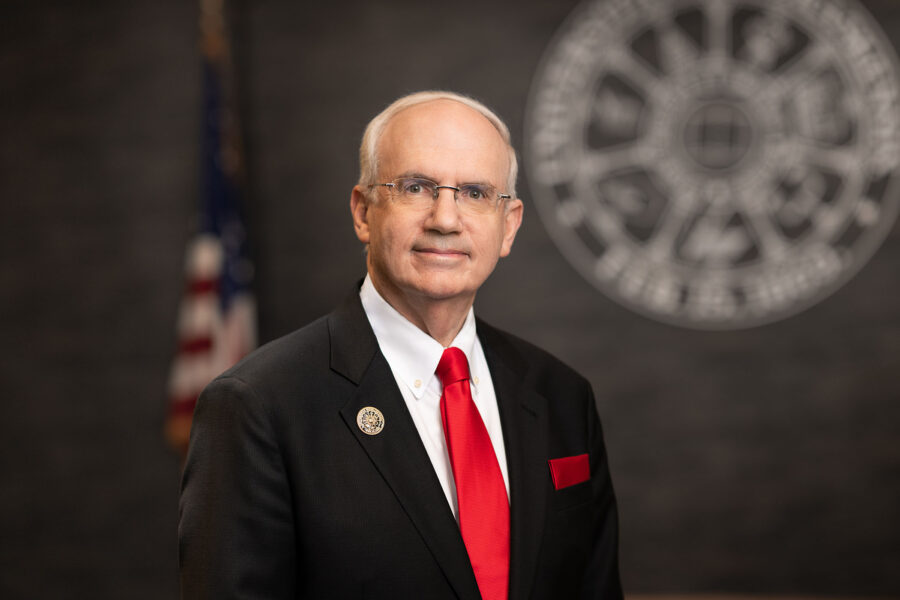
The Institute reflects the University of Nebraska’s commitment to transformative innovation and the pursuit of extraordinary impact, which is central to the mission of NU President Jeffrey P. Gold, MD.
The AI Institute will harness emerging technologies to serve society, grow the economy and support future generations through education, interdisciplinary research, teaching, workforce development and public engagement. Its work will span sectors like health care, agriculture, rural and urban development, business and national security, placing Nebraska at the forefront of applied AI research and advancement.
“Artificial intelligence is reshaping every facet of our world. As a land-grant university, we have a responsibility to lead in ways that serve the public good,” Dr. Gold said. “NU’s AI Institute is a bold step forward. This step reflects our mission to drive innovation, expand access and support communities across Nebraska and beyond.”
Co-directed by Santosh Pitla, PhD, professor of biological systems engineering, and Adrian Wisnicki, PhD, professor of English, both of whom are at the University of Nebraska-Lincoln, the AI Institute builds on a recommendation from the NU AI Task Force. The task force, a faculty-led group, developed a system-wide roadmap for responding to and engaging with artificial intelligence across research, teaching, outreach and service.
Read the full AI Task Force report here.
Structured as a hub-and-spoke model, the AI Institute will strategically coordinate AI research, teaching and engagement efforts across the NU system while leveraging the strengths of each NU campus and its faculty.
“By leveraging the unique strengths of each university in the NU System, we’re creating a collaborative environment where faculty, students and partners can explore the ethical, technological and human dimensions of artificial intelligence,” said David Jackson, PhD, provost of the University of Nebraska. “This is interdisciplinary work at its best, and it positions Nebraska to lead nationally in AI research, education and workforce development.”
UNMC Interim Chancellor H. Dele Davies, MD, said he was excited about the initiative.
“At UNMC, we’re already using AI to advance education, accelerate research and improve health outcomes.,” Dr. Davies said. “The NU AI Institute is a powerful next step in helping us coordinate and expand that work. We look forward to future partnerships that harness AI to work faster, smarter and more responsibly for the people and communities we serve.”
Dr. Pitla is an internationally-recognized expert in AI-enabled agricultural robotics, systems engineering and experiential education. He leads the Machine Automation and Agricultural Robotics Lab at UNL, co-leads the Digital Agriculture Task Force and co-chairs the Heartland Robotics Cluster. In 2025, he was inducted into the global CIGR Next Leaders in AgTech program, a distinction awarded to just 12 engineers worldwide.
He emphasized the importance of collaboration and real-world problem-solving in advancing AI:
“Artificial intelligence is most powerful when it is grounded in real problems, informed by diverse expertise and developed responsibly,” Dr. Pitla said. “My goal is to help build collaborative environments where AI research, education and engagement reinforce one another to create meaningful impact for society. It’s not just about technology. It’s about people, partnerships and purpose. By connecting disciplines and communities, we can ensure AI serves as a tool for innovation, learning and public good.”
Dr. Wisnicki, an internationally-recognized digital humanities and literature scholar, brings a humanistic and socially conscious lens to AI’s development. He coordinates UNL’s Digital Humanities Program, promotes critical AI literacy through innovative courses and has led major global research collaborations supported the National Endowment for the Humanities, American Council of Learned Societies and other funders. He is a faculty fellow for the Center for Digital Research in the Humanities and in 2025 received the President’s Award from the North American Victorian Studies Association.
“The AI Institute offers a timely and powerful opportunity for our world-class faculty and university community to take a proactive role in addressing the challenges posed by AI,” Dr. Wisnicki said, “including well-documented threats to the environment, society and the intellectual development of students. Most importantly, we can do this while modeling responsible and human-centered AI practices and applications across Nebraska, the Midwest, the nation and the globe.”
The AI Institute already has received strong support from industry and philanthropic partners, including Google and the Nebraska Research Initiative. Final ratification by the NU Board of Regents is expected in June 2026, paving the way for expanded partnerships and additional investment.
The University of Nebraska invites faculty, students, staff, industry partners and communities statewide to engage with the AI Institute as it launches its first year of programming and events. More information, updates and opportunities to collaborate are available at the AI Institute online.
After reading the report and using Copilot to find where “Staff” are listed in the report (only 4 times, no monetary investment, “should be available,” “staff are included,” and “staff are referenced”), It’s helpful to know where I can point someone for the same training and knowledge I’ve invested in.