Fueling the next generation of cancer breakthroughs, the American Cancer Society (ACS) is investing in promising early-stage investigators at the UNMC and the Fred & Pamela Buffett Cancer Center through internally competitive institutional research grants designed to tackle some of the most pressing questions in cancer research.
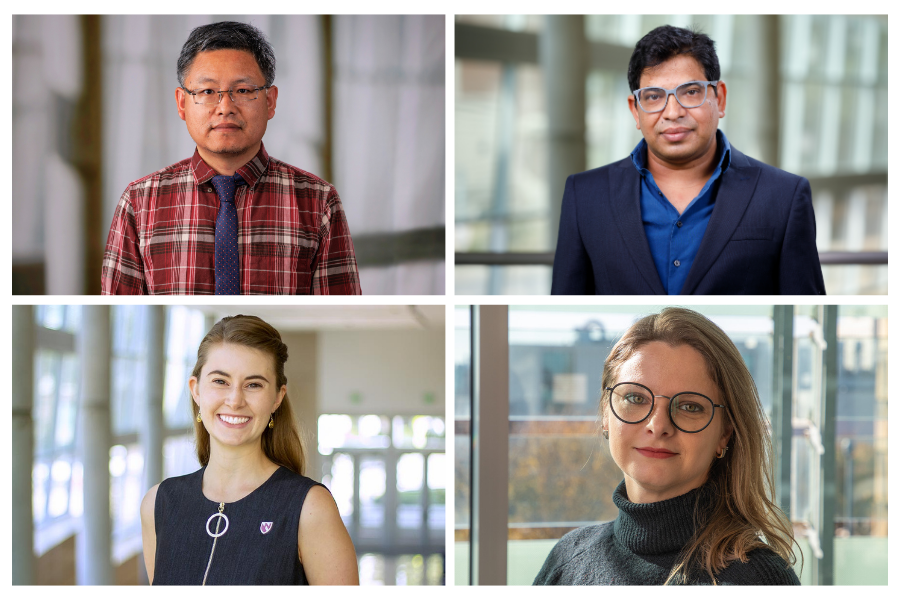
In 2025, four investigators received ACS Institutional Research Grant (IRG) pilots for their innovative projects.
Advancing precision in prostate cancer treatment
Ruirui Liu, PhD, assistant professor in the Department of Radiation Oncology, received the ACS IRG pilot grant for his project “Development and Validation of a Dynamic Treatment Planning System for Ultrasound-Guided High-Dose-Rate Brachytherapy in Prostate Cancer”.
Today, most brachytherapy procedures rely on treatment plans created before the procedure begins. Because the prostate can shift slightly in position or shape during treatment, doctors have limited ability to make adjustments in real time.
Dr. Liu’s approach aims to change that. His system will combine live ultrasound imaging with advanced radiation dose calculations, allowing clinicians to make immediate adjustments during the procedure.
“This system will provide continuous feedback, allowing adjustment of needle placement and radiation dose delivery to maintain target coverage while protecting surrounding organs,” Dr. Liu explained.
To ensure the system works safely and effectively, it will be tested using realistic prostate and pelvic models to evaluate accuracy, efficiency, and reliability.
Targeting muscle wasting in cancer patients
Bhopal Mohapatra, PhD, assistant professor in the Department of Genetics, Cell Biology and Anatomy, received the ACS IRG pilot grant for his project “Targeting of Cbl-b as a Novel Therapeutic Strategy for Cancer Cachexia”.
Muscle wasting can significantly reduce quality of life, make chemotherapy harder to tolerate, and is linked to about 30% of cancer-related deaths. Despite its impact, there are currently no effective treatments.
Dr. Mohapatra’s research focuses on a protein called Cbl-b, which plays an important role in muscle loss. Using genetic models and drug-like inhibitors, his team will test whether blocking this protein could help preserve muscle in cancer patients.
“Strong evidence has accumulated for a key role of Cbl-b in muscle loss from disuse,” Dr. Mohapatra said. “Our preliminary data suggest Cbl-b also plays a role in muscle cachexia.”
Improving life after colorectal cancer through diet
Mariah Kay Jackson, PhD, assistant professor at the College of Allied Health Professions, received the ACS IRG pilot grant for her project “Researching the Effects of Survivorship, Inflammation, and Neuro-Cognitive Enhancement through Cancer and Eating: The RESILIENCE Study”.
Cancer treatment and surgery can disrupt normal eating habits, and many patients are advised to temporarily limit fiber after surgery. This study aims to help survivors safely reintroduce high-fiber foods that support gut health, reduce inflammation, and improve cognitive function.
The 12-week pilot study will enroll 50 colorectal cancer survivors who have completed treatment. Participants will either receive standard care or take part in a comprehensive support program that includes:
- Personalized nutrition counseling
- Telehealth follow-up visits
- Hands-on cooking classes featuring affordable, high-fiber meals
“This trial integrates biological markers with patient-prioritized outcomes to deliver a scalable, tailored model for lifestyle-based survivorship care, ensuring life after cancer is thriving, not just surviving,” Dr. Jackson said.
Bridging the rural cancer care gap
Thais Favero Alves, PhD, assistant professor in the College of Public Health, received the ACS IRG pilot grant for her project “Chatbot Development to Support Rural Nebraskans with Breast Cancer”.
About 20% of breast cancer patients in the United States live in rural areas. Compared with patients in urban communities, they often face additional barriers to care, including fewer healthcare providers, longer travel distances to specialists, and lower access to health information.
Dr. Alves is developing a chatbot designed to support rural Nebraskans living with breast cancer. To ensure the tool reflects real community needs, Dr. Alves is using a community-based research approach. She is partnering with the Fred & Pamela Buffett Cancer Center Office of Community Outreach and Engagement and rural healthcare partners to recruit participants and form a community work group. The study will include English-speaking and Hispanic/Latino breast cancer patients living in rural areas, with information collected in each participant’s preferred language.
“Our central hypothesis is that an evidence-based chatbot designed to address patients’ needs and communication preferences will increase access to care through reliable, personalized support that complements the breast cancer care team,” Dr. Alves said.
Building a foundation for bigger breakthroughs
The ACS Institutional Research Grant pilots are designed to do more than fund early ideas — they help researchers generate strong preliminary findings that can open the door to larger, extramural funding opportunities, accelerating the path from discovery to real-world impact.