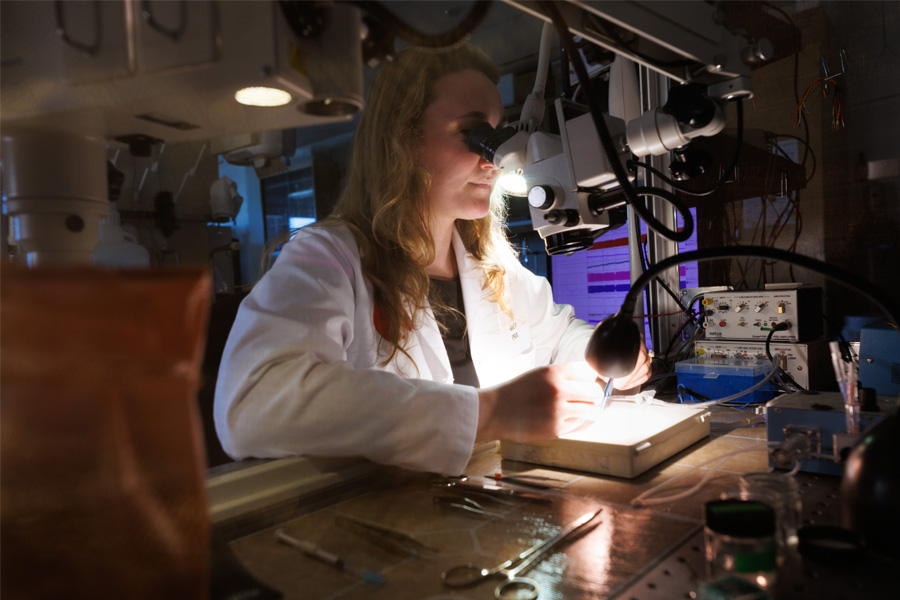
Sarah Pribil Pardun, a graduate student in the UNMC Department of Anesthesiology, has been selected as a recipient of the American Physiological Society’s Cardiovascular Section Research Recognition Award.
The award honors outstanding research by graduate students and postdoctoral fellows who present a first-author abstract at the American Physiology Summit. Pribil Pardun received this honor at the 2026 APS summit in Minneapolis for her research titled “Transgenic activation of skeletal muscle Nrf2 protects the heart against ischemia-reperfusion injury in male mice.”
A Nebraska native from O’Neill, Pribil Pardun has been part of the UNMC community for four years.
How I became interested in research: It was really a domino effect — I loved math growing up, but to young me, math was just numbers. Then I discovered chemistry, which gave math a purpose. That led me to biochemistry, which gave chemistry a purpose. And finally, I found physiology, because it gave biochemistry a purpose that I could actually visualize and connect to real life. Ever since I was a child, I’ve constantly asked how and why things happened. My love for physiology, combined with that curiosity, ultimately led me to the research I do today.
Education:
- Bachelor of Science in Biochemistry – Regis University
- Master of Science in Forensic Medicine – University of Maryland, Baltimore
Research interests: My research interests primarily focus on cardiovascular health and the mechanisms by which exercise protects the heart. My dissertation investigates how activation of the skeletal muscle-specific Nrf2-antioxidant system during exercise promotes communication between skeletal muscle and the heart. Specifically, my work demonstrates that skeletal muscle can release antioxidant-enriched extracellular vesicles and non-vesicular extracellular nanoparticles that travel through the circulation and help protect the heart against ischemia and reperfusion injury. The study showed that activating this pathway in skeletal muscle significantly improves cardiac recovery following ischemic/reperfusion injury, reduces infarct size and enhances cardioprotective signaling pathways, highlighting a novel mechanism of interorgan communication and a potential therapeutic target for cardiovascular disease.
Professional Memberships:
- American Physiology Society
- Midlands Society of Physiological Sciences
Three things people may not know about me:
- I have an 11-month-old daughter.
- We constantly have sports on in our house, and we go to at least one Husker football game a year.
- I am a board member of a nonprofit, Mind Worthy – Beyond the Stigma, which works to put educational materials about suicide and mental health in rural Nebraska schools in hopes of normalizing asking for help and providing adolescents with mental health resources.