UNMC is one of four sites nationwide participating in IntraOp Ox, a two-year, multicenter study launched in June examining whether intraoperative oxygen levels affect patient outcomes including organ injury and mortality.
The department joins Vanderbilt University Medical Center, the University of Utah and the University of Michigan in a collaboration that could reshape how anesthesiologists care for surgical patients across the country.
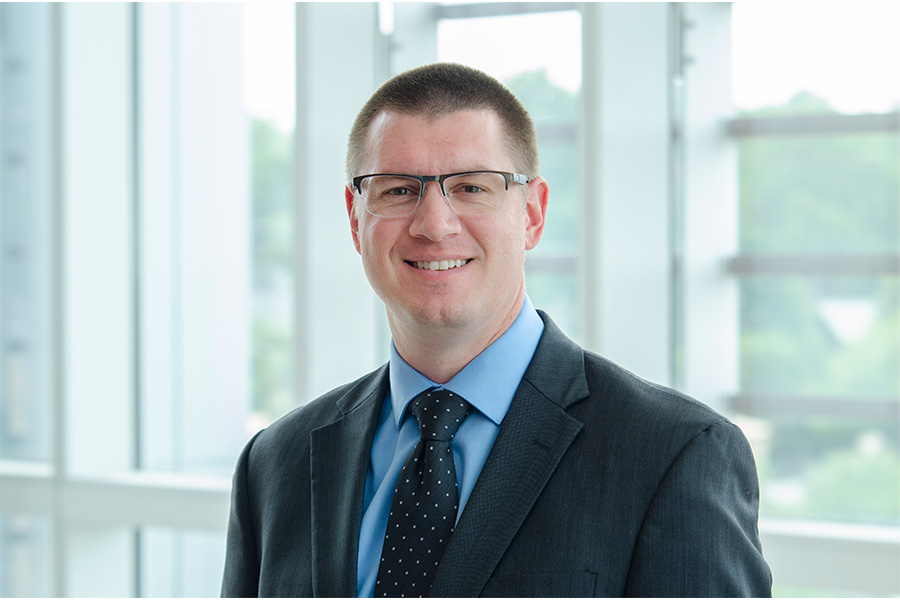
UNMC anesthesiology is one of 13 institutions that applied to take part in the study. Levi Zehr, MD, site principal investigator, attributes UNMC’s selection to the collective department.
“From our leadership to our learners, the level of engagement impressed upon the Vanderbilt was team that we would make a beneficial partner,” Dr. Zehr said.
The study compares three intraoperative oxygen strategies – lower, intermediate and higher – across thousands of surgical patients. Results are tracked through a central database registry, with the primary endpoint being a composite of organ injuries, including acute kidney injury, myocardial injury, lung injury and stroke, as well as 30-day inpatient mortality. UNMC anticipates approximately 8,000 eligible cases annually based on historical volumes.
For Dr. Zehr, UNMC’s involvement marks a meaningful moment for the clinical side of the department.
“Our department’s pre-clinical and basic sciences researchers have led by example in the field,” he said. “It will be amazing for the clinical side to demonstrate its potential.”
The stakes extend well beyond Nebraska. Determining the impact of oxygen exposure on organ injury in the perioperative setting, Dr. Zehr noted, “would alter the care of millions of patients every year.”
Getting to launch required significant behind-the-scenes effort. Dr. Zehr credited Troy Wildes, MD, as instrumental from the selection process through the present, as well as Peter Pellegrino, MD, PhD, and Hanjun Wang, MD, for their contributions to essential aspects of the study. He also acknowledged the broader department.
“Everyone involved within the department have been foundational in making this happen,” Dr. Zehr said.
The response among providers and staff has been encouraging. Dr. Zehr described most reactions as curiosity and excitement, noting the trial already has sparked meaningful academic conversation across the department.
Vanderbilt, the lead site, has enrolled more than 6,000 patients since launching its performance phase. For UNMC, Dr. Zehr said success means matching that standard.
“Performing large clinical trials is a challenging endeavor,” he said. “Just being able to perform a clinical trial of this size with enrollment and adherence rates similar to the other participating sites would demonstrate success.”
The two-year performance phase runs through February 2028.