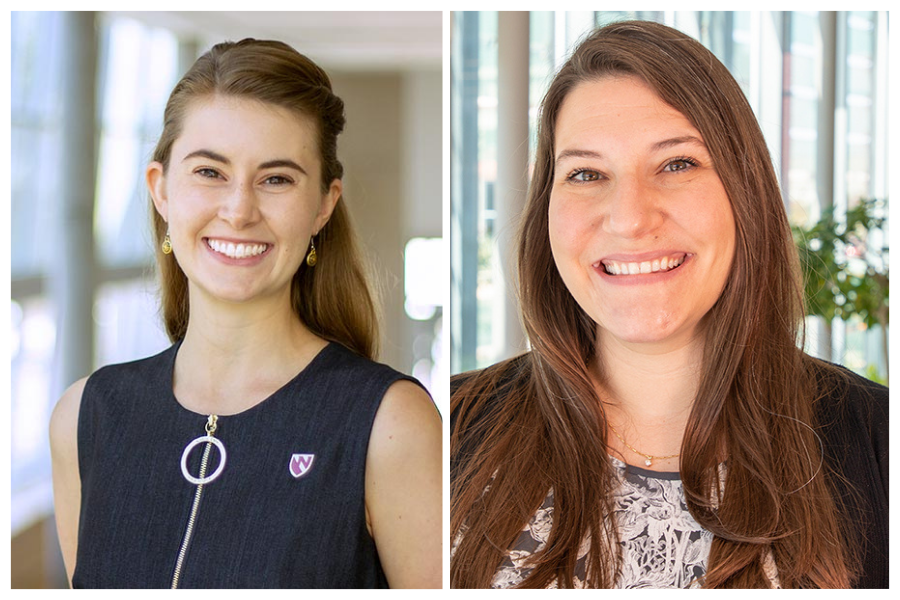
To learn more about how Nebraskans experience obesity and what affects their health, researchers from the University of Nebraska Medical Center and the NCI-designated Fred & Pamela Buffett Cancer Center—Mariah Kay Jackson, PhD, MMN, RDN, LMNT, and Dana Verhoeven, PhD, held listening sessions in communities across the state. Instead of just asking what people know about healthy eating and exercise, they focused on a bigger question: What makes it easy or hard to make healthy choices every day?
“What we heard was clear. Obesity is not seen as just a matter of willpower or personal choice,” said Dr. Jackson. “Participants described a much more complex situation, influenced by work, family duties, stress, money, transportation, food access, culture, and where people live.”
For many people, Dr. Jackson said, the problem was not about knowing what a healthy choice is. The challenge was having enough time, resources, and chances to make that choice, especially in rural areas.
People talked about having to drive long distances to grocery stores, not having consistent access to produce, missing sidewalks and places to be active, and facing transportation problems.
Food is also a big part of Nebraska’s culture and community life. People talked about traditions that include casseroles, meat and potatoes, big servings, and sharing food at family events, sports games, meetings, fairs, and celebrations. It can be hard to make healthy choices when less healthy foods are the norm, and saying no to food can feel like turning down the person who made it.
“One of the most surprising things we found was that people didn’t link obesity with cancer,” said Dr. Verhoeven. “This lack of awareness is an important chance to improve cancer prevention in Nebraska.”
The listening sessions also pointed toward solutions. Participants emphasized the need for practical support. They suggested helping families develop skills in meal planning, grocery shopping, cooking, and preparing healthy meals on a budget. They also called for healthier options in schools and community settings, greater family involvement, stronger connections among organizations, and improvements in access to healthy food and physical activity.”
“The project builds on an existing Fred & Pamela Buffett Cancer Center support grant, overseen by cancer center director Joann Sweasy, PhD, that aims to reduce the cancer burden across Nebraska,” Dr. Jackson said.
The project is supported by a one-year grant from the National Institutes of Health to address obesity as a risk factor for cancer.
The listening sessions did more than identify challenges; they helped point toward solutions. What emerged was a clear message: addressing obesity and cancer prevention will require more than asking individuals to make healthier choices. Communities need practical resources, supportive environments, and stronger connections among the organizations that influence health.
The listening session identified the following potential overarching themes, and the team is currently examining site-specific themes.
1. Improve Public Awareness of the Obesity-Cancer Connection: Many participants were unaware of the relationship between obesity and cancer, while others associated cancer more strongly with genetics, chemicals, or environmental exposures.
2. Increase Access to Practical Integration of Skills: Many stated that knowledge alone is not enough and need help with skill development: meal planning, grocery shopping, cooking skills, and preparing healthy foods on a budget.
3. Make Healthy Choices Easier in Community Settings: Unhealthy foods are the default option at meetings, school events, sporting events, and community celebrations.4. Focus on Families Instead of Individuals: Participants repeatedly described parents and household decision-makers as the primary gatekeepers of food purchasing and family routines, and that engaging the kids and parents together is essential.
5. Strengthen Coordination Across Organizations- Participants repeatedly stated that programs already exist, but people often do not know about them, and organizations frequently operate in silos.