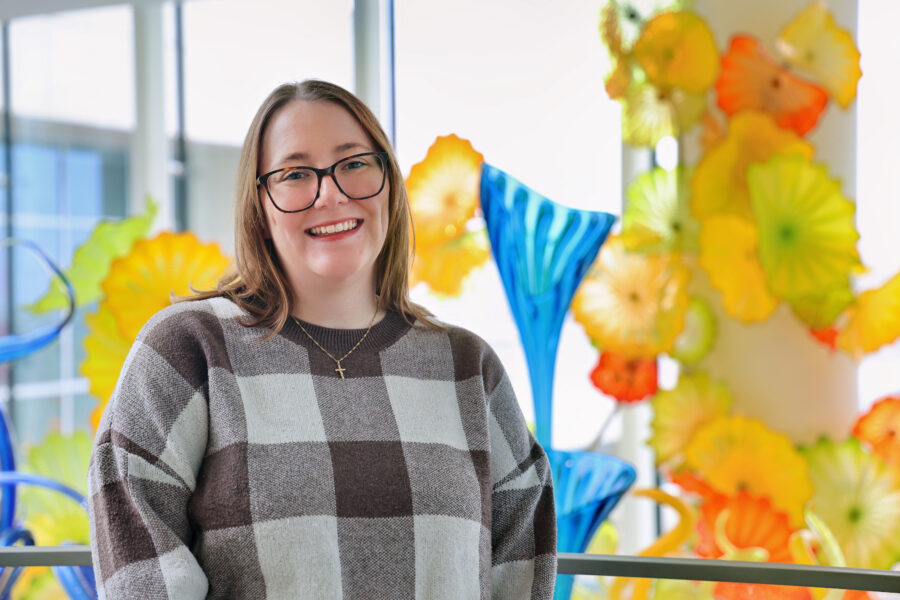
Krista Patterson, a clinical study coordinator at the National Cancer Institute-designated Fred & Pamela Buffett Cancer Center, is December’s Gold U Award recipient for her exceptional dedication to excellence, teamwork and patient care.
Patterson said she was “shocked” to receive the honor, saying, “I had to see the email to believe it. It’s such a huge honor. But honestly, I do this work for the patients.”
Patterson’s colleagues describe her as someone who consistently goes above and beyond to ensure patients have the smoothest, safest experience possible. Whether reorganizing schedules to accommodate urgent needs, coordinating care across multiple campuses, or staying late to make sure nothing falls through the cracks, her guiding principle is simple: What is in the best interest of the patient?
“If something can be done sooner to help a patient, I’ll do it,” she said. “We see people from across Nebraska and neighboring states, so it’s important to make their experience as seamless as possible. Their time matters. Their comfort matters.”
That patient-centered mindset is something she carries into every interaction, whether coordinating labs, navigating complex protocols, or collaborating with physicians and nurses to ensure each step aligns with study requirements and patient needs.
Patterson’s role extends far beyond her own workload. She is known across the trials office as someone colleagues can rely on, from troubleshooting a problem, remembering a key process, or simply offering guidance.
“I never want anyone to feel alone,” Patterson said. “If someone needs help, I want to be the person they can come to. And if I don’t know the answer, we’ll figure it out together.”
One of the qualities highlighted in her Gold U nomination was her integrity. Patterson does not shy away from acknowledging mistakes or areas for improvement, an attitude she hopes encourages transparency across the research team.
“It’s much easier to go to leadership and say, ‘This happened, and here’s how we’ll fix it,’” she said. “That openness helps us improve our systems. We all want the same thing: safe, high-quality care for our patients.”
Her commitment to quality has helped strengthen documentation practices, workflow organization and communication processes that support both patient safety and research integrity.
Congrats Krista!!!
Congratulations!
CONGRATS!!!
YAY Krista!!
Way to go Krista. This is well deserved.
Well deserved. Congrats.
Krista – Congratulations on this well deserved honor!
Congratulations Krista! Well deserved!
Congratulations Krista!
Congrad!