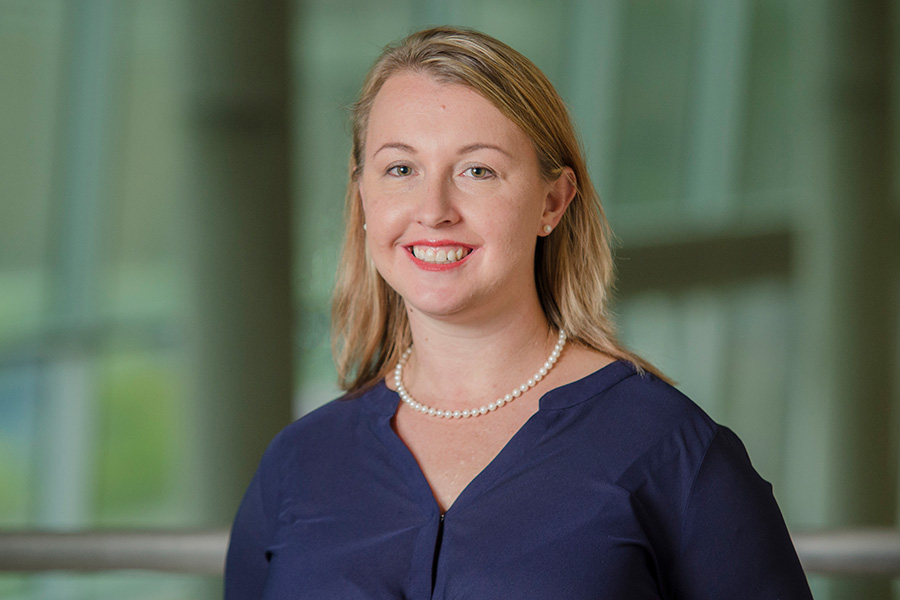
For Amanda Arnzen, MD, medicine has never been about prestige or paycheck. It’s been about showing up for patients who are most vulnerable, in places where access to care can be challenging.
That philosophy is exactly what UNMC’s Department of Anesthesiology is counting on as Dr. Arnzen steps into her new role as director of global health. Department Chair Andrew Patterson, MD, PhD, said Dr. Arnzen has the passion and work ethic to help the department elevate its global health program to the highest levels.
“Eventually, she will be supervising programs on multiple continents and helping to build critical infrastructure while empowering local healthcare teams to provide essential care for those in need,” he said.
It’s a mission she has been building toward her entire career. Long before she arrived at UNMC, Dr. Arnzen was shaped by community-based service, including trips to some of the poorest areas of Mexico, where she learned what it means to work without a safety net and to meet people exactly where they are. That experience planted the seed for a career defined not just by clinical excellence but by a commitment to patient care.
“I’ve always felt that my role was to seek to care for those that couldn’t care for themselves and to bring others along,” she said, adding her guiding principle as a leader is straightforward: Don’t ask anyone to do something you’re not willing to do yourself.
As director, Dr. Arnzen will oversee the department’s ongoing partnership with Zambia – a collaboration that connects 10 universities, including UNMC, to fill educational gaps and provide cutting-edge, hands-on anesthesia teaching to residents in a country with a shortage of trained anesthesiologists. Faculty from all 10 institutions rotate through the program 10 months out of the year, ensuring a consistent, sustainable presence rather than a series of one-time visits.
That distinction matters deeply to Dr. Arnzen. Sustainable impact, she said, means leaving something behind – not just performing procedures but equipping local providers to handle the next case themselves.
“One-time surgical visits have their place, but that’s not what this program is about,” she said. “This is about empowering local providers to raise their own standard of care and for every patient who comes after we’ve gone home.”
Dr. Arnzen said that means bringing equipment that stays, including video laryngoscopes, portable ultrasound devices donated through philanthropic support, and training providers to use them. It means learning which clinical protocols work in resource-limited settings and which ones, however well-intentioned, can actually cause harm when the infrastructure to support them doesn’t exist.
Dr. Arnzen is also focused on what global health work does for the department’s own trainees. Residents and fellows who participate, she said, return with sharpened instincts, deeper humility and a broader view of what anesthesiology can be.
“We are guardians of health when patients are most vulnerable,” she said. “This work expands what that means.”
Dr. Arnzen invites faculty and clinicians across disciplines who are interested in global health to reach out, saying enthusiasm and experience go a long way.