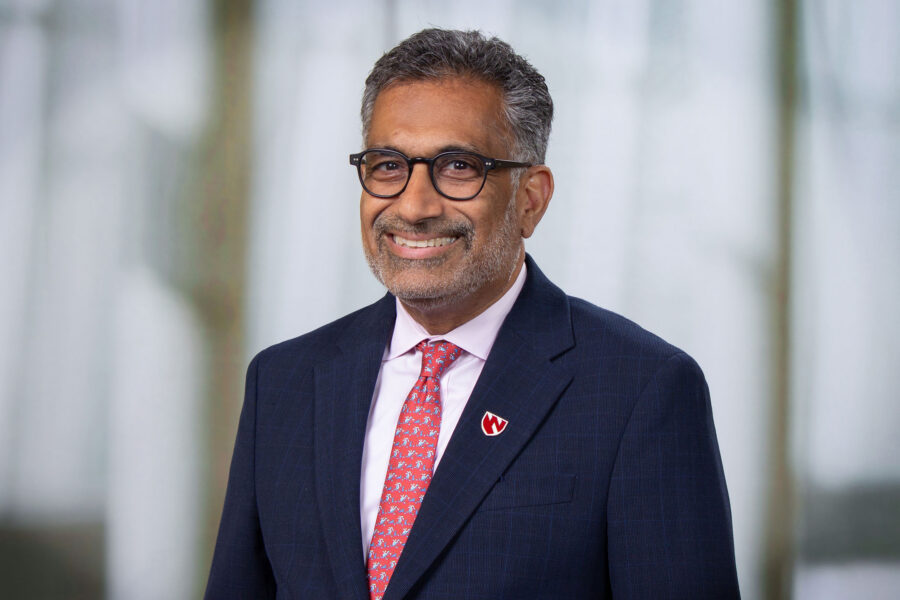
Ali S. Khan, MD, MPH, finds special meaning in being named the inaugural Richard D. Holland Presidential Chair of Public Health, an honor he received in 2024. More than a prestigious title, it serves as a lasting tribute to the mentorship and bond Dr. Khan shared with the late philanthropist.
Dr. Khan already had an impressive resume when he arrived at UNMC in 2014 to become dean of the college of public health. He had completed a 23-year career at the Centers for Disease Control and Prevention, where he served as chief in the CDC’s Special Pathogens Unit and as a former director of the Office of Public Health Preparedness and Response. He also had served as U.S. assistant surgeon general.
Yet, despite his credentials, Dr. Khan recalls the transition to academia with humility, saying: “I was a young dean. I had never been in academia.”
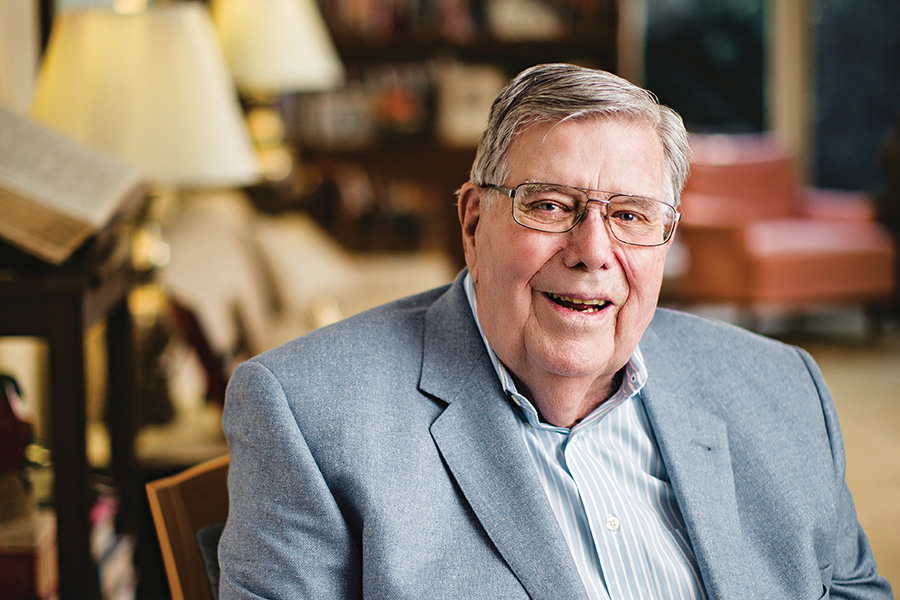
When he was introduced to philanthropist Richard Holland, he admits he didn’t put two and two together at first.
“I met him as a senior member in the community who could help me understand Omaha and Nebraska. I did not know the scale of his influence nor that he was the ‘Holland’ of the Holland Performing Arts Center, where I attended events,” Dr. Khan said.
During the many lunches the two had over the two years before Holland’s death in 2016, they discovered a shared a passion for public health and social justice — a theme that was the centerpiece of their conversations and friendship. During that time, Holland became a mentor to the dean, sharing his perspective about his hometown of Omaha and about Nebraska.
Dr. Khan treasures the insight.
“He was a social justice warrior,” he said. “Dick understood health equity issues at their core. He was a public health person, and from what I can tell, a large number of the many things that he supported had a public health bent. When I became the Holland chair, I was over the moon. I know he would have loved what we as a college can do.”
The $2 million endowed gift, which created the endowed chair, is an invaluable catalyst for the college, Dr. Khan said. It provides the “dream capital” necessary to recruit top-tier faculty, fund student scholarships and launch pilot programs that traditional funding sources might deem too risky.
It also is part of Only in Nebraska: A Campaign for Our University’s Future, a historic initiative to engage 150,000 unique benefactors to raise $3 billion and build the future Nebraska needs right now.
“We depend on philanthropy for pilot funding, so it gives us the flexibility to be innovative,” Dr. Khan said. “We can say, ‘Let’s use this money for a new idea and build the proof of concept needed to secure long-term funding.’ It lets us dream much bigger.”
Innovation is a hallmark of Dr. Khan’s leadership at the college. Together, he and his colleagues continually seek new, creative solutions to address public health problems across Nebraska while also keeping them from happening in the first place. Flexible dollars, like the Holland funding, give them the ability to be innovative as they think about what those solutions may look like.
“We have excellent faculty, but excellent faculty are always being recruited elsewhere, and it is becoming increasingly competitive to recruit excellent faculty,” Dr. Khan said. “You need to make sure that you make it as attractive as possible to come to Nebraska and stay here, and endowed professorships allow us to do that.”
Funding from the Holland chair is being used in a variety of ways to help people across Nebraska, including:
- Maternal and child health — Reducing mother and child deaths and complications such as premature birth as part of a statewide effort. The college has emphasized initiatives that have increased flexibility and relevance — especially tailored for rural communities — while expanding access to maternal health services.
- Harm reduction — Building a statewide, peer-driven recovery network that connects people with substance use disorder to immediate, compassionate support and essential services. During early recovery, an extremely high-risk period, providing rapid peer support, overdose prevention resources and coordinated access to housing, treatment and basic needs can prevent deaths and create a stable pathway to long-term recovery.
- Data science and informatics — Launching a program to apply real world data to population health, ensuring Nebraska’s workforce is equipped with the latest evidence-based tools.
Reflecting on the current state of the world, Dr. Khan believes Holland would have a nuanced view.
“If Dick were here today, he’d be appalled by some of the setbacks in public health,” he said. “But knowing Dick, he’d also be incredibly hopeful. He would support us and recognize exactly how his legacy is helping us do more.”