UNMC researchers will bring expertise in artificial intelligence and computational biology to a new $6 million National Science Foundation project focused on developing stronger, more resilient cereal crops.
The four-year project, co-led by the University of Idaho, UNMC and Clemson University, brings together specialists in artificial intelligence, engineering, plant biology and genetics. Researchers will study stalk lodging, a condition in which crop stems weaken or fail, causing plants to fall before they can be harvested.
Lodging can be triggered by wind and other environmental stresses and can reduce both crop yield and quality. The research will focus on cereal crops, including wheat, corn and sorghum.
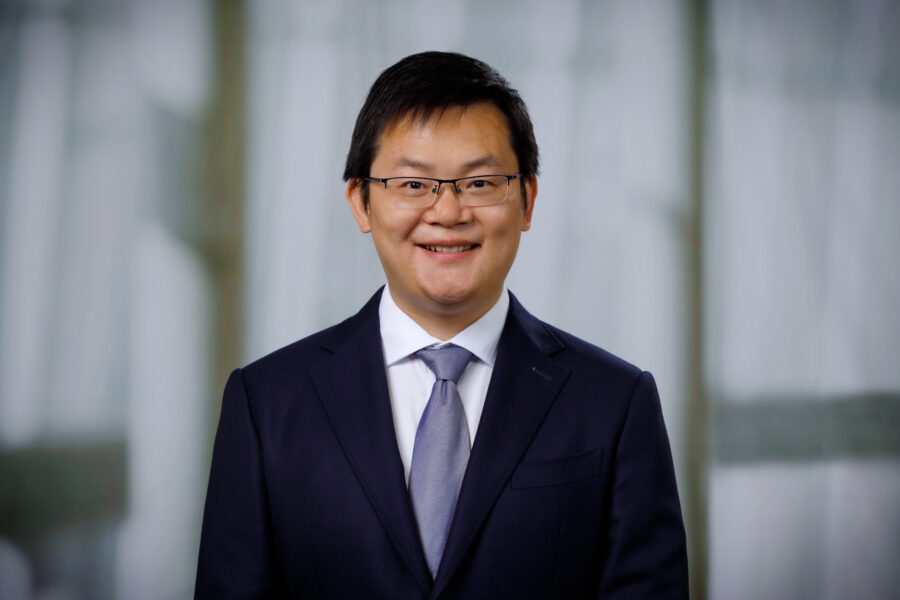
At UNMC, Shibiao Wan, PhD, assistant professor in the UNMC Department of Genetics, Cell Biology and Anatomy, will serve as the principal investigator for the project’s AI team, and Jieqiong Wang, PhD, assistant professor in the UNMC Department of Neurological Sciences, will serve as the co-principal investigator. They will use genomic, imaging, biomechanical and other data generated across the collaboration to develop a multimodal large language model aimed at identifying characteristics associated with stronger, more resilient plants.
“UNMC functions as the AI hub of the consortium,” Dr. Wan said. “Our team will transform the large, heterogeneous datasets produced by our partner institutions into predictive models and decision-support tools.”
Researchers at the University of Idaho will develop technologies to measure the physical characteristics and performance of crops, while Clemson scientists will contribute expertise in genomics and crop genetics. UNMC researchers will integrate those different types of information through AI models designed to identify genetic and biomechanical factors associated with lodging resistance.
Those models eventually could help researchers estimate which crop varieties are more vulnerable to lodging under different environmental conditions and identify genes and traits that warrant further study. The approach could allow plant breeders to make more informed decisions earlier in the breeding process.
For Dr. Wan, the project also offers an opportunity to apply approaches used in human health research to a different scientific challenge.
“My own research journey reflects that philosophy,” he said. “I was trained in engineering as an undergraduate and later transitioned into the intersection of AI and biomedical research.”
Dr. Wan said many of the computational questions involved in human and plant biology are similar, particularly when researchers are trying to understand how genetics, physical characteristics and environmental factors interact.
The work also may have implications beyond agriculture. Dr. Wan said AI approaches developed through the project could eventually inform biomedical research in areas such as multi-omics analysis, biomarker discovery, precision oncology and disease prediction.
The NSF award began in August and will support the project through 2030.