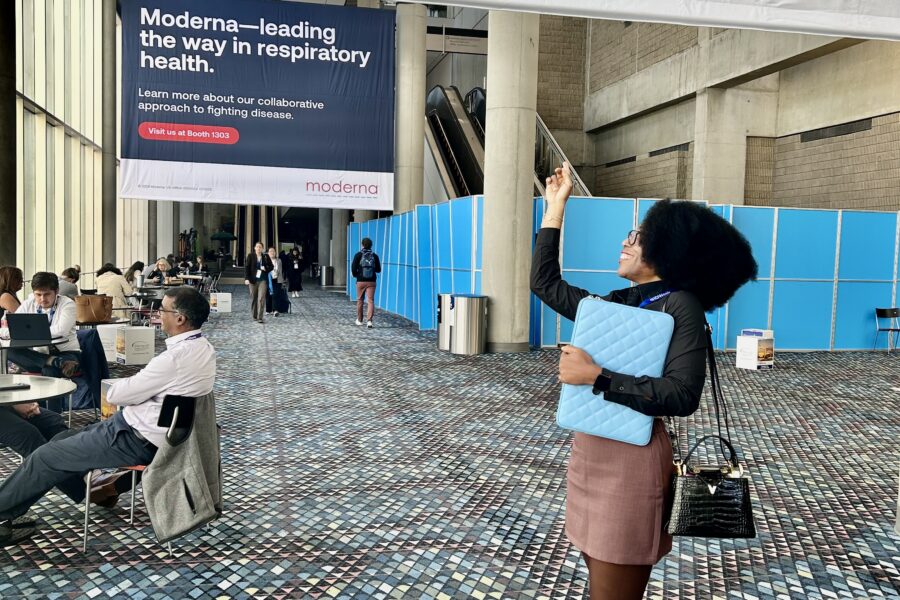
Amaka Modebelu, a PhD candidate in pharmaceutical sciences, needed to come up with an elevator pitch not just for professional reasons but also for something much more important:

Her mom needs to be able to explain to her friends what her daughter is working on in America.
An elevator pitch is a summation of your work that could be completed by the time the doors opened on the top floor – and easily understood by those along for the ride with you.
Or put another way, if you happened to find yourself on an elevator with a potential investor, and they asked you what you do, could you pique their interest in your project before the doors ding?
It can be tough to shorten an explanation of complicated scientific concepts that you’ve been working on for years, never mind doing so in a way that can be understood by someone starting from square one.
Modebelu’s example follows one of the most common pieces of advice for doing so. How would you explain your project to your mom?
She was able to craft an effective summation, winning an elevator pitch contest last fall sponsored by UNMC Graduate Studies and the UNMC American Association of Pharmaceutical Scientists student chapter.
Tanvi Patil finished second in the contest. She said she was inspired by the popular Three Minute Thesis competition.
But three minutes? She realized she’d need to cut that in half. At least.
Competitors in the UNMC contest were told to keep the description of their work to a minute and a half or less. How is that even possible?
“The key is simplicity,” Modebelu said. “The message should be easy for everyone to understand.
“It is important to have confidence also. It should be authentic, not memorized.”
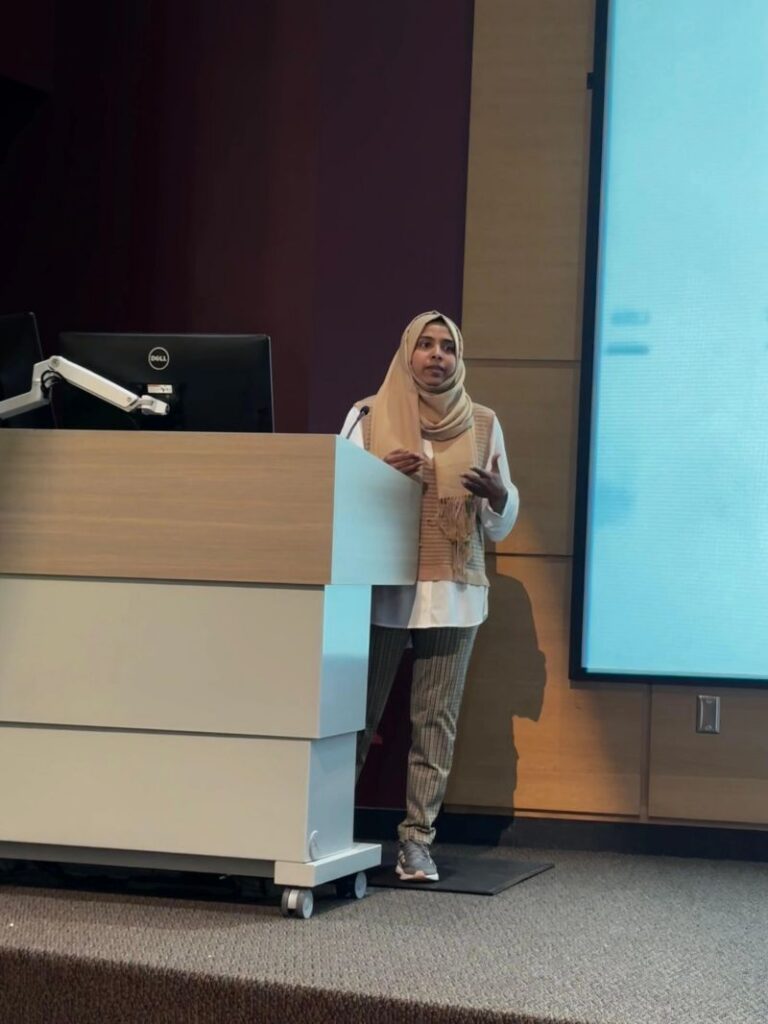
Patil cut and cut. She also leaned on the time-honored approach.
“I practiced my elevator pitch with my mom and my sister. When they understood the thing I wanted to convey to them, I knew I had it,” she said.
The realization that you can deliver your message to anyone can be freeing and even thrilling.
“It has helped my confidence,” Modebelu said.
“It’s like magic,” she added.
Sumaiya Nahid, a PhD candidate in medicinal chemistry, finished third in the contest. She recently published a LinkedIn post describing the experience of implementing her new skill at a conference:
“At the booth, a distinguished chemist asked me about my research. Surrounded by the noise, I casually summed it up in just a minute. To my surprise, he immediately asked for my contact information to invite me for a talk!
“That moment reminded me of the true power of an elevator pitch; how even one minute can open doors you never expect!”