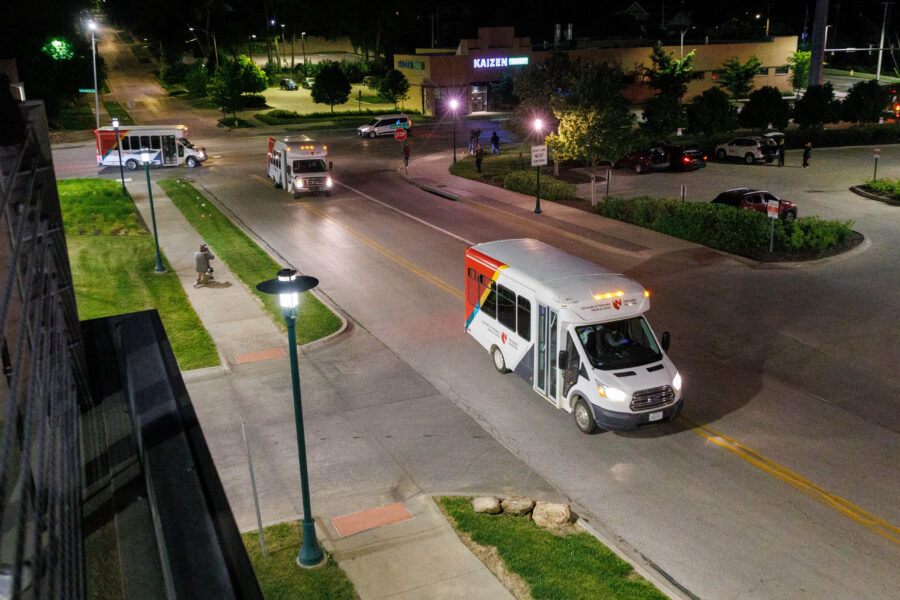
U.S. citizens who were aboard the cruise ship associated with a hantavirus outbreak arrived in Omaha early Monday morning, with one passenger who tested positive for the virus, but does not have symptoms, admitted to the Nebraska Biocontainment Unit at the med center for follow-up testing and monitoring. The other passengers arrived at the National Quarantine Unit, located at the Davis Global Center on the campus of UNMC and Nebraska Medicine, for assessment and monitoring.
During a May 8 press conference, UNMC and Nebraska Medicine experts provided information about hantavirus, the National Quarantine Unit, the Nebraska Biocontainment Unit and the plans and processes in place.
Michael Wadman, MD, Muelleman Chair of Emergency Medicine at UNMC and medical director of the National Quarantine Unit, compared a stay in the unit to “like staying in a hotel room.” The unit features 20 such rooms that include bathrooms, Wi-Fi and exercise equipment, with individual negative air pressure systems. The rooms are designed to be comfortable for the people staying in the unit while providing safety for medical center personnel and others.
Angela Hewlett, MD, medical director of the Nebraska Biocontainment Unit, Orr Chair in Health Security and infectious diseases physician-scientist, said this Andes type of hantavirus is not a new virus. It can spread between people, unlike most hantaviruses. But it is not infectious through indirect contact, like COVID-19. It would likely take sustained very close contact to spread from person to person, Dr. Hewlett said. She does not foresee another worldwide pandemic.
John Lowe, PhD, director of the UNMC Global Center for Health Security and assistant vice chancellor for health security training, said the medical center has been working hand in hand with each of its partners from the city, county and state level to federal agencies, including the Centers for Disease Control and Prevention (CDC), U.S. Department of State, U.S. Department of Health and Human Services (HHS) and Administration for Strategic Preparedness and Response (ASPR). As the organization previously safely treated patients during the 2014 Ebola outbreak and cared for some of the first Americans diagnosed with COVID-19 in 2020, these relationships are rock solid.
“There’s a high degree of trust,” Dr. Lowe said. “It’s really helpful to have that background experience, to be starting with knowing what works.”
“COVID focused us,” Dr. Wadman said. “We now have a standardized response to just about anything that might occur.”