Innovations come in all sizes and touch every corner of our lives. Some are tools or processes; some are materials (like bioplastics) or systems that advance scientific techniques.
Here’s a look at the variety of inventions that UNeMed, UNMC’S technology transfer and commercialization leader, is advancing into the marketplace.
Ideas in Development
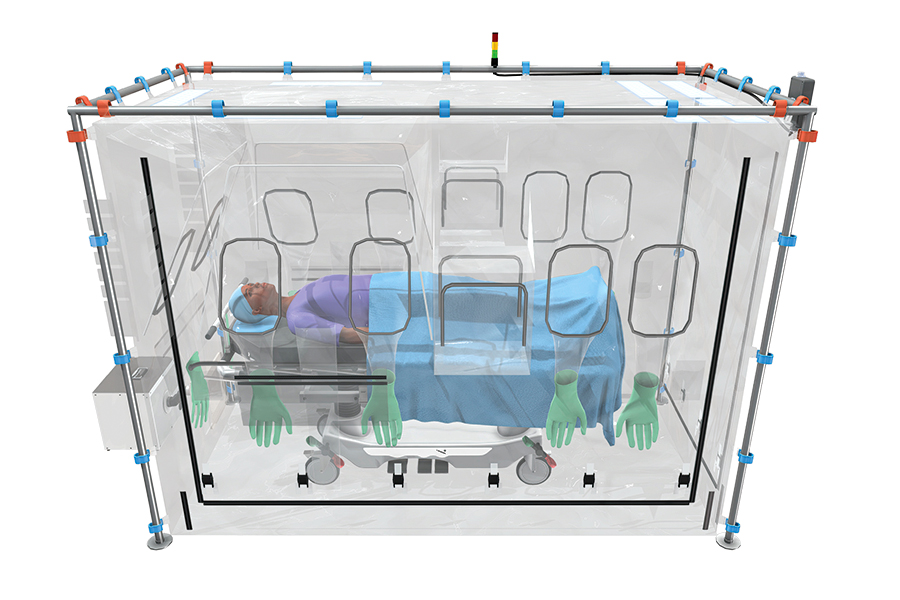
Carecube ISTARI is an FDA-approved isolation unit built for rapid deployment wherever care is needed. Co-developed with infectious disease and pandemic response experts from UNMC, the Centers for Disease Control and Prevention, ASPR (Administration for Strategic Preparedness) and DARPA (Defense Advanced Research Projects Agency), the Carecube was featured in an October 2025 episode of NBC’s “Chicago Med.”
Creatine HCI, a UNMC-patented creatine hydrochloride formulation, was co-invented by UNMC researchers and Vireo Systems. It was designed to improve solubility and ease of use compared with traditional creatine monohydrate. The technology is incorporated into dietary supplements that support muscle performance and recovery and has been commercialized by the Nebraska-based startup Vireo Systems, which manufactures and markets the product globally under the CON-CRET® brand. Vireo’s Plattsmouth, Nebraska facility, which first opened in 2008 and was updated as recently as 2023, represents the first domestic manufacturing plant dedicated to creatine and amino acid production.
During critical care crises, families have greater support through Familyroom.health. This clinical, digital platform enables families to chart their contributions directly into the electronic health record and makes family input a documented part of patient care. UNMC’s Breanna Hetland, PhD, developed the platform after her father was a patient in the intensive care unit.
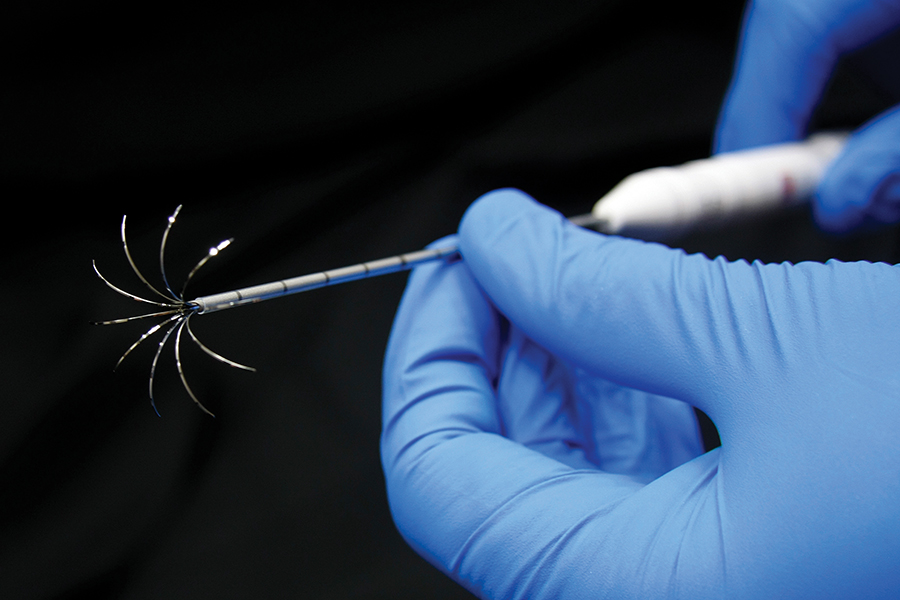
The LeVeen Needle Electrode uses radio frequencies to destroy tumors with greater precision. UNMC graduate Robert LeVeen, MD, invented the umbrella-shaped tool while a faculty member in the UNMC Department of Radiology (1975 to 1999). The idea came to him instantly while listening to a colleague’s presentation about using a needle to burn tumor. The problem, however, was single-needle electrodes produced small areas of therapeutic heating. “I understood the problem could be solved by having an array of needles, thus the array would produce a large lesion suitable for treatment of tumors. It was like an instant revelation. I understood the solution right away.”
In 2012, the malaria drug Synriam was approved and deployed to fight malaria in India. UNeMed partnered with Medicines for Malaria Venture, an international group that battles malaria with the help of the Bill & Melinda Gates Foundation and other organizations. UNMC’s Jonathan Vennerstrom, PhD, led the international team that created the drug compound that led to the development of Synriam.
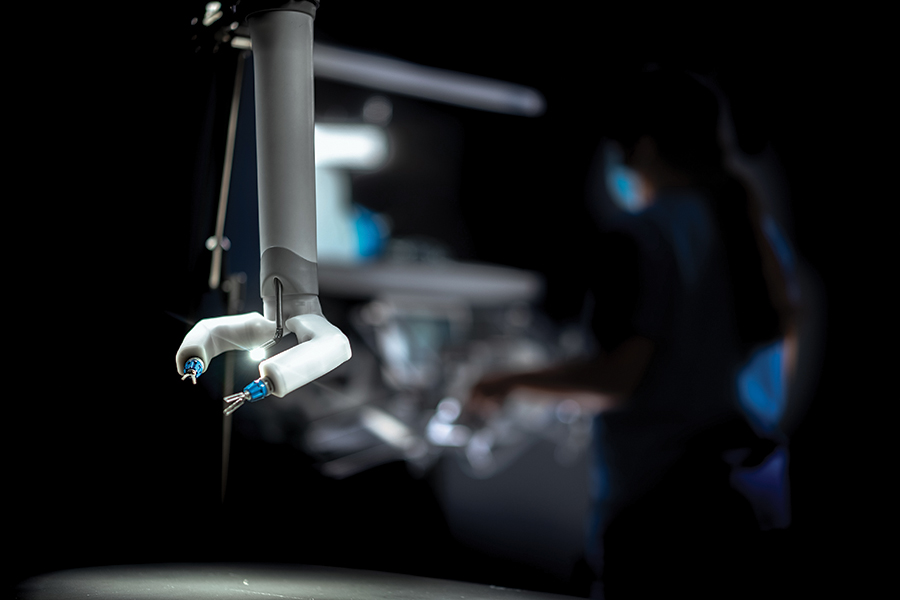
Virtual Incision is a surgical robotics company – and poster child for what success in commercializing innovations looks like. This cross-campus collaboration between UNMC and the University of Nebraska-Lincoln has resulted in more than 200 U.S. patents and an excess of $100 million in funding from investment and angel groups. Today, the company’s Miniaturized In Vivo Robotic Assistant has FDA clearance for minimally invasive surgery procedures, namely bowel resections. MIRA also has been tested in experiments aboard the space station.
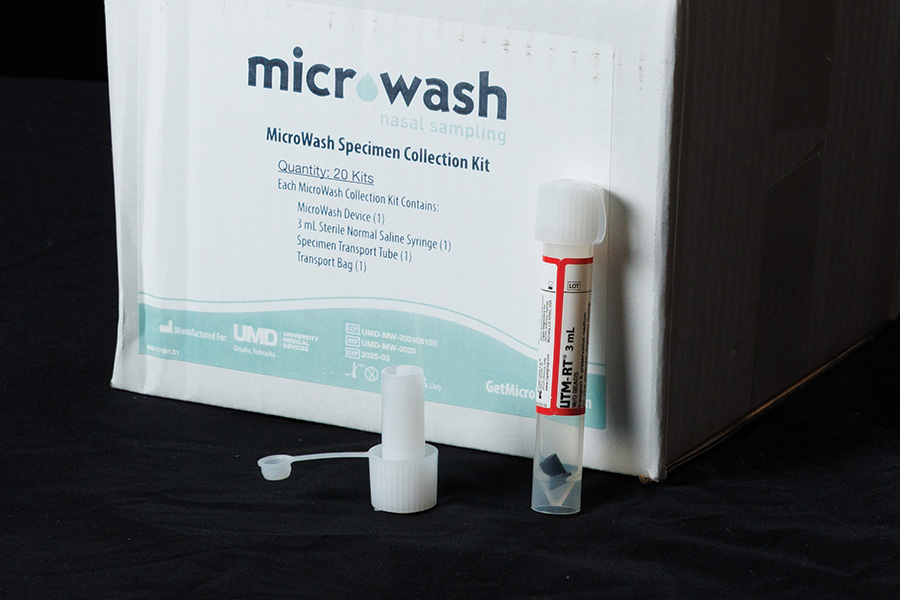
Born out of the COVID-19 pandemic, MicroWash is a self-contained irrigation device that allows clinicians to easily and painlessly collect samples from a patient’s nasal cavity. Invented by ThanhNguyen, PhD, and Michael Wadman, MD, the device simplifies the sample collection process and is the cornerstone technology for their startup, University Medical Devices.