Patients at the Fred & Pamela Buffett Cancer Center now have access to a promising new therapy that has generated national attention for its potential to improve outcomes for people with advanced pancreatic cancer. Patients with previously treated metastatic pancreatic cancer can receive daraxonrasib through an Expanded Access Program (EAP), providing an opportunity to receive the investigational therapy while it awaits review by the U.S. Food and Drug Administration.
Daraxonrasib targets RAS mutations, genetic alterations that drive the growth of most pancreatic cancers. The therapy has generated significant interest after results from the Phase 3 RASolute 302 study, which were presented at the American Society of Clinical Oncology (ASCO) annual meeting in June.
The EAP expands access to an investigational treatment that could represent an important advance against one of the deadliest forms of cancer.
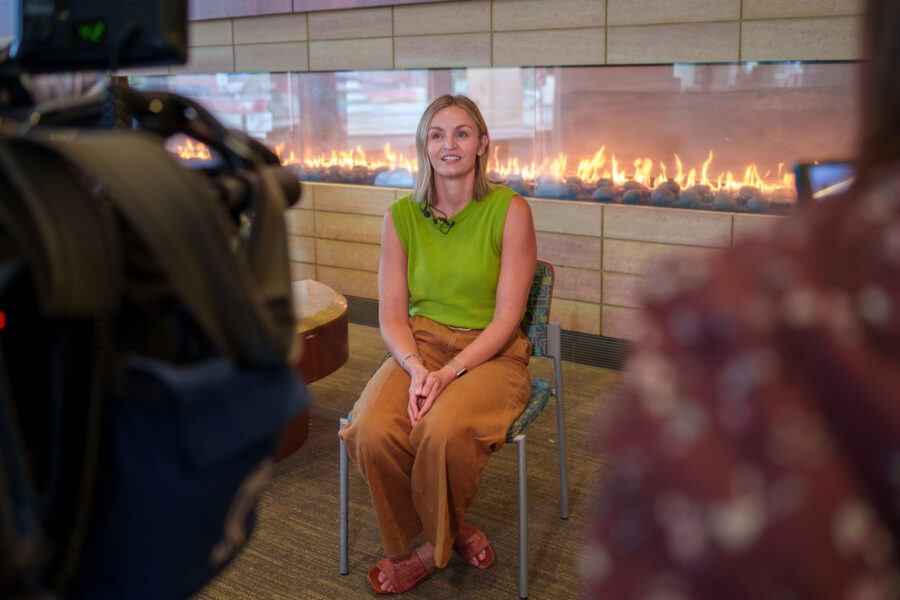
“Pancreatic cancer has historically been one of the most difficult cancers to treat, and meaningful breakthroughs have been rare,” said Kelsey Klute, MD, gastrointestinal medical oncologist at Nebraska Medicine and the Fred & Pamela Buffett Cancer Center. “The results seen with daraxonrasib are among the most encouraging we’ve seen in this disease in many years. Through the Expanded Access Program, we’re able to offer eligible patients access to this promising investigational therapy while it undergoes the FDA review process.”
Unlike a clinical trial, the Expanded Access Program lets doctors request access to an investigational drug outside of a research study for eligible patients. Daraxonrasib remains an investigational therapy and has not yet received FDA approval.
The program is currently available only for patients with metastatic pancreatic cancer whose disease is no longer responding to chemotherapy. It is not available for patients with newly diagnosed metastatic pancreatic cancer, earlier-stage pancreatic cancer, or other cancer types.
More than 90% of pancreatic cancers are driven by KRAS or related RAS mutations, making therapies that target these pathways a major focus of cancer research. Researchers have described daraxonrasib as a potentially significant advance in addressing these mutations.
The treatment gained broader public attention after former U.S. Senator Ben Sasse shared on the CBS News program 60 Minutes that he was receiving daraxonrasib as part of his treatment for metastatic pancreatic cancer. Sasse was not treated at the Fred & Pamela Buffett Cancer Center.
“One of the greatest strengths of an NCI-designated cancer center is the ability to bring innovative therapies to patients who otherwise might not have access to them,” Dr. Klute said. “Our goal is to offer the most promising treatment options as quickly as possible while continuing to advance cancer care through research and innovation.”
As Nebraska’s only National Cancer Institute-designated cancer center, the Fred & Pamela Buffett Cancer Center offers patients access to leading-edge research, clinical trials and innovative cancer treatments that may not be available at many other institutions.
God bless the work done at the Fred and Pamela Buffett Cancer Center and all the doctors and staff researching. Thank you!
This is incredible to be able to bring such innovative treatment to the patients of Nebraska. Thanks for all the amazing work you do Dr. Klute and team!