
Hope Kircher looped her badge around her neck and sat behind the front desk to clock in for her afternoon shift. She paused behind the computer to greet a few guests and offer directions to the appropriate meeting rooms.
It’s a typical day at the Barbara Weitz Community Engagement Center on the University of Nebraska at Omaha campus.
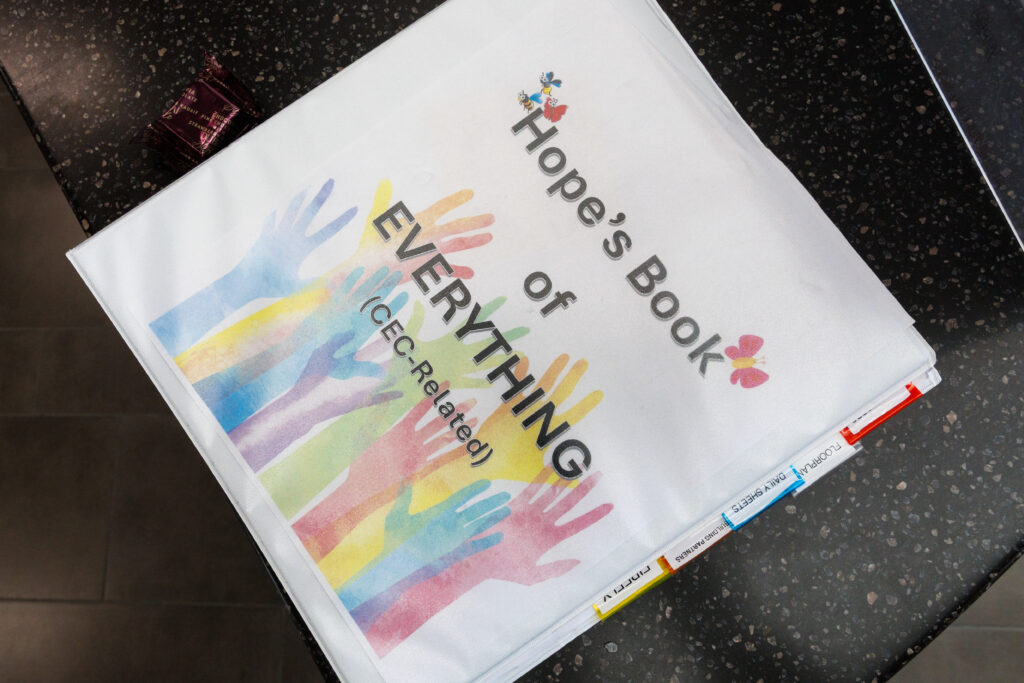
That means greeting guests, resetting meeting rooms and keeping the Weitz CEC commons spaces presentable and welcoming. But first, Kircher, a welcome desk student worker, armed herself with “Hope’s Book of Everything.” The white binder, adorned with butterflies on the cover, contains color-coded tabs and checklists to help Kircher with her part-time job.
The 22-year-old landed the job in November, thanks in part to her experience with the Trailblazers program at the Munroe-Meyer Institute. In the program, Kircher said, she learned social skills and gained a sense of independence.
Kircher’s training at MMI comes from the Nebraska EmployABILITY grant, which helps individuals with disabilities discover their potential and find fulfilling careers.
Kircher, an Omaha native, participated in Trailblazers for three years, taking classes at UNO and completing workplace training that included cashiering, customer service, organization, communication, teamwork and independent task completion, said Rachel Ray, assistant professor and Nebraska EmployABILITY project director at MMI.
Ray recommended Kircher for the UNO gig.
Kircher went to the interview and earned the job the same day.
“Our goal isn’t simply to help someone get a job — it’s to help them build a career that matches their strengths, interests and goals,” Ray said. “Hope consistently demonstrated reliability, attention to detail and a genuine desire to help others. Once the Weitz CEC saw those qualities, the focus shifted from what supports she might need to the value she brings to their team.”
A typical day might see Kircher greeting visitors who enter the building, booking meeting spaces, and ensuring the building’s common areas and meeting rooms are ready for community use.
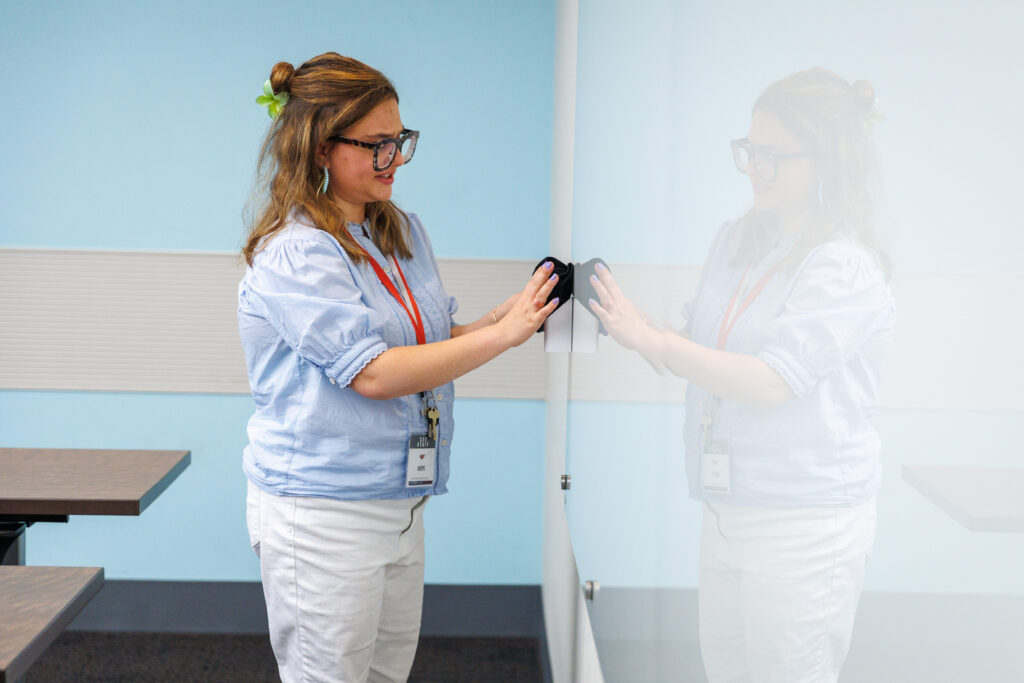
After Kircher logged in, she entered the atrium armed with her binder. She started by cleaning tables, countertops and stools. She moved onto meeting rooms where, in addition to cleaning, she tested whiteboard markers, computers and audio visual equipment. When one screen wouldn’t turn on, she made a note on her checklist to revisit the issue.
Sometimes hurdles like that can be frustrating, Kircher said. But her colleagues have been patient with her as she learns.
“I learn differently,” Kircher said. “Some things may take me a while to figure out but I get it eventually. They’ve been patient with me and I’m very grateful.”
Nakita Williams, operations manager of the Weitz CEC , said they realized quickly that Kircher likes to have something physical in hand. That led to “Hope’s Book of Everything.”
“We all learn differently,” she said. “[Kircher’s] right on schedule when it comes to catching on to new tasks. Everybody comes here with a different learning curve.”
No two days on the job are the same, and Kircher is always willing to learn something new. Williams applauded Kircher’s work ethic — on display at UNO and on her own, selling handcrafted potholders.
“She comes in like a ray of light,” Williams said. “If she does have a bad day, you don’t know it. She’s a hard worker.”
Ray’s goal is for clients to find jobs they enjoy, not just whatever job is hiring. Kircher said she’s found that in her position at the Weitz CEC.
“I love the people here,” she said. “They’ve been awesome and very understanding. I want to stick with this job.”
Hope’s success reflects a growing effort across Nebraska to connect individuals with disabilities to meaningful employment through work-based learning, individualized supports, and partnerships with employers who recognize talent and potential.
The funding supporting Kircher’s job training program is provided by the Nebraska EmployABILITY grant through the U.S. Department of Education, grant number H421F240047.