Angel white whooping cranes – the rarest crane species in the world – come to life on the Davis Global Center atrium’s three-story screen.
There, imagery shows lean, five feet tall birds dancing a graceful courtship tango, using their beaks as a trowel and hatching chicks from eggs the size of a softball.
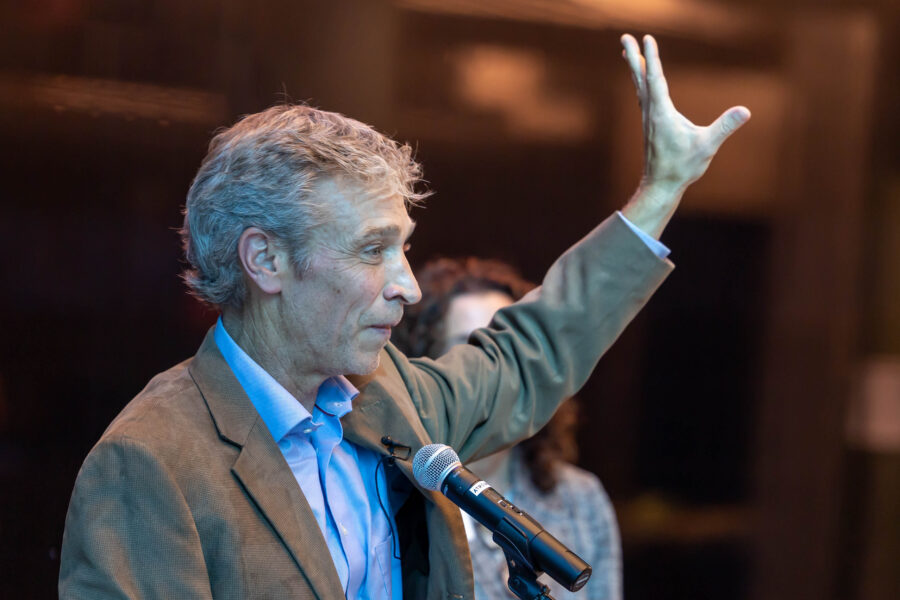
“These birds are here despite us and because of us,” said photographer and conservationist Michael Forsberg of Lincoln, Nebraska, as he showcased birds that migrate 2,500 miles, twice a year, from northern Canada to the Texas Gulf Coast, stopping briefly along the Platte River Basin.
That stop, he said, marks the largest gathering of cranes — both sandhill and whooping cranes — anywhere on the plant, often surpassing one million birds.
Forsberg’s Sept. 8 artist talk, “Into Whooperland,” wove together art, innovation and technology to highlight the beauty of, and our responsibility for, a species that, thanks to conservation work, now totals 540 birds in the wild (up from about 20 in the 1940s).
Hosted by UNMC and the Healing Arts Program, Forsberg maximized the unique platform provided by the iEXCEL program, sharing photographs and digital content ranging from timelapse photos in whooping crane habitats to AR film footage of their migration path.
“There’s a lot we can learn through the arts to teach us how to be better providers,” said UNMC Chancellor H. Dele Davies, MD, touting the role observation, listening and being curious plays within the arts and healthcare. “The humanities made me a better physician…and support another dimension of wellness.”
Since its establishment in 2017, UNMC’s Healing Arts Program has hosted 13 exhibitions with local and national artists, launched a medical orchestra and choir, and grown their collection to more than 500 works of art, including the Chihuly Sanctuary inside the Fred & Pamela Buffett Cancer Center. While introducing Forsberg, Amy Jenson, executive director of the Healing Arts Program, credited Gail Yanney, MD, and her late husband, Mike, for their support in establishing the Healing Arts Program.
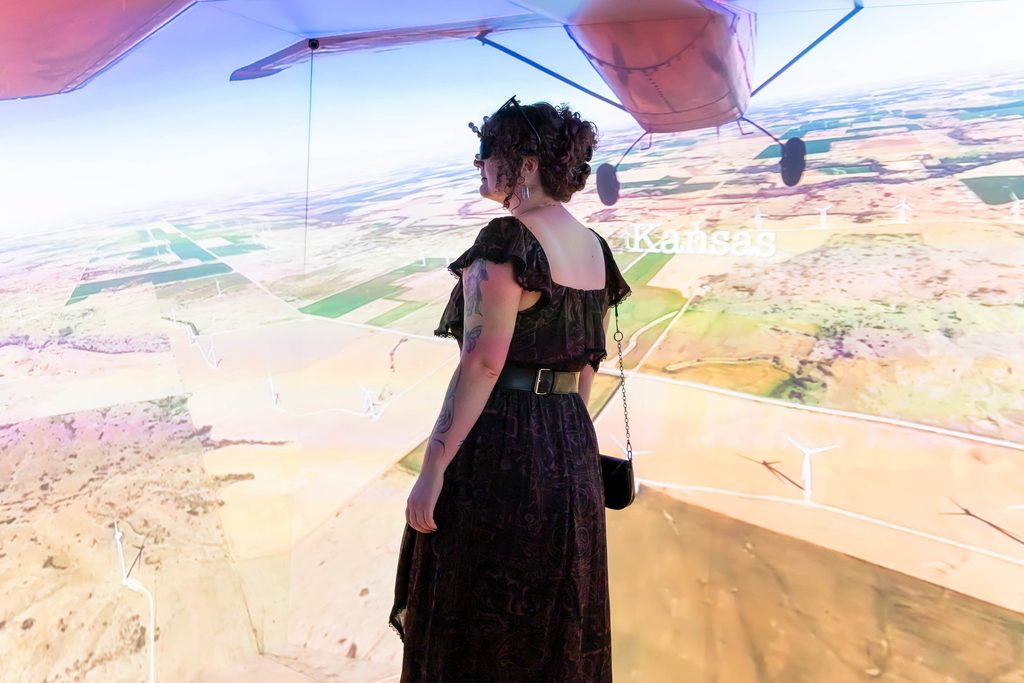
Following Forsberg’s presentation, attendees learned more about the cranes through immersive exhibits via the Davis Global Center’s holographic theater, curved cadwall, multitaction iWall helix and 3D laser-projected cave, which enabled participants to ‘fly’ the crane’s 2,500-mile migration path.
Forsberg, who recently spent two months biking the Central Flyway migratory route, noted that – like missing rungs on a ladder – urban development, habitat loss and water quality issues threaten the species and their migratory route.
“I’m looking at the wonder and the worry,” he said, as the elegant bird stood behind him on screen.