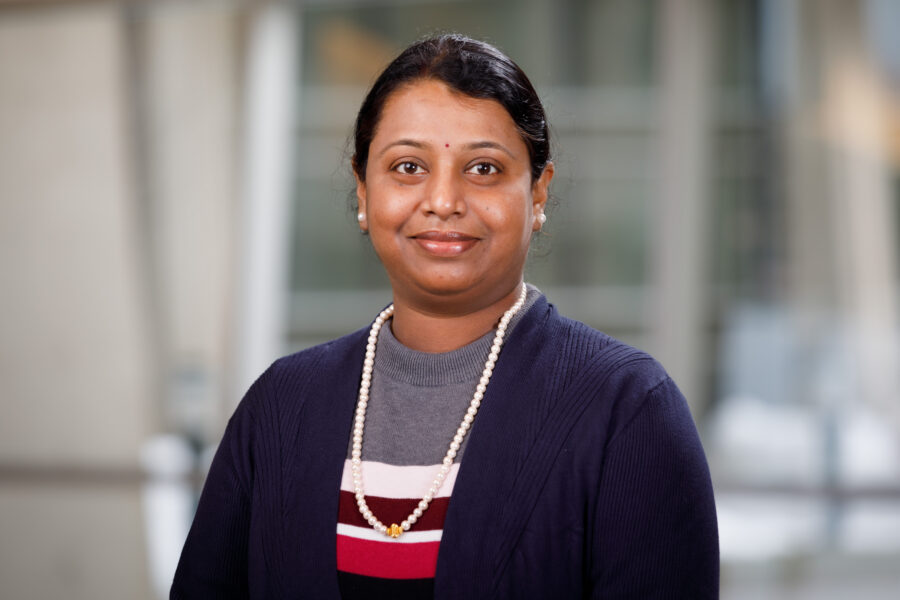
This profile is part of a series to highlight the researchers who will be honored at a ceremony on Oct. 29 for UNMC’s 2026 Scientist Laureate, Research Leadership, Distinguished Scientist and New Investigator recipients.
Karuna Rasineni, PhD, will receive a Distinguished Scientist Award. Distinguished Scientist Awards, which are sponsored by the chancellor, recognize researchers who have been among the most productive scientists at UNMC during the past five years.
- Name: Karuna Rasineni, PhD
- Title: Associate professor, UNMC Department of Biochemistry and Molecular Biology, UNMC College of Medicine
- Joined UNMC: 2010
- Hometown: Venkatadri Palli, Anantapur district, Andhra Pradesh, India
Please describe your research focus in three words or less:
- Alcohol-associated fatty liver disease
- Metabolic dysfunction-associated steatotic liver disease
- Aging and its effects on alcohol-associated fatty liver disease
Why is research important in the world today?
Research is the foundation of better health. It helps us understand the biological mechanisms that underlie health and disease, identify new therapeutic targets and translate scientific discoveries into meaningful improvements in patient care. By uncovering how organs, hormones and metabolic pathways interact, research enables more effective strategies to prevent and treat chronic diseases, improve quality of life and ultimately shape a healthier future.
My research will make a difference because:
Chronic liver diseases are among the fastest-growing causes of morbidity and mortality worldwide, yet effective treatment options remain limited. Our laboratory investigates how metabolic hormones and inter-organ communication coordinate energy balance, alcohol consumption, inflammation and liver health. By studying emerging pathways involving ghrelin, LEAP2, GLP-1 and related hormonal networks, we seek to uncover fundamental mechanisms linking the intestine, liver, adipose tissue and immune system to disease progression. These discoveries will advance our understanding of liver disease biology, identify novel therapeutic targets and support the development of innovative treatments that improve patient outcomes and reduce the global burden of liver disease.