A national leader on medical public policy and advocacy urged UNMC health scientists to harness their expertise and experience to create a “superpower” that they can use to advocate for research, patient care and education.
Danielle Turnipseed, JD, chief public policy officer with the Association of American Medical Colleges, delivered the keynote address Tuesday during the third annual Bob and Helen Bartee and Family Advocacy of Science Lectureship and Award for Scientists.
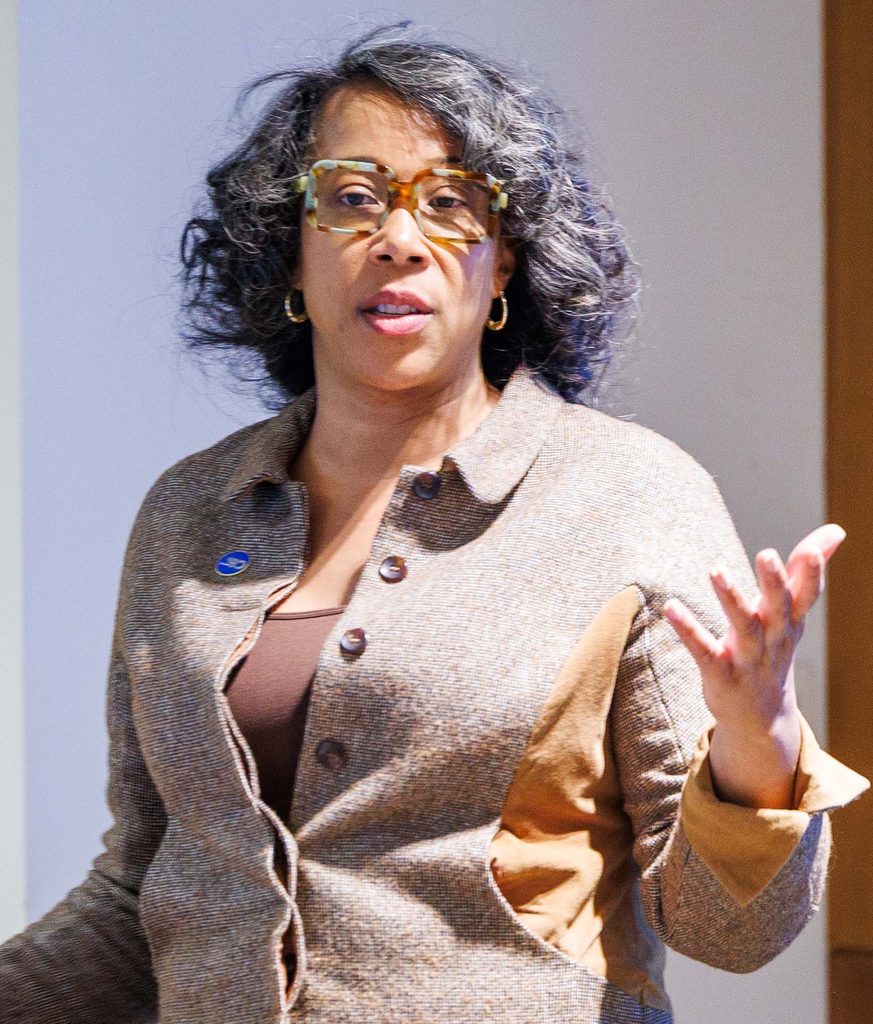
Advocacy can take many forms and use a variety of tools, including data, storytelling and trust-building to bring people along on the journey, she said.
Being an advocate and harnessing power requires practicing your argument and position. “Have somebody who does not see things your way engage with you and listen and give you feedback … Seek to understand how they are arriving at their own position. Is it a matter of distrust? Is it a lack of knowledge?” Turnipseed said.
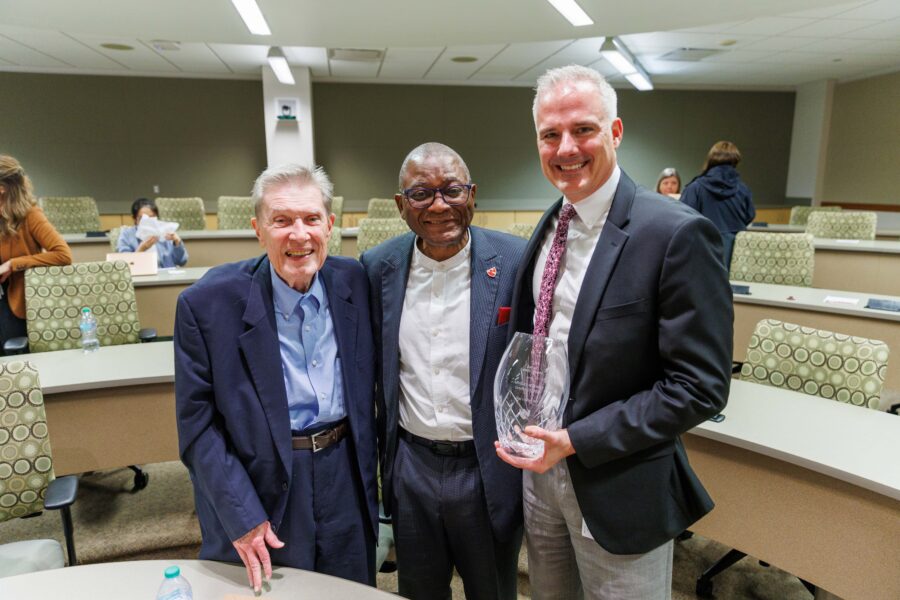
She also described how Don Coulter, MD, winner of this year’s award, turned a problem a patient faced into advocacy with the state. That led to the founding of the Pediatric Cancer Research Group and ongoing state funding that helps support a growing portfolio of pediatric cancer research in Nebraska.
Dr. Coulter, Edna Ittner Chair of Pediatric Hematology and Oncology and the PCRG’s director, credited the research group’s establishment to the encouragement and mentorship he received from Bartee, UNMC’s longtime vice chancellor for external relations.
“More important than any impact on my career are the impacts that the scientists of the Pediatric Cancer Research Group have made and are making for the families of Nebraska,” he said. “Through Bob’s legacy, through his guidance, we’ve changed the paradigm of pediatric cancer clinical care and research in the state.”
UNMC Chancellor H. Dele Davies, MD, seconded Turnipseed’s call to action. Paraphrasing the Martin Luther King Jr. quote, “Everybody can be great, because anybody can serve,” Davies said, “Everybody can transform lives, because everybody can advocate.”