When the National Governors Association wanted a model for strengthening behavioral health workforce in America, it looked to Nebraska.
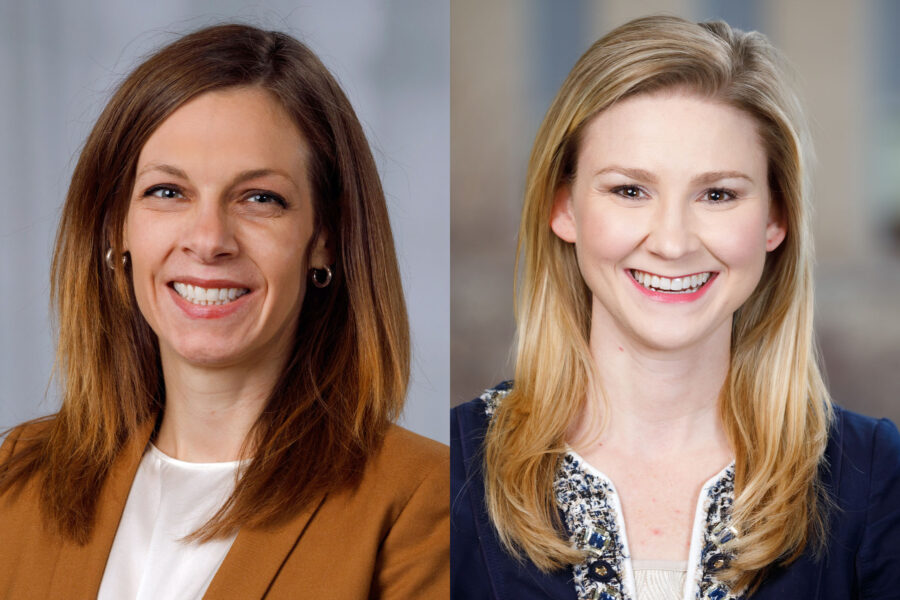
Marley Doyle, MD, director of the Behavioral Health Education Center of Nebraska, and Katrina Cordts, PhD, BHECN’s deputy director, presented at the National Governors Association’s Governors’ Education Policy Advisors Institute in New Orleans in late May, speaking on the plenary panel, “Strengthening the School-Based Mental Health Workforce.” The two-day event, held May 28-29, brought together education policy advisors from states and territories across the country.
NGA specifically sought out BHECN to feature the Nebraska Model — the organization’s comprehensive framework for behavioral health workforce development — as a model approach for other states.
Dr. Doyle presented the Nebraska Model’s six components: career awareness, career preparation, training experiences, professional support, workforce research and outreach. Dr. Cordts illustrated how the model is being applied through a grant from the Nebraska Department of Health and Human Services, under which BHECN places graduate trainees in school settings to build interest in school-based mental health careers.
“States across the country are exploring innovative approaches to strengthen their behavioral health workforce,” Dr. Doyle said. “Our experience in Nebraska suggests that progress is greatest when workforce development efforts are aligned across multiple areas, from career awareness and training opportunities to professional support and retention.”
The presentation is the latest milestone in a rapidly expanding national impact. Nebraska’s model has influenced the creation of similar centers in Nevada, Illinois and Florida, and in February 2025, BHECN helped found the Behavioral Health Workforce Center Alliance, which has since grown to represent 22 member states.
“Although BHECN has been in operation since 2009, we’ve seen rising national interest and subsequent growth in behavioral health workforce development efforts in the last few years,” Dr. Cordts said. “It’s exciting to have conversations with other states that are curious about what we’re doing and interested in partnering to create new solutions.”
Dr. Doyle added that Nebraska is the only state longitudinally tracking its behavioral health workforce, a practice that began in 2010 and has documented a 49% increase in providers. She hopes advisors leave with a simple takeaway.
“I hope states leave with practical ideas and strategies they can adapt within their own contexts as they work to strengthen their behavioral health workforce,” she said.
Congratulations on your efforts, Dr Cordts! You are an outstanding representative of the Department of Pediatrics and the Child Health Research Institute. We applaud this great work.
Congratulations to BHECN on the national recognition of their behavioral health workforce development model!
Congratulations! 2 of the BEST!