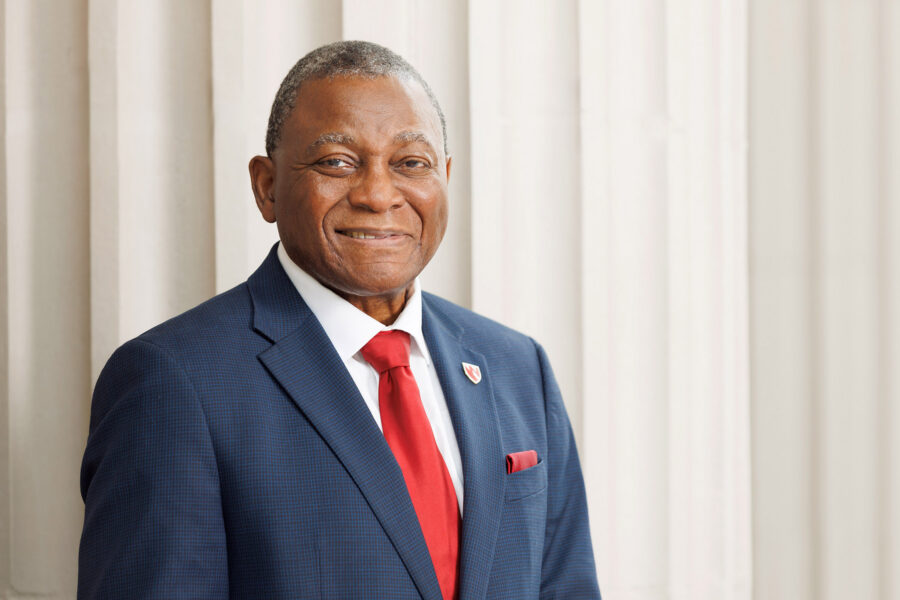
Students and faculty leaders at the UNMC Kearney campus discussed the challenges and opportunities of a rural health education campus recently with a key UNMC advisory group.
More than 30 members of the UNMC Board of Counselors – who serve as ambassadors, advocates and advisers for the university – met Oct. 20 at the Douglas A. Kristensen Rural Health Education Complex in Kearney. They engaged with student and faculty leaders of the Kearney campus and toured the Health Science Education Center II, which opened last spring.
“This meeting was especially meaningful because it was the first time our UNMC Board of Counselors had gathered in central Nebraska,” said UNMC Chancellor H. Dele Davies, MD. “At UNMC, we call ourselves a 500-mile-wide campus. Being here gives the board an opportunity to see what that means firsthand. Kearney is an important hub for educating Nebraska’s health workforce, expanding access to research and clinical trials and strengthening partnerships with communities across the state.”
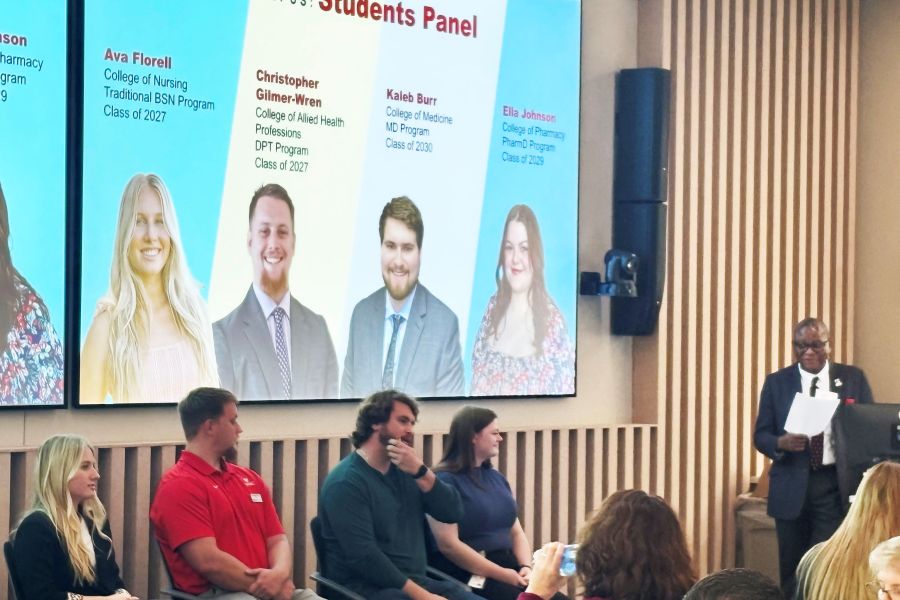
UNMC’s history of educating students across Nebraska goes back decades. In Kearney, those efforts expanded in 2014 with the opening of the Health Science Education Center I. In fall 2025, pharmacy and expanded nursing and allied health programs began, with the first cohort of medical students beginning in fall 2026. At full implementation, total enrollment in UNMC’s programs on the Kearney campus will be more than 600 learners.
Faculty leaders who participated in the Oct. 20 panel included:
· Gary Cochran, PharmD, interim associate dean, UNMC College of Pharmacy
· Teresa Cochran, PhD, associate dean, UNMC College of Allied Health Professions
· Melissa Florell, PhD, interim assistant dean, UNMC College of Nursing
· Rob Messbarger, MD, associate dean, UNMC College of Medicine
Students who participated included:
· Kaleb Burr, UNMC College of Medicine
· Christopher Gilmer-Wren, UNMC College of Allied Health Professions
· Ava Florell, UNMC College of Nursing
· Ella Johnson, UNMC College of Pharmacy
“We had meaningful discussions and heard insightful perspectives from both faculty and students, as well as from our Board of Counselors,” said Dr. Davies, who moderated the panel discussions with faculty and students. “I want to thank everyone who joined us in Kearney and participated in these conversations.”
The engagement between educators, learners and community members is essential to meeting Nebraska’s workforce needs, Dr. Davies explained. “As we work to increase the number of health providers in rural areas, it is important to keep these conversations going. They help us better understand the needs of the communities we serve and ensure we are creating educational opportunities that prepare students to learn, train and ultimately build their careers in greater Nebraska.”