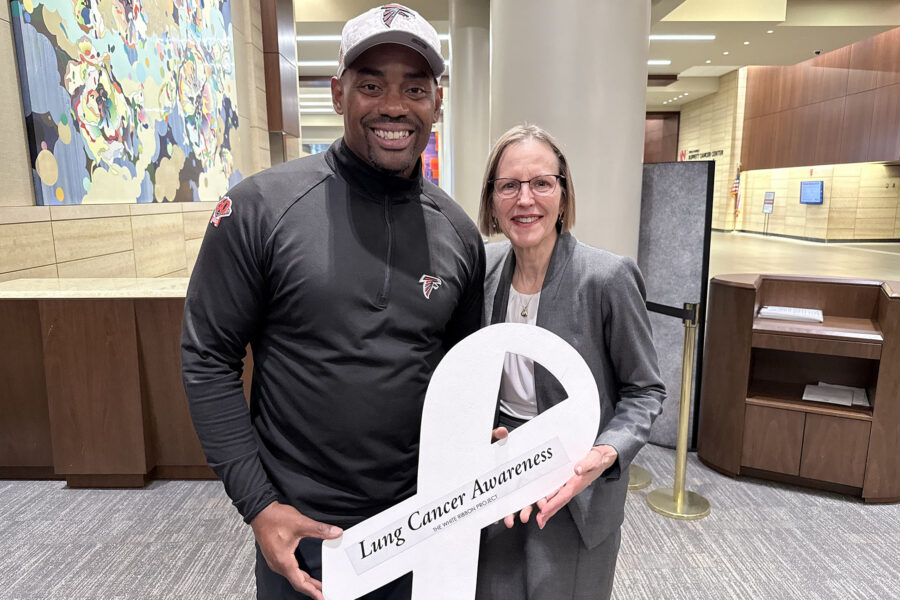
The National Cancer Institute-designated Fred & Pamela Buffett Cancer Center welcomed former NFL linebacker and lung cancer advocate Christopher Draft on Nov. 25 for an inspiring visit highlighting gratitude, survivorship and the power of community commitment to cancer research.
“Chris Draft is changing the ways we think about a diagnosis of lung cancer for people and families affected by this disease,” said Joann Sweasy, PhD, director of the Fred & Pamela Buffett Cancer Center. “He is helping to remove the stigma associated with this disease. Chris is also a strong advocate for lung cancer screening, and increasing the lung cancer screening rates for Nebraskans is top of mind for the Fred & Pamela Buffett Cancer Center because early detection saves lives.”
Draft is the founder, president and CEO of the Chris Draft Family Foundation, established in 2006 to empower families to lead healthy, active lifestyles. He also is the co-founder, alongside his late wife, Keasha Rutledge Draft, of Team Draft, a national campaign dedicated to changing the face of lung cancer.
After Keasha’s stage-four diagnosis at age 37, the couple committed themselves to raising awareness that anyone can get lung cancer and to advocating for increased research funding to expand treatment options and improve survival.
Keasha Draft died from lung cancer just one month after their wedding. But Draft has transformed that loss into purpose. He has dedicated his life to raising awareness and driving change through the foundation, which honors Keasha’s legacy and supports lung cancer survivors and research.
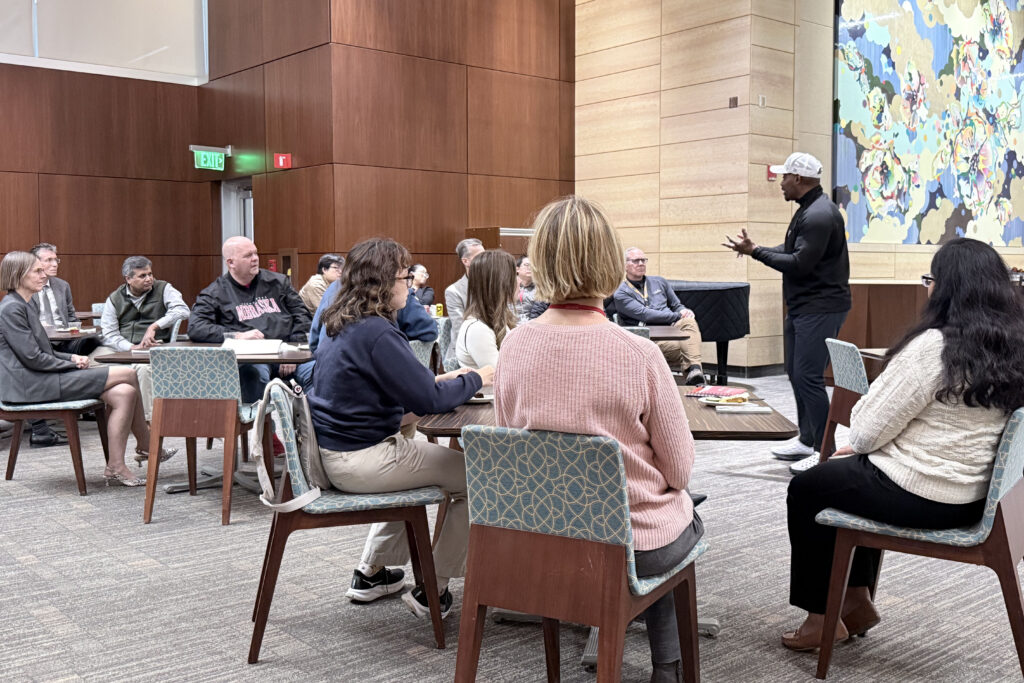
While telling his story to the med center community, Draft said, “My fight is no longer just personal. It is part of a much larger movement.”
Draft continues to lead efforts across the country to destigmatize lung cancer and celebrate the lives made possible by research, clinical trials and expanded screening.
During his visit, Draft emphasized that continued collaboration among patients, families, advocates and cancer center teams is what drives improved outcomes.
“I can choose to be mad, but forget that,” he said. “I want to celebrate our folks. The survivors, the families… everything we see happens because people committed to this work. It didn’t randomly happen. It was work. And we get to see what happens because of that work.”
Draft’s visit to the cancer center carried special meaning, taking place during the week of Thanksgiving, the holiday falling this year on their anniversary.
He shared how Keasha, an energetic and athletic 37-year-old, recognized something was wrong and went to her primary care physician. A chest X-ray revealed a mass; by the next day, tests confirmed stage-four lung cancer. She received genomic testing, rare at the time, and later learned she had a HER2 mutation, for which an effective therapy did not yet exist.
Draft said this experience reinforced a critical truth: Research matters, and patients’ lives change when advancements reach them in time.
A strong national voice in lung cancer advocacy, Draft works to empower families to embrace healthier lifestyles and speaks openly about smoking and tobacco cessation, noting that research has long shown tobacco use to be a leading cause of lung cancer.
At the same time, Draft challenged attendees to shift national conversations about lung cancer away from blame and toward survivorship.
“People who smoke are not to be blamed — they are often victims of addiction and circumstance.”
He said that stigma developed because public messaging focused almost exclusively on smoking and prevention. As a result, he said, many patients, especially those with a smoking history, internalize guilt that keeps them from seeking screening or support.
“If we want that behavioral shift and to help people quit, it’s the power of personal stories. Celebrating those who have found the strength to quit can inspire meaningful behavioral change. Each testimony of resilience, courage or quitting can motivate others to take that same step toward better health.”
Celebration, he said, is not about minimizing challenges but about showing the public what research, trials, early detection and multidisciplinary care make possible. He urged cancer centers to share stories of patients who are “doing regular things,” such as picking up their kids or going to the grocery store, because new therapies kept them alive long enough to continue living their lives.
Addressing Nebraska’s large rural population, Draft said expanding screening requires creativity and trust-building. Mobile CT units, partnerships with local anchor communities and relationships with churches and civic groups are key strategies.
“Just because you live in the city doesn’t mean someone nearby won’t have to drive 45 minutes,” he said. “How do we meet people where they are? How do we get them excited? How do we make sure they understand why it matters?”
He also underscored the particular importance of screening and outreach for veterans — another population disproportionately affected by tobacco use.
Drawing comparisons between professional football and their lung cancer journey, Draft said players never know which game might be their last, so the question becomes how they want to be remembered.
“That’s what football is about,” he said. “How do you want to be remembered? Did you give everything you had?”
Draft said continuing this work required an honest reckoning. He shared the three commitments that continue to guide him:
- Accepting that nothing he does will bring Keasha back.
- Celebrating the people who are benefiting from innovations.
- Fighting for the people not in the room, including rural communities where access to screening can be limited.
Draft closed his remarks with a challenge fitting for Thanksgiving week: Help the public understand what to be thankful for.
“Let people know the team of people it takes to get things done,” he said. “It doesn’t just randomly happen. It happens because a team made a commitment and played their positions.”
Nebraska Medicine physician outreach liaison Jessica Freedman said the message resonated deeply.
“The focus on celebrating screening, making it joyous, really stood out,” Freedman said. “Removing blame and lifting up the progress being made helps us continue improving while honoring every win.”
Find out if you or a loved one meet the recommended guidelines for lung cancer screening and whether you should get screened.
Mr Draft presented a heartfelt Thanksgiving message of cancer survivorship. To me, it was a “hopeful huddle” of actionable plans to truly serve our community of patients, families, clinicians, and researchers. The end goal(-post) being a loving team effort of “all for one and one for all.” Chris’ plan was clear. Send me in coach, let’s go for the win.
Thank you, Mr & Mrs Draft, for a wonderful Thanksgiving gift of insight. Team, let’s go tackle rogue cancer cells together.